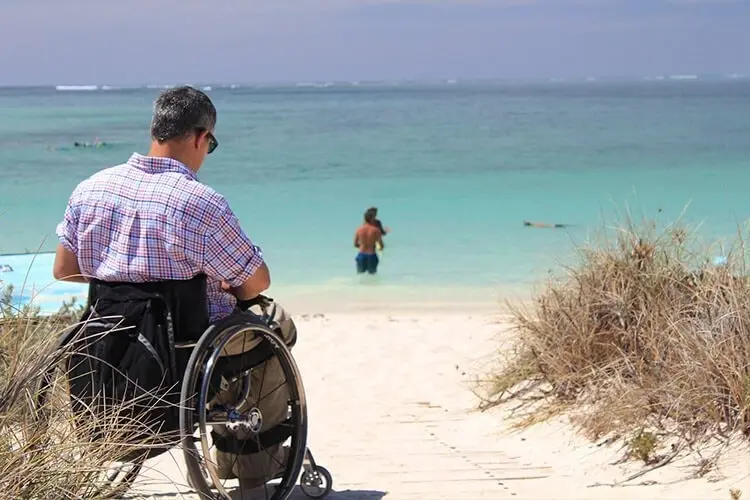
Navigating the world as a wheelchair user has historically presented a multitude of obstacles, transforming even a trip to a local neighborhood into a logistical challenge. Traveling internationally compounds these difficulties exponentially, often leaving individuals with mobility impairments discouraged from planning vacations. However, over the past decade, a profound shift has been taking place across the global tourism landscape. Governments, municipal planners, and the hospitality sector have increasingly embraced barrier-free policies, recognizing that travel is a fundamental right for people of all physical abilities.
Today, the travel environment is markedly different from what it was ten years ago. International airports, public transport networks, hotels, and restaurants are steadily adopting universal design principles. Public spaces, including sprawling national parks and centuries-old museums, are undergoing systematic remodeling to accommodate disabled visitors. While barriers still exist, these sweeping infrastructural improvements mean that a dream holiday is far more attainable for wheelchair users than ever before. To highlight this positive global trajectory, a look at ten destinations around the world reveals how modern cities and resorts are successfully welcoming travelers with mobility needs.
Venice, Italy
At first glance, Venice might appear entirely incompatible with wheelchair travel. Renowned for its intricate network of canals, floating water buses, and architecturally stunning arched bridges, the historic Italian city can look intimidating to the mobility-impaired. Yet, beneath this initial impression lies a surprisingly accessible destination. Beyond the bridges, a significant number of Venice’s historic and cultural landmarks have been adapted for wheelchair users.
The Doge’s Palace stands out as a prime example of this integration. Almost all the rooms within the palace are either completely step-free or connected by ramps. To reach the upper floors where these historic chambers are located, the palace features a dedicated elevator system. The primary logistical hurdle for visitors is the ticket office, which currently lacks wheelchair accessibility. Travelers typically need a companion to secure tickets on their behalf or assist them through that initial phase. Once inside the gates, however, visitors find an environment thoughtfully prepared for independent exploration.
Singapore
While many nations are currently scrambling to update their infrastructure, Singapore addressed barrier-free accessibility two decades ago. As a result, the city-state has earned its reputation as the most wheelchair-accessible destination in Asia and one of the most advanced globally.
Singapore’s Mass Rapid Transit system sets an international benchmark for public transportation. Every single MRT station is fully equipped with barrier-free facilities, including operational lifts, wheelchair-accessible restrooms, and continuous ramps. To assist passengers with varying sensory needs, arrival and departure schedules are prominently displayed on digital screens and announced audibly through speaker systems for the visually impaired. Over one hundred stations currently feature these comprehensive upgrades, with additional developments continually underway.
Major attractions follow this same standard of inclusivity. Gardens by the Bay, the ArtScience Museum, and the National Museum of Singapore are entirely barrier-free, offering smooth pathways and accessible facilities. Furthermore, many of these cultural institutions provide wheelchairs at their main entrances on a complimentary, first-come, first-served basis, reinforcing Singapore’s status as a leader in accessible public infrastructure.
Berlin, Germany
For travelers who prefer urban exploration and cultural immersion over traditional sightseeing, Berlin offers an exceptional European escape. Through deliberate municipal policies, the German capital has heavily adapted its environment to create a seamless experience for both local residents and international visitors.
Berlin boasts a modern public transport network featuring nearly one hundred subway stations outfitted with elevator access, making it one of the most navigable transit systems in Europe. The city’s sidewalks and pathways are meticulously maintained and designed to accommodate wheelchairs, ensuring that visitors can freely traverse one of the continent’s most historically and culturally diverse urban centers.
Museums, theaters, and galleries throughout Berlin are overwhelmingly wheelchair-friendly. An added advantage for tourists is the geographical layout of the city; most of Berlin’s major historical sites and cultural hubs are located in relatively close proximity to one another, minimizing the physical exertion and travel time required to experience the capital.
Loutraki, Greece
As the home of one of the world’s oldest civilizations, Greece remains an immensely popular holiday destination. Loutraki, benefiting from warm weather across the seasons, offers a particularly welcoming environment for travelers with limited mobility through specialized infrastructure.
The Sirens Resort in Loutraki was conceived specifically to cater to guests with physical disabilities. The property provides specialized amenities such as roll-in showers, accessible kitchen facilities, comprehensive laundry and cleaning services, and on-site equipment rentals.
Crucially, the resort features a fully accessible ramp system that extends directly from the hotel grounds to the shoreline, allowing wheelchair users to experience the sand and sea firsthand. The continuous ramp leads straight into the ocean waters, giving guests unrestricted access to the beach. Additionally, the resort operates localized tours and dedicated wheelchair taxis to help visitors explore nearby historical landmarks without transportation barriers.
Vancouver, Canada
Characterized by a diverse and inclusive population, Vancouver maintains some of the strictest barrier-free policies in North America, establishing itself as a premier destination for travelers with mobility needs.
The city’s most iconic tourist locations are fully equipped for wheelchair users. Visitors can easily navigate Stanley Park, explore the Vancouver Art Gallery, tour downtown districts, visit the Vancouver Aquarium, and experience the cultural vibrancy of Chinatown.
During the winter months, the region extends its inclusivity to winter sports. The Whistler Adaptive Sports Program provides individuals with physical disabilities the opportunity to experience skiing and snowboarding through the use of specialized adaptive equipment and trained support staff.
Paris, France
While the French capital presents certain structural challenges due to its historic architecture, Paris remains a rewarding destination for wheelchair users willing to plan ahead. Landmarks like the Eiffel Tower can accommodate visitors with mobility impairments up to their first two levels, and numerous cultural institutions have made significant strides in accessibility.
The Palace of Versailles, located just outside the city center, stands as a notable success in historic preservation and accessibility. The three main palace buildings are entirely wheelchair-friendly, connected by ground-floor ramps and serviced by elevators leading to the upper galleries. Golf carts are also available at discounted rates for disabled visitors navigating the vast estate.
Within the city, the "Another Paris Tourist Train" offers a fully accessible sightseeing tour. Travelers can also take in panoramic views of the Eiffel Tower and the Parisian skyline from the Montparnasse Tower, view the Mona Lisa at the Louvre Museum, and stroll through the city’s numerous accessible public parks.
Sydney, Australia
Australia’s most populous city combines stunning natural harbors with a strong commitment to public accessibility, ensuring that its premier viewpoints and cultural sites are open to all travelers.
The Sydney Tower Eye provides visitors with a sweeping, bird’s-eye perspective of the urban landscape from a fully accessible observation deck. Similarly, the Sea Life Aquarium and the Wild Life Sydney Zoo offer close encounters with Australia’s unique marine and terrestrial wildlife along step-free pathways.
Major civic landmarks, including the sprawling Royal Botanical Gardens and the architectural marvel of the Sydney Opera House, maintain robust accessibility accommodations, allowing wheelchair users to fully participate in the city’s vibrant cultural life.
Washington, DC, USA
The capital of the United States offers an array of federally managed monuments, memorials, and museums that prioritize universal access. Visitors can readily explore the Washington Monument, the Lincoln Memorial, the White House, and the National Air and Space Museum.
Washington DC features an extensive network of wheelchair-friendly hotels, restaurants, and public transit systems, complemented by accessible sidewalk infrastructure. Inside the White House Visitor Center and during official tours, guests of all physical abilities utilize the same pathways, supported by integrated ramps, elevators, and available loaner wheelchairs.
The Lincoln Memorial demonstrates thoughtful accessibility engineering, allowing visitors to enter the interior structure without navigating a single step. Elevators located in the ground-floor lobbies and ramps leading to the lower levels ensure that every guest can experience the monument without restriction.
Los Angeles, CA, USA
Known globally for its sunny climate and cinematic heritage, Los Angeles accommodates international tourists through extensive municipal and commercial accessibility initiatives.
Universal Studios Hollywood incorporates numerous wheelchair-accessible rides alongside auxiliary services such as language interpreters. The Aquarium of the Pacific similarly offers a fully navigable environment where visitors can experience marine exhibits without transferring from their chairs.
Cultural and commercial hubs like The Getty Center and The Grove provide modern, barrier-free access. Furthermore, municipal programs across several Los Angeles beaches provide free beach wheelchair rentals, ensuring that mobility-impaired visitors can enjoy the coastline alongside everyone else.
Philadelphia, PA, USA
Steeped in American history, Philadelphia bridges the gap between historical preservation and modern accessibility, offering wheelchair users a navigable journey through the nation’s founding era.
Iconic sites such as the Liberty Bell Center, Independence Hall, the National Constitution Center, the Betsy Ross House, and The Franklin Institute are fully equipped to welcome visitors with mobility impairments.
In addition to these historic institutions, the historic Reading Terminal Market offers a single-level, enclosed environment where tourists can sample local culinary staples and browse shops while navigating the bustling indoor marketplace entirely on one floor.