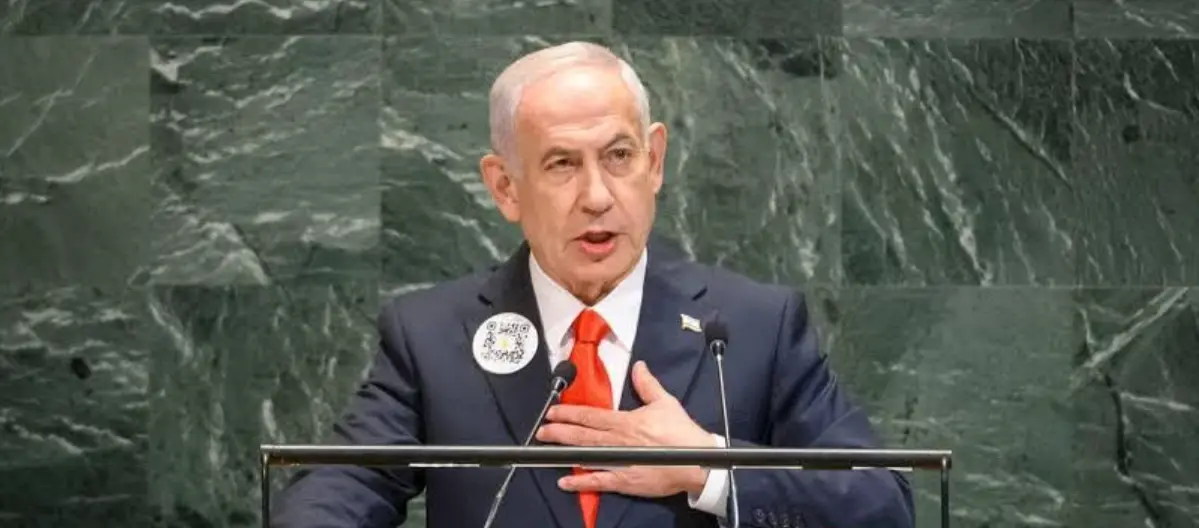
As Prime Minister Benjamin Netanyahu pushes for yet another term in office, a profoundly transformed Middle East and an evolving strategic relationship with India await a decisive political reckoning.
On October 27, the Israeli public will head to the polls for the first time in four years. This upcoming election marks a significant milestone in the country’s contemporary political history, representing the first Knesset since 1988 to complete a full, uninterrupted term without the governing coalition collapsing prematurely. This durability speaks volumes about the political resilience and tactical skill of Netanyahu, whose current coalition has managed to endure in an environment where Israeli governments notoriously falter.
Yet, this survival has not come without severe internal friction, notably characterized by fierce political battles between extremist figures like Itamar Ben-Gvir and other more moderate or pragmatic members of the ruling alliance. Now, Israelis must decide whether this deeply polarizing government deserves a renewed mandate. The outcome of this electoral test will shape not only the immediate domestic future of the country but also the trajectory of an entire region standing on a knife-edge.
A Career on Trial
Netanyahu’s political career is exceptionally long and deeply complex. He first ascended to the premiership in 1996, returned to power in 2009, and currently stands as Israel’s longest-serving leader. Although he was voted out of office in 2021—largely driven by a wave of anti-incumbency sentiment and widespread fatigue—he engineered a dramatic political comeback in December 2022. He returned at the head of a coalition that proved to be more religiously conservative and intensely nationalist than any administration the country had ever witnessed.
This latest government has presided over a turbulent and defining era. It initiated a controversial judicial overhaul that bitterly divided the nation and flooded Israeli streets with months of mass protests. It was also at the helm during the catastrophic October 7 surprise attack, an event widely regarded as an unprecedented intelligence failure. Following that tragedy, the administration managed two consecutive years of intense warfare and engaged in a direct, high-stakes showdown with Iran that fundamentally recast the security architecture of the Middle East.
Few prime ministers in modern history have been forced to make so many legacy-defining decisions in such a compressed timeframe. Yet, Netanyahu himself enters this election as a far more uncertain and legally compromised figure than in previous campaigns. His controversial return to power has left deep scars, and the implications of granting him yet another term remain a subject of fierce domestic debate within Israel and its dominant Likud party.
Two overarching issues now overshadow every aspect of the political landscape. The first is deeply personal. Netanyahu is currently on trial facing multiple charges of bribery, fraud, and breach of trust, making him the first sitting Israeli leader to be prosecuted while actively holding office. His legal defense has required extensive courtroom appearances, including testimony delivered across 98 separate hearings held between December 2024 and June of the current year, with proceedings occasionally delayed when urgent national security duties demanded his attention.
The high-profile corruption case is now inevitably advancing toward final legal arguments, though no definitive judicial verdict has yet been reached. Netanyahu has consistently denied any wrongdoing, dismissing the entire prosecution as a politically motivated witch hunt orchestrated by his detractors. Meanwhile, his international allies have occasionally intervened in the discourse; United States President Donald Trump has publicly voiced robust support for the embattled Israeli leader, going so far as to urge Israel’s president to issue a pardon or halt the trial altogether.
While Netanyahu’s supporters view such foreign backing as solidarity during an exceptionally difficult moment, the domestic political opposition fiercely denounces these interventions as an improper and dangerous interference in Israel’s independent judicial system.
For a vast number of Israeli citizens, the trauma of October 7 remains an unhealed, open wound. Fairly or unfairly, the catastrophic security failure of that day and the ongoing corruption trial have become inextricably fused in the public consciousness. For a substantial share of the electorate, the upcoming election is fundamentally a referendum on Netanyahu’s personal character, integrity, and leadership. Consequently, the vote is being interpreted not merely as a traditional choice among competing political parties and detailed legislative programs, but as a judgment on the man whose contentious decisions have fundamentally reshaped the nation and the region.
A Fractured Field
Recent public opinion polls present grim reading for the long-serving prime minister. Projections indicate that Likud could secure anywhere between 18 and 27 seats in the upcoming Knesset, a sharp decline from the 32 seats the party captured in the 2022 elections. Meanwhile, a newly formed political faction led by Gadi Eisenkot, the former Chief of Staff of the Israel Defense Forces, has surged to the front of numerous surveys. Naftali Bennett, another former prime minister, is also emerging as a highly competitive force in the political arena.
The central dilemma facing both the pro-Netanyahu and anti-Netanyahu blocs is that neither camp possesses a clear, straightforward path to securing a governing majority without relying on Arab political parties. However, many Zionist conservative parties within both major political blocs continue to steadfastly refuse to sit in a coalition with them. As a result, political analysts predict that a protracted and contentious period of coalition bargaining will inevitably follow the close of the polls.
A striking recent poll revealed that only about one-third of Israelis believe Netanyahu should remain in office as prime minister, even though an overwhelming 82 percent of his loyal base within Likud and its allied religious parties desperately want him to stay. Even more telling is a broader sociological indicator: 62 percent of Israelis expressed deep anxiety regarding how the rest of the international community views their country.
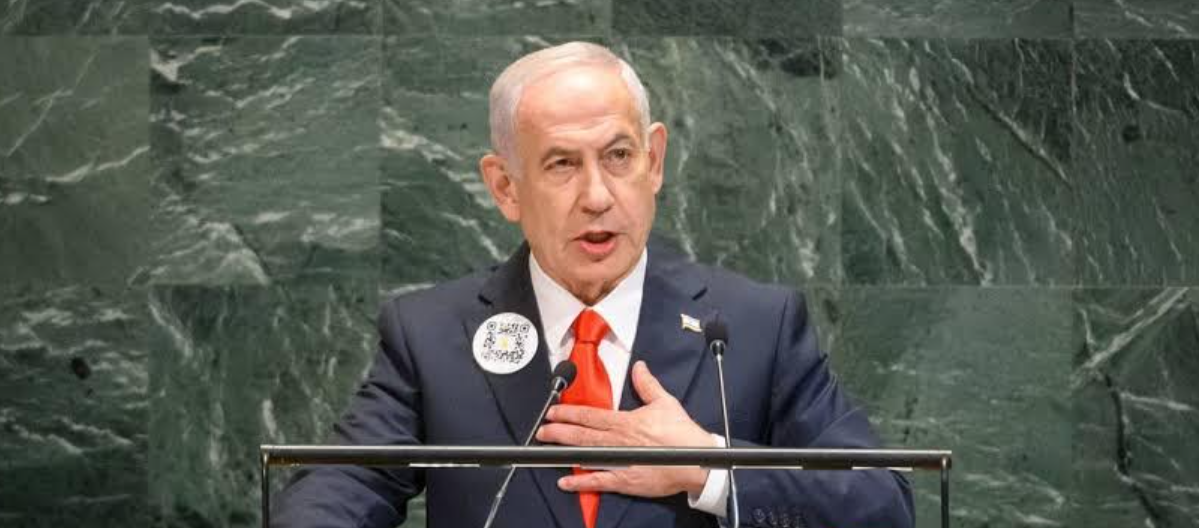
This growing global alienation may ultimately be remembered as the defining legacy of the current government. Israel’s international standing has deteriorated rapidly over the past few years. Even traditionally steadfast Western allies have increasingly condemned the nation’s military conduct in Palestinian territories and have begun issuing urgent calls for a comprehensive political settlement, cementing the public image of an increasingly isolated Israel on the world stage.
The Region Netanyahu Leaves Behind
The broader geopolitical reality of the Middle East extends far beyond the borders of Gaza. On February 28, Israel and the United States launched coordinated, pre-emptive military strikes against strategic targets inside Iran after high-stakes nuclear diplomatic talks completely collapsed. This opening wave of attacks notably resulted in the death of Iran’s Supreme Leader, Ali Khamenei, setting an unprecedented and volatile regional precedent.
This escalation triggered forty days of intense warfare, characterized by retaliatory attacks targeting major American military installations and critical economic infrastructure across Gulf Cooperation Council (GCC) member states. The powerful Lebanon-based militant group Hezbollah also entered the active fray before a fragile ceasefire was finally brokered on April 8.
However, this truce has proven remarkably difficult to maintain. The ceasefire began to fray by June, and by September, the United States and Iran were once again actively exchanging military strikes in what regional analysts have increasingly described as a grinding war of attrition.
The Israeli government maintains that the primary objective of this expansive military campaign is to permanently dismantle a dangerous nuclear threat and, ideally, to facilitate a fundamental regime change in Tehran. Conversely, critics, including several foreign governments, argue that the targeted assassination of a foreign head of state represents an illegal and dangerous escalation, regardless of the underlying strategic motives. How the incoming Israeli government chooses to manage this highly volatile security file will be closely monitored by global powers and will directly dictate how Israel is perceived internationally for years to come.
Simultaneously, the severe humanitarian crisis unfolding in Palestine continues to generate immense geopolitical pressure from international organizations, human rights bodies, and foreign governments alike. A tenuous ceasefire agreed upon in September 2025, framed under a comprehensive diplomatic plan proposed by Donald Trump, has largely managed to hold since October. Under the parameters of this arrangement, all remaining hostages have been fully accounted for, with the final body successfully returned to Israel in January.
However, the much more difficult and contentious elements of the proposed peace plan—including the complete disarmament of Hamas, the establishment of a viable new administrative apparatus, and securing funding for massive regional reconstruction—have remained hopelessly stalled for months. Both sides have also repeatedly undermined the spirit of the truce through minor, localized escalations.
The next leader of Israel will inherit this unfinished and deeply complicated conflict alongside the overarching crisis with Iran. Gaza remains heavily devastated and desperately requires urgent, sustained humanitarian assistance. Furthermore, the incoming government will be forced to carefully navigate the complex coexistence of various resident groups within the fractured territories. It is an exceptionally difficult brief, even if a workable, long-term political outcome remains theoretically possible.
The View from New Delhi
Half a world away, India’s bilateral relationship with Israel has continued to deepen and institutionalize. When Indian Prime Minister Narendra Modi traveled to Israel in February—marking his first official visit in nine years—both nations officially elevated their diplomatic alignment by rebranding the partnership as a "Special Strategic Partnership for Peace, Innovation, and Prosperity." This visit followed a substantive defense understanding reached between the two capitals just the previous November.
Concurrently, bilateral discussions regarding a comprehensive free-trade agreement were officially launched, alongside pioneering new cooperative frameworks focused on artificial intelligence and digital payment systems. While the personal political chemistry between Modi and Netanyahu is palpable—with Netanyahu publicly referring to his Indian counterpart as a brother—the most enduring progress is structural in nature. Both nations have focused on cementing trade and defense agreements designed to outlast any single political leader. Strategic partnerships built on such institutional foundations are naturally structured to survive changes in government.
Nevertheless, the timing of Modi’s visit remained diplomatically sensitive within India. The ongoing Middle East conflict was continuously subjected to intense global scrutiny, forcing New Delhi to carefully balance its expanding circle of partnerships with Israel while preserving its long-standing, independent diplomatic lines of communication with Iran and the wider Gulf region. Notably, India has continued its strategic investments in Iran’s Chabahar port even as its multifaceted ties with Israel have flourished.
This balancing act highlights the core principle of Indian foreign policy: whether the next Israeli leader turns out to be Gadi Eisenkot or a re-elected Benjamin Netanyahu, India’s core national interests will remain entirely unchanged. The bilateral relationship is fundamentally insulated from the political fate of any single individual; rather, it is anchored in the concrete technological, intelligence, and defense capabilities that Israel can offer a rising nation navigating an increasingly volatile global neighborhood. Consequently, New Delhi will almost certainly continue its diplomatic outreach to Israel, Iran, and the Gulf simultaneously, employing a calculated hedge designed to protect its own economic stability and security in a rapidly transforming world.
For outside observers watching from beyond Israel’s borders, the upcoming ballot will ultimately settle Benjamin Netanyahu’s personal political fate. It may either begin the slow, arduous process of healing or deepen the profound polarization that has characterized Israeli domestic politics for years. However, what this election will decidedly not settle is the overarching shape of the turbulent region left behind by this administration. It leaves behind a Middle East where the traditional deterrence architecture once built around containing Iran lies in total ruins, and the ultimate future of a devastated Gaza remains entirely unwritten. Whoever ultimately ascends to govern Israel next will inherit both monumental challenges, whether they are politically prepared for them or not.