Public contracting can be a powerful engine for local economic growth and community inclusion, but in Boston, many small and diverse businesses historically missed out on vital opportunities. A landmark 2020 Disparity Study commissioned by the City revealed a stark reality: minority- and women-owned business enterprises (M/WBEs) received just 11% of the total value of Boston’s contracts over a five-year period, despite being ready, willing, and able to compete for an estimated 16.9% of contracting dollars. Black-owned businesses faced the most severe gap, winning roughly $12 for every $100 they might have been expected to secure based on market capacity.
Determined to correct these systemic imbalances, Boston embarked on an ambitious journey of reform. The City sought to open up more procurement opportunities to historically disadvantaged businesses while simultaneously building a sophisticated framework to track participation, spending, and the actual impact of its policy changes.
To achieve these goals, Boston introduced a series of strategic changes to ensure its procurement practices aligned with its broader economic vision: generating greater earnings for minority and women entrepreneurs, creating localized employment opportunities for residents, and fostering a competitive marketplace that ultimately yields better pricing and value for the municipality. City staff across multiple government departments—including procurement, IT, legal, auditing, and supplier diversity—joined forces to focus on three core areas: expanding routes into City contracting for small and diverse businesses, strengthening cross-departmental coordination to enable earlier planning and consistent procurement methods, and improving data-driven monitoring to measure impact.

Through the Open Contracting Partnership’s (OCP) Lift impact accelerator program, OCP acted as a strategic partner in this multi-year endeavor. The collaboration helped the City sharpen its reform strategy and connect open data directly to its inclusion goals by designing key performance indicators, developing public dashboards, and improving procurement forecasting.
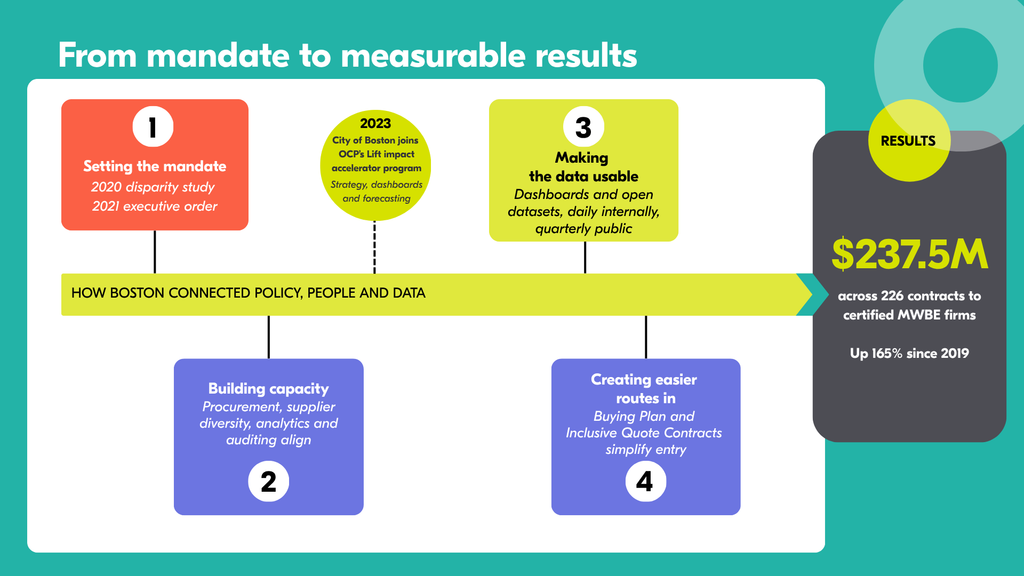
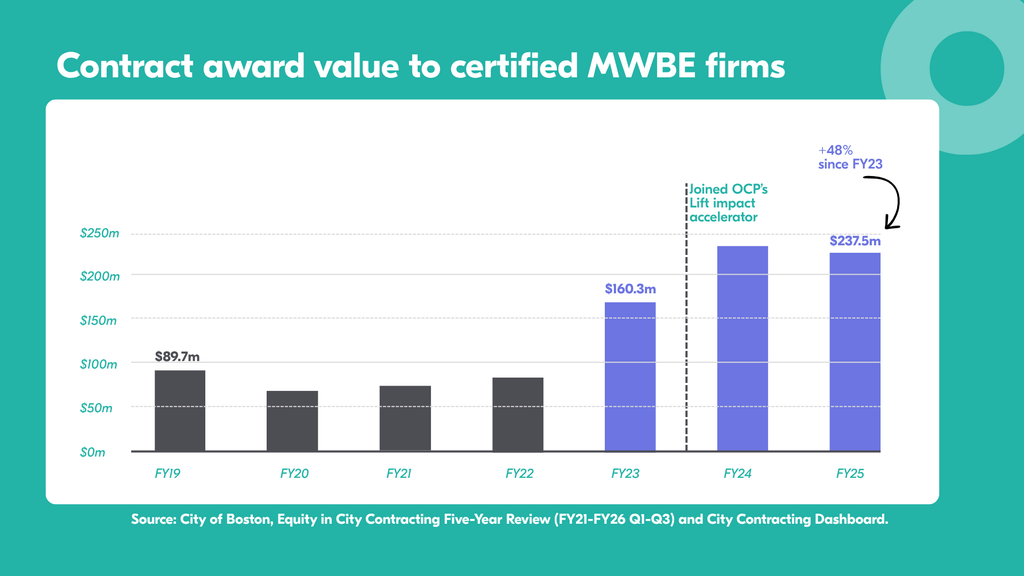
The results of these concerted efforts have been profound. Since the Lift program began in 2023, the total value of contracts awarded to certified M/WBE firms rose by nearly 50%, climbing from $160.3 million to a peak of $237.5 million in fiscal year 2025. Furthermore, the number of individual contracts awarded to these businesses increased by 25%, growing from 181 to 226 in that same year, while the share of discretionary spending—money actually paid to suppliers where the City exercises vendor choice—more than doubled.
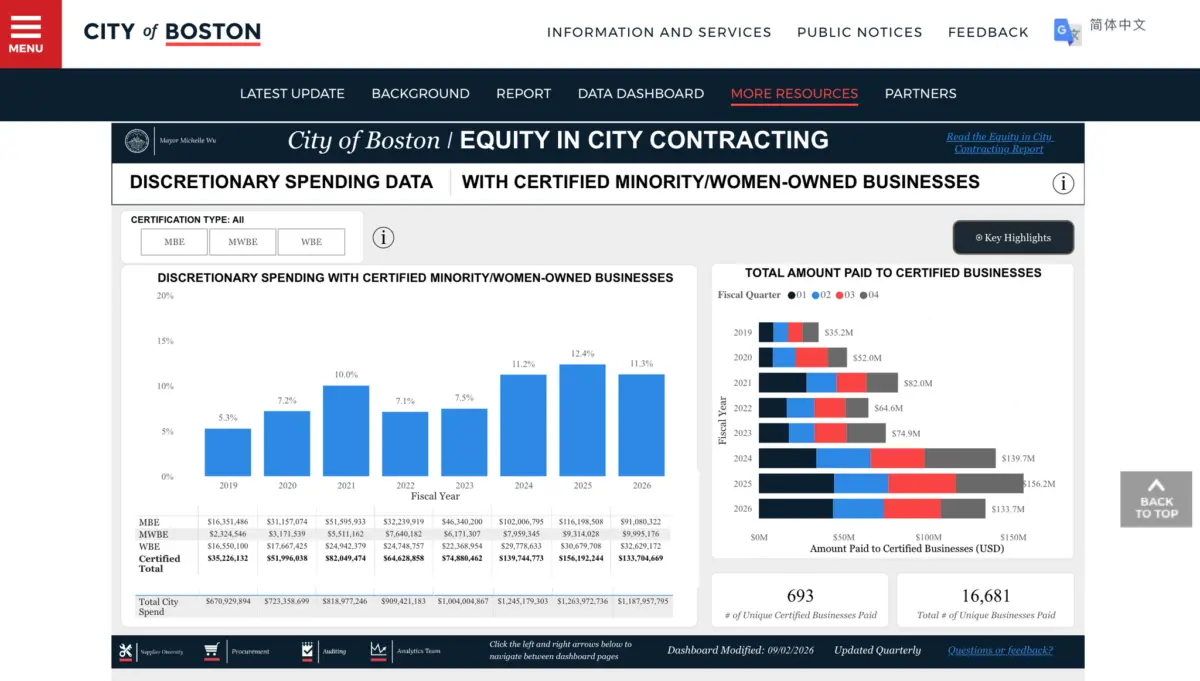
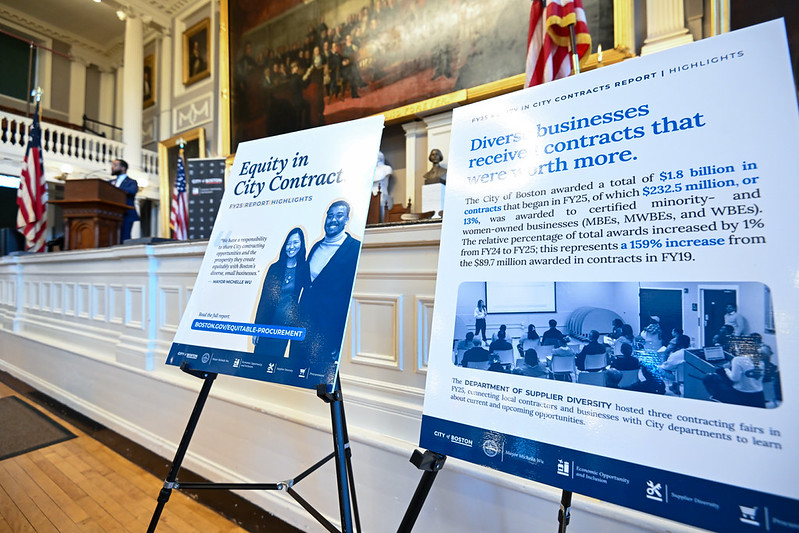
Looking at the broader trajectory of the reforms since fiscal year 2019, the total value of contracts awarded to certified firms has surged by 165% at its fiscal year 2025 high. Their share of total award value increased to 12% of all City contract value, up from 9%. While overall award values experienced slight fluctuations in fiscal year 2026—bringing contract awards to $115.4 million—discretionary spending percentages remained remarkably stable. To maintain transparency, Boston now automatically tracks these critical indicators on a dedicated public spend dashboard. Additionally, the City has published three new open datasets providing timely insights into contract awards, vendor payments, and future purchasing plans. According to OCP estimates derived from publicly available government data, more than 10,000 employees across 514 businesses have directly benefited from Boston’s public contracts over a two-year period.
A Local Win, and the Bigger Picture
The human and economic impact of these policy shifts is visible across the city. On the morning of May 18, 2022, entrepreneur Sheldon Lloyd stood outside the Orchard Gardens school alongside Boston Mayor Michelle Wu to announce a milestone agreement. Lloyd’s food service enterprise, City Fresh Foods, had secured a landmark three-year, $17 million contract to provide school meals for nearly 50,000 public school students. It was the largest non-construction contract ever awarded to a minority-owned business in the history of Boston.
Founded in 1994 by Sheldon’s brother Glynn with just two employees, City Fresh Foods had expanded over the decades to employ nearly 200 people, supplying nutritious meals to vulnerable residents across the city. Crucially, the company transitioned to employee ownership in 2020, granting its predominantly Black, Hispanic, and immigrant workforce a direct stake in the business and a sustainable pathway toward wealth generation. This high-profile contract reflected the municipal government’s growing commitment to leveraging its immense purchasing power to promote racial equity, environmental sustainability, and local economic development.
The year 2022 also marked the relaunch of the Boston Contracting Opportunity Fund. Over a three-year span, grants were distributed to 178 businesses, with approximately 80% going to minority-owned enterprises and 34% to women-owned firms. The fund was explicitly designed to dismantle barriers identified in the comprehensive 2020 Disparity Study.
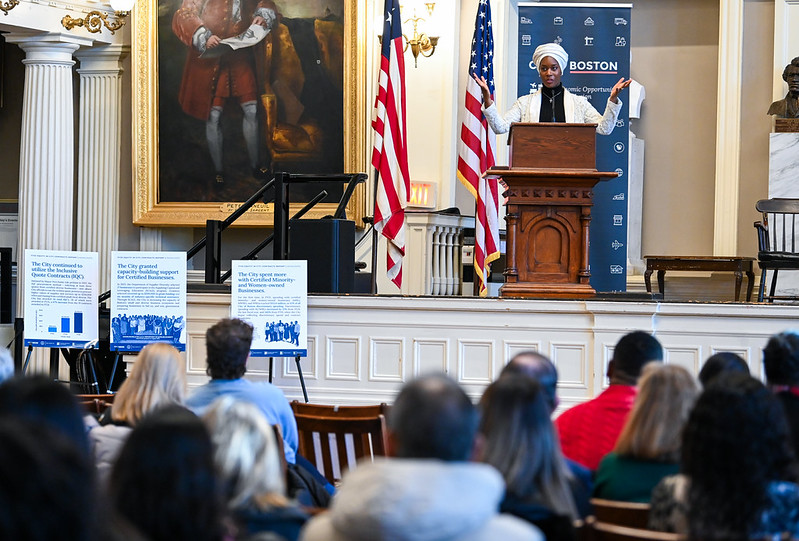
Spanning over 700 pages, the disparity study examined five years of historical public contracting records and surveyed local business owners about their operational hurdles. The findings confirmed that M/WBEs were systematically locked out of procurement opportunities commensurate with their capabilities. For every $100 in procurement dollars they were qualified to earn, these firms received only $65. Minority-owned businesses were awarded roughly 2.5% of the City’s contracting dollars against an estimated capacity of 5.7%, while white women-owned businesses captured about 8.5% compared to an estimated readiness of 11.2%. Black-owned businesses faced the steepest disparities, securing only $12 for every $100 of expected contracting share.
The study provided undeniable empirical evidence to support what local entrepreneurs and civil rights advocates had long argued: qualified minority- and women-owned businesses existed in abundance within the region, but legacy support programs were insufficient to bridge the gap. In response, then-Mayor Martin Walsh signed an executive order in February 2021 codifying the study’s findings into public policy. The order established an ambitious aspirational target of channeling 25% of City spending toward M/WBEs, backed by a comprehensive Supplier Diversity Plan, targeted outreach campaigns, and mandatory participation goals on individual contracts.
By 2023, Boston possessed the political mandate, empirical backing, and programmatic infrastructure required for transformation. However, executing these interventions demanded granular, timely data that the City could not yet easily access. Municipal buyers needed a reliable vendor directory, digitized procurement plans to keep diverse suppliers informed of upcoming market trends, and robust spending data to measure progress against established benchmarks. To solve this, Boston applied for and secured a spot in OCP’s competitive Lift impact accelerator program, receiving financial support and hundreds of hours of tailored technical assistance.
Opening Routes In for Small and Diverse Businesses
Boston’s reform strategy targeted three fundamental practical barriers: businesses needed earlier visibility into upcoming opportunities, simpler pathways to bid on eligible contracts, and clearer channels of communication with municipal buyers.
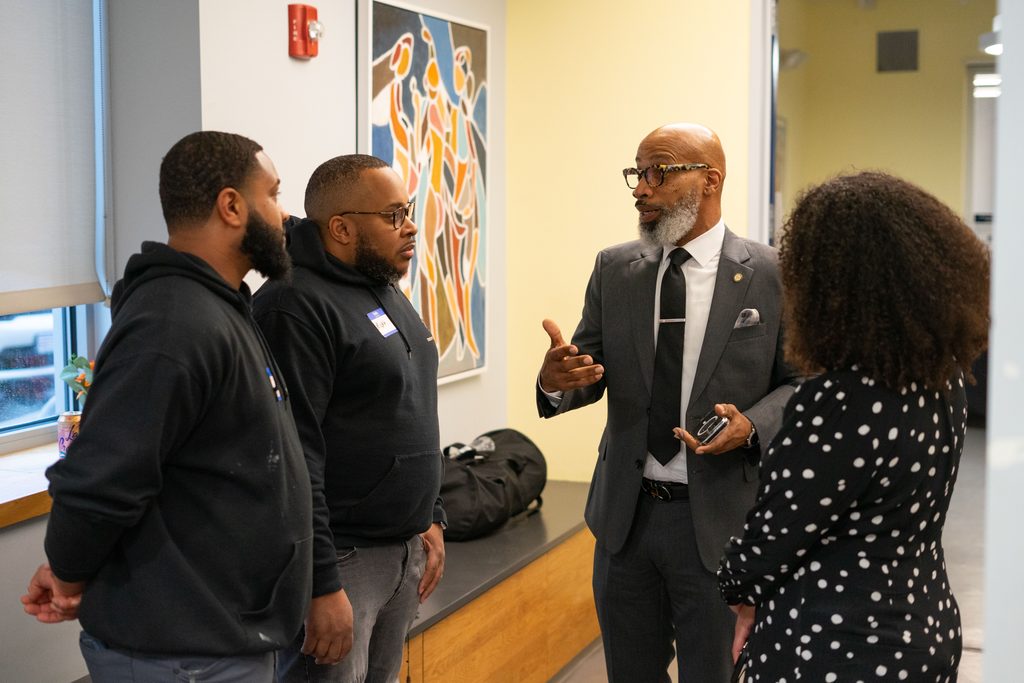
Andrea Swain, Director of the Department of Supplier Diversity for the City of Boston, emphasized the core challenge: familiarity with convoluted procurement procedures historically granted an unfair advantage to incumbent businesses. Reducing friction in the system, she noted, is essential for driving healthy competition and lowering public costs.
To address this, the City introduced the "Buying Plan," giving enterprises advance notice of planned procurements long before official solicitations go live. This early visibility grants firms adequate time to evaluate bidding capacity, forge strategic partnerships, and prepare necessary documentation. Furthermore, the planning exercise transformed how internal municipal departments approach purchasing. Naida Faria, Director of Administration and Finance at Boston Centers for Youth & Families (BCYF), explained that preparing the buying plan requires departments to look ahead and coordinate with colleagues early to anticipate upcoming service and equipment needs.
The transparency generated by these plans has expanded significantly. The fiscal year 2027 Buying Plan cataloged 688 opportunities across 56 departments with an estimated cumulative value of $808.3 million—representing an 82% increase over the previous year’s plan. This greater visibility has also fostered a constructive feedback loop with the vendor community, helping municipal officials refine how procurement data is presented to the public.
For smaller, eligible purchases, the City implemented Inclusive Quote Contracts (IQCs). Instead of requiring a full public solicitation process, municipal buyers can utilize a streamlined written quote procedure that solicits at least three quotes from certified diverse businesses. By the time the City published its Five-Year Supplier Diversity Program Review in July 2026, Boston had successfully awarded 81 IQCs totaling $11.4 million.
Simultaneously, the City broadened its outreach by translating marketing materials for the Buying Plan into seven languages and meeting directly with business owners at public events. These initiatives spurred increased subscriptions to the City Record—a digital newsletter detailing active contracting opportunities—and drove strong attendance at supplier diversity events.
Achieving these outcomes required profound organizational changes within City Hall. Under Mayor Wu’s leadership, Boston expanded staffing across its procurement, supplier diversity, and analytics divisions while forging closer operational alignment between auditing, legal, IT, and individual buying departments. Laura Melle, Director of Procurement Planning and Support Services, noted that the City successfully shifted its mindset, transforming procurement from a risk-averse, administrative back-office function into a strategic partner capable of mitigating risk while delivering superior public solutions.
Building the Data Infrastructure
Prior to these reforms, outreach regarding bidding opportunities typically occurred merely one to two weeks before deadlines, and reporting on spending was largely a manual, people-powered undertaking. Staff were forced to reconcile information across disconnected systems, resulting in fragmented communication with vendors. Furthermore, historical contract award data only captured deals exceeding $10,000, completely omitting smaller purchase orders and failing to track actual disbursements.
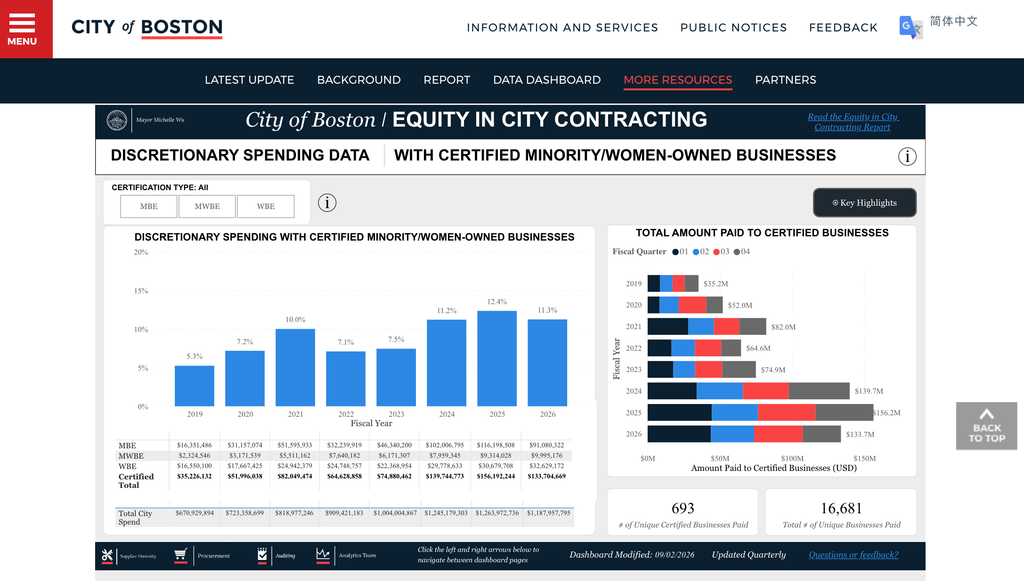
To resolve these blind spots, Boston integrated business certification data directly into its financial architecture and established automated processes within its enterprise software. This technical integration powered the creation of the City’s first public dashboard dedicated to tracking spending with certified M/WBE firms, supplemented by three open datasets covering contract awards, discretionary spending, and future buying plans.

The public dashboard is refreshed quarterly, while internal dashboards update daily, providing municipal buyers with immediate access to current financial metrics. This data integration allows the City to identify patterns and compliance issues that were previously invisible, such as monitoring multiple smaller contracts issued to a single vendor that collectively surpass thresholds requiring competitive bidding.
The tangible benefits of this data infrastructure extend across municipal agencies. For instance, the Mayor’s Office of Arts and Culture leveraged certified vendor directories to direct nearly $950,000 to certified suppliers in fiscal year 2025—a staggering 265% increase over the previous year. Kenny Mascary, Senior Advisor for the Creative Economy, noted that relying on verified business directories ensures that municipal partnerships authentically reflect the diverse communities the City serves.
Dollars and Data: the Results
While Boston’s broader reform initiatives began prior to its participation in the Lift accelerator, some of the most substantial performance gains materialized during the partnership. In fiscal year 2023, contract values awarded to certified M/WBE firms stood at $160.3 million. By fiscal year 2025, that figure climbed by 48% to $237.5 million, while the number of awarded contracts grew by 25% to 226. Discretionary spending directed toward these businesses more than doubled over the same timeframe.
Fiscal year 2026 data provides an early indication of how these structural reforms have sustained momentum beyond the formal conclusion of the Lift program. Between July 2025 and June 2026, certified M/WBE firms received $133.7 million in spending, accounting for 11.4% of the municipal total. While overall contract award values experienced a minor contraction relative to total procurement activity, discretionary spending directed to minority- and women-owned businesses remained steady, hovering around 11% to 12% annually from fiscal year 2024 through fiscal year 2026.
Underpinning these financial metrics are tangible economic benefits for local workers. Secure municipal contracts enable small businesses to expand operations, hire additional personnel, and generate increased demand for professional auxiliary services like legal and accounting counsel. Between January 2024 and December 2025, 514 certified businesses received municipal payments. With complete employment records available for 238 of those enterprises, OCP estimates that these businesses collectively employed more than 10,000 people. Meanwhile, the overall supplier base has continued to expand, with 1,037 businesses holding an active City certification in fiscal year 2025.
Boston’s experience demonstrates that diagnosing a systemic problem through a disparity study is only the first step. True transformation requires robust data infrastructure, practical operating routines, and cross-departmental collaboration that translates high-level policy into daily administrative decisions. As municipal leaders look toward future challenges—such as improving transparency in complex construction spending and tracking subcontracting compliance—the overarching lesson remains clear. In the words of Laura Melle, procurement reform is not a zero-sum game, but a dual commitment to operational excellence and inclusive economic empowerment.