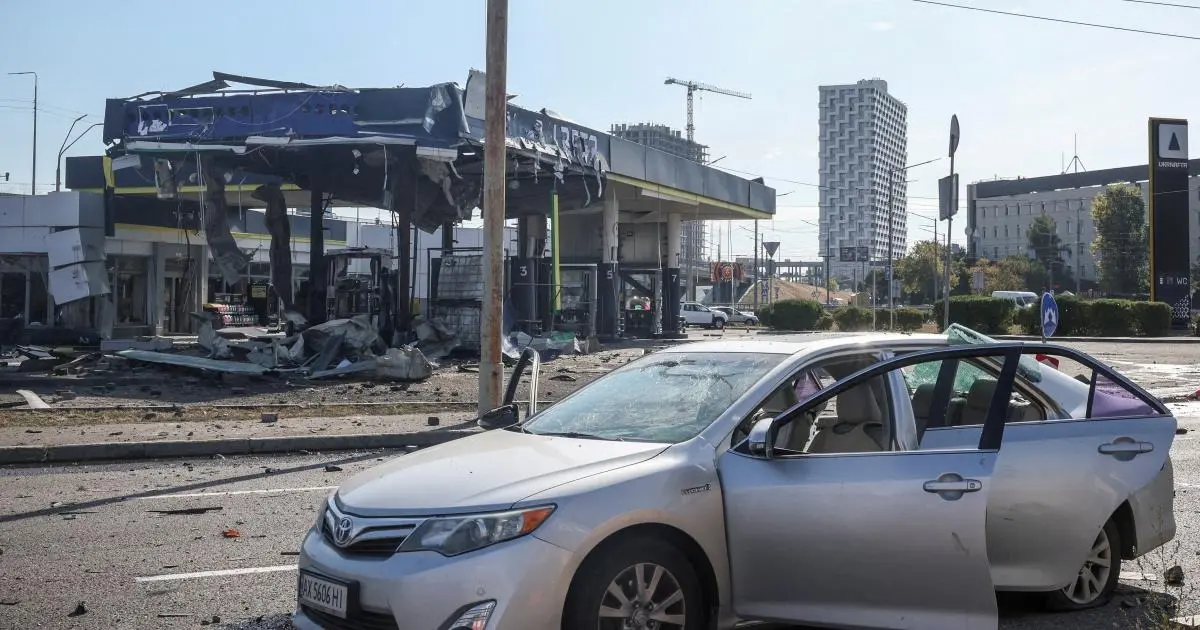
Ukraine is currently navigating its most precarious and vulnerable strategic moment since the opening days of the full-scale Russian invasion. Since late July, Moscow has capitalized on a steadily growing stockpile of ballistic missiles alongside a sophisticated new generation of jet-powered drones to dramatically intensify its long-range aerial bombardment. These relentless strikes are no longer confined to the immediate frontlines; instead, Russian forces are actively targeting population centers across the breadth of Ukraine, with a calculated emphasis on crippling the nation’s vital logistics, transportation, and commercial infrastructure. According to recent intelligence assessments shared by Ukrainian authorities, the Kremlin is actively planning an even more punishing and comprehensive campaign targeting energy grids and municipal water supplies this coming winter. The explicit objective of this coordinated assault is to decisively break the backbone of Ukraine’s domestic economy and fracture societal resilience before the year is out.
This already dire security landscape appeared to grow even more perilous on October 9, when U.S. President Donald Trump announced a surprising bilateral arrangement with Moscow. Under the terms of the announced deal, the United States would unilaterally lift economic sanctions on Russian diesel exports. Simultaneously, Trump publicly called upon Kyiv to immediately suspend its high-impact drone strikes against Russian oil refineries—strikes that have served as one of Ukraine’s most potent forms of asymmetric counterpressure in recent months.
However, this unexpected diplomatic pivot is not necessarily a major strategic setback for Kyiv. Rather, it arrives amid a broader operational shift by the Trump administration over recent weeks. Washington has increasingly moved away from pursuing an elusive, comprehensive peace settlement—which has repeatedly foundered on the vast chasm between Russian ambitions and Ukrainian security requirements—in favor of negotiating a targeted, mutual cease-fire focused solely on energy infrastructure. Such a localized cessation of hostilities could ultimately yield significant benefits for Kyiv. Furthermore, during an angry public retort to criticism of the diesel deal leveled by Ukrainian President Volodymyr Zelensky, Trump inadvertently revealed a viable path forward for Ukrainian military planners: as long as Ukraine halts its attacks on Russian oil refineries, the U.S. president asserted, Kyiv retains the autonomy to conduct operations against other targets within Russia.
Ukraine would be wise to take Trump at his word. If upheld in good faith by both Moscow and Kyiv, an energy infrastructure cease-fire would represent a vital initial step toward containing the broader geographical and economic scope of the war. If framed correctly by Western diplomats, such an arrangement would deliberately leave open alternative avenues of military pressure that could help compel long-term Russian compliance. Ideally, a reciprocal, monitored halt to long-range air and missile bombardments could eventually be replicated across other vital sectors—including maritime routes, commercial shipping lanes, and major transportation hubs—thereby laying the foundational framework for a broader aerial cessation of hostilities.
Thus far, Russian President Vladimir Putin has given no definitive public indication that he is prepared to halt, or even meaningfully curtail, his devastating strike campaign. For the Kremlin, the widespread destruction of Ukrainian urban centers and civilian infrastructure remains viewed as the most direct and reliable pathway to ultimate victory. Yet, Putin is simultaneously feeling the acute domestic and military pressures of a widening war of attrition. To a significant degree, Moscow’s accelerating air campaign masks underlying weaknesses along the frontlines, where Russian forces have achieved only negligible territorial progress throughout 2026, and where Ukrainian troops have even managed to reclaim minor ground in the contested Donbas region. Furthermore, Russia is shouldering growing economic and psychological costs at home stemming directly from Ukraine’s long-range strikes, which have successfully disrupted domestic energy facilities and heightened public anxiety over the prospect of a protracted conflict.
The United States and its European allies are well-positioned to capitalize on these mounting Russian vulnerabilities, provided they grant Ukraine the necessary latitude to apply targeted pressure aimed at forcing Moscow to pause or significantly limit its reckless aerial campaign. To be genuinely effective, this coercive approach must be paired with focused, disciplined diplomacy explicitly tailored to that single objective. In practice, the diplomatic and military tools required for this strategy are readily available, and the practical barriers to deploying them quickly are far more surmountable than commonly perceived.
The key to unlocking this diplomatic leverage lies in credibly signaling to the Kremlin that critical Russian military and economic assets will face imminent peril if Russian forces continue their unyielding bombardment of Ukraine’s civilian economy and society. Only when faced with such concentrated threats might Putin conclude that his current escalation strategy has reached a point of diminishing returns—prompting him to pivot tactically, much as he has done at previous critical junctures of the war. Simultaneously, this diplomatic play must be closely integrated with a robust, urgent effort by Kyiv’s Western partners to shore up Ukraine’s depleted air defense networks and stabilize its national finances ahead of the harsh winter months. While such a multifaceted strategy carries no absolute guarantee of immediate success, failing to attempt it would all but ensure that Ukraine suffers an extraordinary and potentially irreversible degree of structural damage.
Pressure Points
The Trump administration’s repeated inability to advance its stated objective of brokered peace between Russia and Ukraine has led many international observers to dismiss diplomatic engagement as an exercise in futility. Over the preceding 21 months, Washington’s diplomatic apparatus has made virtually no headway in its attempts to forge a comprehensive peace settlement. The fundamental war aims of Moscow and the non-negotiable security requirements of Kyiv—particularly regarding disputed territorial sovereignty, formal security guarantees, and Russia’s long-term relations with the West—remain fundamentally irreconcilable. Moreover, early in the diplomatic process, Washington missed crucial opportunities to build genuine leverage over Moscow, opting instead to court the Kremlin with premature commercial incentives while persistently pressuring Kyiv to accept unfavorable Russian conditions.
Yet that frustrating experience has directly informed the administration’s current pursuit of more realistic and narrowly defined diplomatic goals. Following high-level exploratory visits to Moscow and Kyiv in early September by Trump’s special envoys, Jared Kushner and Steve Witkoff, the administration pivoted decisively toward a more limited, achievable energy cease-fire. In the weeks since, President Trump has repeatedly reiterated his personal support for such an arrangement. While Trump’s interest in an energy freeze is undeniably self-serving—having publicly blamed Ukrainian refinery strikes for domestic spikes in fuel prices—this strategic shift could ultimately serve Kyiv’s interests exceptionally well, provided it is leveraged to secure broader, reciprocal limits on aerial warfare.
The core challenge, however, remains convincing a recalcitrant Russia to embrace any form of negotiated restraint. To date, Putin has summarily rejected proposals for aerial restrictions of any kind, calculating that the strategic damage he is inflicting upon Ukraine vastly outweighs the economic and political pain Russia absorbs from Ukrainian counter-strikes. Nevertheless, the United States and its European partners possess several tangible mechanisms to fundamentally alter this cost-benefit calculus.
Crucially, Washington and European capitals must empower Ukraine to strike active missile launchers and other high-value military targets inside Russian territory—or, at the very least, allow Kyiv to credibly threaten to do so. Until now, Ukraine has concentrated its long-range drone attacks primarily on fixed energy infrastructure because targeting hardened Russian military installations and mobile launch systems is technically far more complex. Yet it is precisely these mobile, difficult-to-replace military assets that concern the Kremlin leadership the most.
In practical terms, it would not require an insurmountable effort for the United States to facilitate direct strikes on these high-priority military assets. For months, Ukrainian officials have lobbied the Trump administration and SpaceX Chief Executive Officer Elon Musk to enable stable Starlink satellite internet access over a specific zone of Russian territory directly opposite the Ukrainian border, from where the vast majority of ballistic missile barrages are launched. Kyiv desperately requires this connectivity to allow specialized drone units to track and destroy mobile launchers. The moment Ukraine acquires this operational capability, Russian military commanders would likely be forced to withdraw these vulnerable systems deeper into Russian territory, thereby considerably reducing the daily ballistic missile threat facing Ukrainian cities.
Thus far, both Trump and Musk have deflected Kyiv’s repeated requests, with each party publicly suggesting that the decision rests with the other. Yet neither has categorically foreclosed the possibility of greenlighting such access. Kyiv’s case for securing Starlink connectivity over Russian soil would gain significant persuasive power if Ukrainian officials framed it explicitly as negotiating leverage within a broader, U.S.-led diplomatic strategy aimed at achieving an aerial cease-fire—particularly if offered as a quid pro quo tied to Washington’s desire to halt strikes on Russian oil refineries. Specifically, President Trump could authorize the necessary satellite access quietly, while signaling to Moscow that the authorization will remain in place only until a comprehensive aerial cease-fire is officially implemented.
There is historical precedent to suggest such a tactic could succeed. Earlier this year, Musk collaborated with Ukrainian engineers to establish a specialized registration system that strictly limited Starlink usage to authorized Ukrainian drone operators. For a brief period, that tactical adjustment threw Russian front-line forces into severe operational disarray. Unfortunately, Washington failed to exploit that fleeting window of Russian vulnerability to force a tactical de-escalation, as U.S. attention was abruptly diverted weeks later to escalating tensions with Iran.
The German government holds a strikingly similar diplomatic and military card. Kyiv has long pressured Berlin to supply the advanced Taurus air-launched cruise missile, a weapon system that would enable Ukrainian forces to strike fixed military targets hundreds of miles deep into Russia, including vital defense manufacturing plants that produce jet-powered drones and ballistic missiles. Thus far, German Chancellor Friedrich Merz has consistently resisted transferring the Taurus system, arguing that such a move would constitute an unacceptable escalation and would necessitate on-site technical support that could inadvertently entangle German personnel in the conflict. However, Chancellor Merz might be persuaded to relent—or at least authorize Ukrainian military personnel to begin training on the platform—if he became convinced that doing so would generate irreversible momentum toward an aerial cease-fire, ideally executed in tandem with a parallel move by Washington regarding Starlink connectivity. In turn, other European partners could contribute meaningfully to this coordinated strategy by significantly stepping up intelligence-sharing and technical expertise to help Ukraine accurately target military launchers inside Russia.
Euros and Patriots
Any leveraged diplomatic strategy of this nature inherently depends upon Ukraine’s Western allies demonstrating an unwavering commitment to addressing Kyiv’s immediate wartime requirements, ensuring that Moscow cannot succeed in its intensified campaign to break Ukrainian societal endurance this winter. This necessitates a coherent, immediate strategy focused on shoring up both domestic air defense architectures and national economic stability, regardless of temporary fluctuations in U.S. political support.
At the very center of this defensive imperative lies the critical shortage of Patriot air defense interceptors. For Ukraine, the Patriot system’s advanced PAC-3 variant remains by far the most effective shield against devastating Russian ballistic missile barrages. Yet Kyiv’s existing stockpiles have grown dangerously thin as the United States husbanded its remaining inventory, which has been significantly depleted by concurrent military commitments in the Middle East. Meanwhile, Ukraine’s European partners have scoured global markets in search of replacement Patriot missiles but have so far fallen short of meeting Kyiv’s modest, urgent request for 300 interceptors to safely navigate the winter months. Nations possessing robust Patriot inventories—such as Greece, Japan, South Korea, and Spain—have remained hesitant to transfer their systems due to a complex array of domestic security and legal constraints.
To overcome this bottleneck, European capitals should look to a proven U.S. diplomatic playbook from earlier in the conflict. During the Biden administration, U.S. officials successfully cajoled reluctant international partners and engineered creative, multiparty hardware swaps and backfill agreements, many of which were financially subsidized by Washington, to free up critical munitions for Ukraine. For instance, the United States previously acquired 155-millimeter artillery shells from South Korea and PAC-3 interceptors from Japan to backfill American stockpiles transferred to the front. On this occasion, Ukraine possesses the financial capacity to directly fund many of these necessary acquisitions through the multi-billion-euro loan package currently being disbursed by the European Union.
On the domestic economic front, Ukraine’s most acute fiscal vulnerabilities could be decisively mitigated if the European Union agreed to frontload the disbursement schedules of its upcoming multi-year macro-financial assistance loans. While EU leadership has repeatedly emphasized that Kyiv must first satisfy strict governance and reform benchmarks to unlock previously promised tranches, Brussels will likely need to identify supplemental financial resources, as the existing loan framework through 2027 will ultimately fall short of covering Ukraine’s total fiscal deficit.
In August, a coalition comprising the Netherlands, Poland, Spain, and Sweden renewed a compelling proposal to tap directly into Russia’s frozen sovereign assets. An estimated $240 billion of these funds currently reside within the European Union, the vast majority held by the Belgium-based international central securities depository Euroclear. While the legal, political, and institutional obstacles to seizing and transferring these sovereign assets directly to Kyiv remain formidable to resolve in time for the immediate winter crisis, Ukraine’s international partners have repeatedly demonstrated a capacity for creative financial engineering.
In 2024, the Group of Seven successfully designed a $50 billion loan mechanism serviced entirely by the future windfall profits generated by frozen Russian capital. Similarly, the European Union’s €90 billion loan package represents another innovative instrument, financed through capital market borrowings and structured so that Ukraine is only required to repay the principal if Moscow eventually provides war reparations; otherwise, the EU has explicitly reserved the legal right to reimburse itself using the frozen Russian sovereign assets. The European Union and likeminded international partners—notably Canada, Japan, and the United Kingdom—can readily revisit and expand both of these financial mechanisms to generate vital supplemental revenue for Ukraine while deftly steering clear of political tripwires.
Coordinated Coercion
Ultimately, each of these military, financial, and diplomatic steps must be tightly coordinated if they are to exert maximum psychological and strategic influence over Vladimir Putin’s calculus. The fact that the Trump administration recently invited senior European officials to participate in diplomatic talks with Ukrainian negotiators in Miami offers an encouraging sign that transatlantic coordination remains achievable, even during periods of broader strain in U.S.-European relations. Conversely, troubling reports that Washington has occasionally threatened to abruptly curtail intelligence-sharing, air defense interceptor deliveries, and other critical munitions supplies underscore the persistent reality that the current U.S. administration remains a capricious and unpredictable interlocutor.
In light of this volatility, European leaders who maintain constructive working channels with the White House—such as Finnish President Alexander Stubb—must continue pressing the argument that granting Starlink access and applying coordinated pressure on Moscow directly serves President Trump’s stated ambition of de-escalating the conflict.
President Putin remains firmly committed to his maximalist war aims, and no single stroke of external pressure is likely to convince him to abandon those objectives entirely. However, the Russian leader is a seasoned opportunist who has repeatedly demonstrated a pragmatic capacity for tactical adjustments in the pursuit of his broader geopolitical ambitions. In the early weeks of 2022, Putin abruptly abandoned his ground offensive targeting Kyiv once it became starkly evident that the assault was failing. Later, he ordered the redeployment of the Russian Black Sea Fleet away from Ukraine’s coastline after Kyiv systematically demonstrated its ability to sink high-value naval assets using asymmetric tactics. Furthermore, in late 2022, under intense diplomatic pressure from African nations suffering from severe grain shortages, Moscow agreed to enter the United Nations- and Turkey-brokered Black Sea Grain Initiative, which safely maintained agricultural exports from Ukrainian ports for nearly a year.
For Putin, these tactical retreats were never driven by goodwill; rather, they were cold calculations of self-preservation designed to safeguard his overarching strategy of subjugating Ukraine. With the application of disciplined, synchronized leverage by the United States and Europe, there is no structural reason to assume the Kremlin would rule out a comparable pullback from its indiscriminate aerial assaults against Ukrainian civilian populations and critical economic infrastructure. Putin would be even more inclined to view a negotiated aerial cease-fire as advantageous if he simultaneously witnessed a significant expansion of Ukraine’s capacity to disrupt daily life within Russia’s major urban centers—an operational capability Kyiv is clearly intent on developing, as evidenced by its recent, highly effective strikes against strategic Russian digital infrastructure and data centers.
Naturally, the possibility remains that even when confronted with these escalating costs, Putin will stubbornly refuse to adjust his approach. Yet in that pessimistic scenario, actively enabling Ukraine to target Russian ballistic missile launchers and domestic defense manufacturing plants—combined with sustained economic strangulation—remains indispensable to helping Kyiv weather the Russian escalation. Beyond offering immediate relief to battered Ukrainian cities by degrading Moscow’s capacity to launch large-scale aerial salvos, systematically targeting these military assets will directly undercut Russia’s long-term warmaking capacity. That outcome would deliver substantial strategic dividends even if it ultimately falls short of immediately containing the broader air war.
Paradoxically, the tactical flexibility that has enabled many of Putin’s past maneuvers also creates valuable operational space for Kyiv and its Western partners to assert greater initiative than they frequently realize. President Trump, President Zelensky, and European leaders must urgently organize their collective actions in a manner that relieves crippling pressure on the Ukrainian economy while simultaneously demonstrating an unyielding willingness to exploit critical Russian domestic vulnerabilities. Only when faced with this cohesive front might Putin conclude that he is fundamentally better off executing a tactical pivot—in this specific instance, agreeing to a monitored aerial cease-fire—rather than maintaining his current, attritional course. He would make such an adjustment not out of concession, but to find a more sustainable pathway toward achieving his ultimate strategic ambitions. Within that transitional breathing space, Kyiv and its international partners would secure the vital time required to regroup, fortify their defenses, and prepare resiliently for whatever phases of the conflict lie ahead.