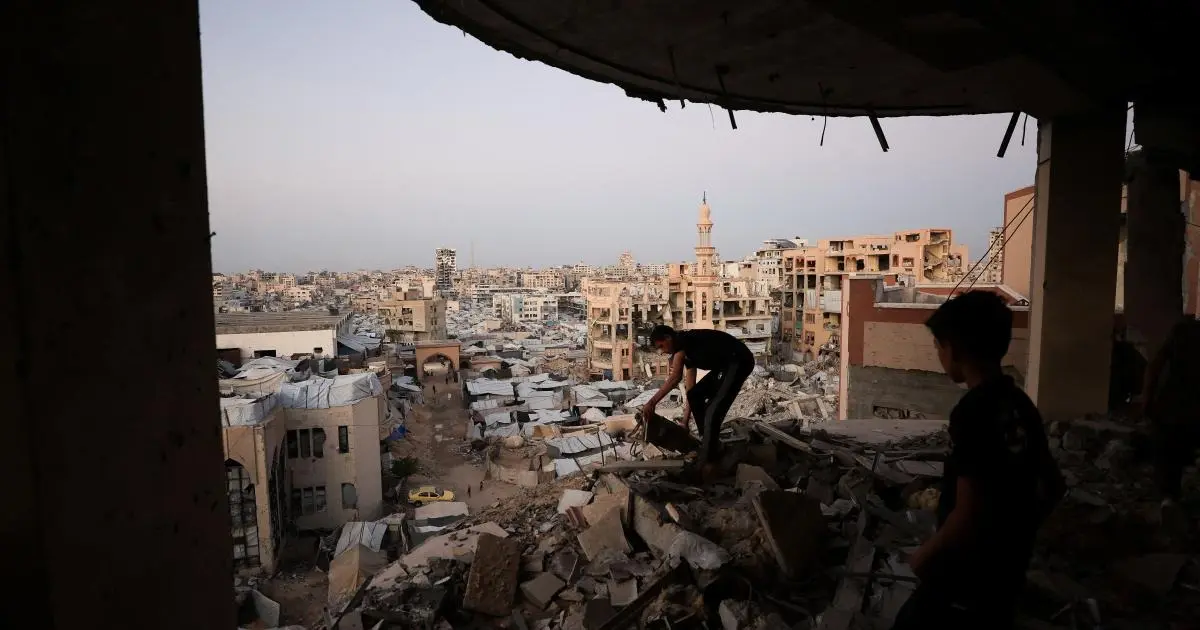
A year after the Trump administration successfully brokered an agreement to end the devastating war in Gaza, Palestinians across the battered enclave are still waiting for the promised "day after" to arrive. The October 2025 cease-fire plan successfully secured the release of the final remaining Israeli hostages and ostensibly brought a halt to active, large-scale hostilities. However, the reality on the ground tells a starkly different story. Israel continues to launch frequent, targeted strikes across Gaza, regularly claiming civilian lives, including approximately 300 children over the past year alone.
The original agreement also mapped out a phased political process designed to jump-start the reconstruction of the deeply devastated territory. In January of this year, Jared Kushner—U.S. President Donald Trump’s son-in-law and key Middle East envoy—publicly promised that the restoration of vital services and critical infrastructure would begin within 100 days. This rehabilitation was slated to include the rebuilding of severely damaged water and sewage systems, electrical grids, hospitals, and bakeries.
Yet, nine months past that initial window, Gaza has witnessed zero meaningful reconstruction, no widespread restoration of basic public services, and no reprieve from daily violence. Instead, the overwhelming majority of the territory’s inhabitants remain confined to sprawling, squalid tent cities jammed tightly along a shrinking strip of coastline. These makeshift settlements are plagued by widespread disease and severe rodent infestations, while residents endure extreme shortages of food, safe drinking water, essential medicines, and basic sanitation facilities.
While Gazans may no longer be teetering on the edge of outright famine as they were during the darkest periods of the prior years, the humanitarian situation remains catastrophic and fundamentally unsustainable. Observers warn that these intolerable, dystopian conditions could easily act as a catalyst for a fresh explosion of violence. Furthermore, the ongoing deprivation directly serves an endgame favored by many prominent Israeli leaders: the eventual, permanent eviction of Gaza’s population of more than two million Palestinians.
Indeed, the persistent paralysis of the peace process appears to suit the current Israeli leadership. Nikolay Mladenov, the Bulgarian diplomat serving as the high representative of Trump’s Board of Peace—the body tasked with overseeing the Gaza peace plan—recently pointed to where the primary obstacle to progress lies. Commenting on Israel’s repeated failure to meet its core commitments, Mladenov gently noted that this is "where we are little bit stuck right now." Kushner has similarly pointed fingers at Israel’s upcoming elections, arguing that the political pressure surrounding the vote has made Prime Minister Benjamin Netanyahu’s government "a little irrational" regarding the management of Gaza.
While intense domestic electoral considerations are undeniably at play—Netanyahu is currently locked in a tight, politically existential reelection campaign—the totality of official Israeli rhetoric and military actions points toward something much deeper and more alarming. Ultimately, the Netanyahu government’s underlying strategy appears to have less to do with stabilizing the Gaza Strip or successfully disarming Hamas than with rendering the entire territory completely uninhabitable and forcing out its remaining residents.
Whether or not the Trump administration actively shares this ultimate objective, its extraordinary diplomatic deference to Netanyahu’s far-right government and its broader indifference to the daily suffering of Palestinians are effectively facilitating this very outcome. Unless the United States and its international partners are finally prepared to compel Israel to abide by the terms of the agreements it signed, analysts warn that it may soon be a matter of time before Gaza is lost permanently.
HELL ON EARTH
It remains difficult to overstate the staggering scale of death, destruction, and profound human suffering inflicted on Gaza and its roughly 2.2 million inhabitants over the past three years. In the immediate wake of the October 7, 2023, terrorist attacks led by Hamas against Israel, Israeli military and political leaders openly vowed to "flatten" Gaza and transform it into a "city of tents," explicitly promising that the territory would never return to what it once was.
They have largely delivered on those grim threats. The estimated 223,000 tons of explosives dropped on Gaza—an explosive payload roughly equivalent to 15 times the power of the atomic bomb dropped on Hiroshima—have claimed the lives of more than 74,000 Palestinians, the vast majority of whom are civilians, while reducing the vast majority of Gaza’s built environment to rubble. The intensity of Israel’s military assault has placed the nation on trial for genocide at the International Court of Justice. The campaign has wiped out approximately 92 percent of Gaza’s housing stock, destroyed 95 percent of its agricultural farmland, obliterated all 12 of its universities, and disabled nearly half of its 36 hospitals, systematically dismantling the institutions and infrastructure required to sustain human life.
Following such unprecedented devastation, last year’s negotiated cease-fire brought a profound, undeniable sense of relief. Under the initial phase of Trump’s multi-step Gaza plan, the warring parties agreed to an immediate halt to all military operations, a comprehensive exchange of hostages and prisoners, the restoration of basic municipal and medical services, and a massive, unhindered surge of humanitarian aid.
Aside from Hamas fulfilling its obligation to release Israeli hostages, however, most of these commitments have faced continuous obstruction and remain only partially fulfilled. Phase two, which was formally launched in January even though Israel had yet to satisfy its phase one obligations, envisioned the long-term stabilization of Gaza. This was to be achieved through the deployment of an international peacekeeping force, the establishment of a neutral Palestinian technocratic governing body known as the National Committee for the Administration of Gaza, the gradual disarmament of Hamas, and a phased military withdrawal of Israeli forces. Together, these final steps serve as strict operational prerequisites for the long-term reconstruction of the Gaza Strip as mapped out in phase three.
One full year after the initial cease-fire announcement, however, Israel continues to block the physical entry of the Palestinian governing and policing bodies that would enable Hamas to formally relinquish administrative power and allow reconstruction work to begin. Furthermore, Hamas and Israel remain deadlocked regarding the exact sequencing of the militant group’s disarmament relative to the timing of an Israeli military withdrawal.
Although the availability of food has improved since the height of the famine conditions last year, Israel continues to tightly restrict humanitarian aid shipments, permitting only a tiny fraction of the 600 daily supply trucks mandated by the cease-fire agreement to cross into the territory. More than 90 percent of Gaza’s population remains internally displaced.
Compounding these humanitarian challenges, the Israeli military has unilaterally expanded its physical control from just over half of the Gaza Strip to approximately 65 percent of the territory since the cease-fire was declared. Frequent, ongoing Israeli airstrikes have killed more than 1,400 Palestinians since the truce officially went into effect. The grim reality that the death toll continues to climb during a declared cease-fire highlights the dystopian nature of Gaza’s new normal. As UN Middle East envoy Sigrid Kaag bluntly summarized, current living conditions in Gaza represent "hell on earth with no prospect of significant change in sight."
Of course, Israel is not solely responsible for the perpetuation of these hellish conditions. Hamas also bears a significant share of the blame. The leadership of Hamas spent months stubbornly resisting mounting international and regional calls to disarm, a core requirement of the Trump plan, ultimately agreeing to the measure only under immense pressure applied by Egypt and other key mediators.
At the same time, the Trump administration bears substantial responsibility for the current impasse. Washington has allowed the political implementation process to stall indefinitely, granted Israel extraordinary latitude, and maintained a highly lopsided approach to enforcing the terms of the cease-fire. In practice, the United States has effectively permitted Israel to continue waging its war in Gaza, albeit at a reduced scale.
Just a few months ago, there were fleeting signs that the diplomatic deadlock might finally be broken. In late July, President Trump announced a breakthrough concerning the implementation of the second phase of his Gaza peace initiative. Following seven months of fraught, high-stakes negotiations, Hamas and the Board of Peace reached a tentative agreement outlining the disarmament of the Palestinian militant group. Theoretically, this paved the way for the initiation of desperately needed recovery and reconstruction efforts, alongside the introduction of new Palestinian governance and civilian policing mechanisms.
The overall success of this plan relied on a carefully constructed sequence of events: Hamas was to disarm in parallel with an incremental Israeli military withdrawal. This pairing was specifically designed to ensure steady progress and prevent either side from exercising an effective veto over the peace process.
The fact that Hamas—an organization founded entirely on the principle of armed resistance—had agreed to any form of disarmament was unprecedented, and it was rightly hailed by Trump as a historic diplomatic achievement. Nevertheless, Prime Minister Netanyahu categorically rejected this operational road map. He insisted that there could be no Israeli military withdrawal whatsoever until Hamas was completely and thoroughly disarmed, while simultaneously maintaining that Israel must retain the absolute freedom to continue conducting military operations inside Gaza. In effect, Israel was demanding that Hamas fulfill all of its phase two obligations before Israel had satisfied even its phase one requirements, rendering the entire diplomatic framework unworkable.
Consequently, the process is once again deeply stuck. Without tangible progress on either Hamas’s disarmament or an Israeli military withdrawal, the Palestinian governing committee—currently marooned in Cairo—and the newly trained police force remain locked out of Gaza, alongside any prospective international stabilization force.
The Trump administration and the Board of Peace have repeatedly attempted to obfuscate this sequencing dilemma since the summer. Publicly, they have leaned toward embracing the Israeli insistence that Hamas must disarm first, while privately assuring Hamas and other regional intermediaries that the original road map remains unchanged.
In diplomatic arenas, however, ambiguity almost invariably serves the interests of the stronger party. Washington’s hedging functioned as an implicit endorsement of the hard-line Israeli position. Having already granted Israel an effective pass on the vast majority of its phase one obligations by consistently refusing to condemn daily cease-fire violations, the Trump administration was now effectively relieving Israel of its phase two obligations as well. As a result, Gaza’s reconstruction and rehabilitation remain frozen indefinitely.
GONE FOR GOOD
The severe dangers posed by this ongoing political impasse were underscored by Nikolay Mladenov during an interview in September. He warned that the total absence of meaningful progress on the ground in Gaza was actively foreclosing the future of the territory and effectively killing any viable prospect for a two-state solution, which would inevitably trigger grave consequences for the broader Middle East region.
"If we allow for Gaza to continue in the situation that we have now," Mladenov cautioned, "Gaza will be gone. It will be gone for good." He added that if the international community fails to refocus its urgent attention on the plight of the two million Palestinians living in intolerable conditions, "we will not be able to find our way back to a credible path to resolving the Israeli-Palestinian question." He warned that current policies are actively planting "the seeds of a next security, military crisis that is going to emerge."
What Mladenov left unsaid, however, is that Netanyahu appears quite content for the peace process to remain trapped in this exact state of paralysis. Israel’s prime minister, who only reluctantly acceded to Trump’s 2025 Gaza cease-fire proposal under intense international pressure, has successfully managed to continue low-intensity military operations in Gaza without incurring significant political or diplomatic costs at home. The ongoing violence and the deepening humanitarian catastrophe inside the strip fail to generate meaningful domestic outrage within Israel. Even Netanyahu’s primary political rivals have felt compelled to publicly dismiss the U.S.-backed Gaza road map. Meanwhile, international outrage over the ongoing carnage has largely subsided, with many foreign governments preferring a dysfunctional, failing peace process to no process at all.
For Netanyahu, maintaining violence at this specific threshold—just high enough to prevent Gaza’s meaningful recovery and reconstruction, but carefully calibrated to avoid triggering a major international outcry—has become an objective in its own right. Much as he insisted on the implausible political goal of "total victory" during the first two years of the war, he now insists on the equally unachievable objective of the "total disarmament" of Hamas. While it is one thing to expect Hamas to surrender heavy armaments such as rockets, missiles, and mortars, it is entirely unrealistic to imagine that the group will surrender every last individual firearm, particularly while foreign military forces continue active operations within the territory. Netanyahu’s uncompromising stance serves to placate his extremist coalition partners, justify permanent Israeli military occupation over Gaza, and indefinitely forestall any future political accommodation with the Palestinians.
More crucially, keeping Gaza trapped in a multi-faceted limbo—characterized by neither a genuine, stable cease-fire nor a return to full-scale conventional war, marked by limited short-term humanitarian relief but zero long-term reconstruction, and populated by civilians consumed entirely by the daily struggle for survival without any real hope for the future—directly serves the broader ideological vision harbored by Israeli hard-liners. This strategy aims to make Gaza so profoundly uninhabitable that its residents are ultimately compelled to leave.
For Netanyahu and his far-right cabinet members, the systemic immiseration of Gaza is not an ancillary side effect, but rather a central pillar of state strategy. Senior Israeli figures, including Defense Minister Israel Katz, have publicly vowed that the military will remain in Gaza indefinitely and refuse to withdraw. More tellingly, across the two-thirds of the Gaza Strip currently under direct Israeli military control, the army has systematically erased virtually all traces of civilian Palestinian life, razing thousands of structures, flattening entire neighborhoods and agricultural zones, and erecting permanent military bases and infrastructure.
Members of Netanyahu’s government have made little secret of their ultimate desire to clear out Gaza’s population and open the territory up for eventual settlement by Israeli citizens. Israeli National Security Minister Itamar Ben-Gvir, among the most vocal proponents of Palestinian expulsion, recently unveiled an explicit seven-year plan aimed at promoting the "voluntary emigration" of Palestinians from Gaza, with an initial target of moving 250,000 residents out of the strip within the first year.
Ben-Gvir is far alone in stating these goals publicly. Katz has similarly called for facilitating the emigration of Gazans "by any means," asserting that "there is no real solution for Gaza in the end without this migration." Netanyahu himself has advocated for similar outcomes behind closed doors, reportedly confirming to a group of lawmakers in 2025 that Israel has been systematically "destroying more and more houses" in Gaza to ensure that Palestinians "have nowhere to return." Netanyahu observed that "the only obvious result will be Gazans choosing to emigrate outside of the strip."
The Trump administration, for its part, may not be fundamentally opposed to such an outcome. In January 2025, President Trump briefly floated a proposal suggesting that the United States should "take control" of Gaza and "clean out" its more than two million inhabitants as part of an expansive vision to transform a depopulated strip into a "Riviera of the Middle East." Although Trump subsequently backed away from the specific proposal following an immediate and fierce international outcry, the administration’s broader laissez-faire attitude toward Israeli violations suggests a high tolerance for prolonged Palestinian suffering.
LOSING GAZA
The potential consequences of perpetuating Gaza’s misery are severe. As Mladenov and other international diplomats have warned, staying on the current trajectory is virtually guaranteed to produce two major outcomes: driving growing numbers of desperate Palestinians to abandon the Gaza Strip entirely, and dramatically increasing the likelihood of a violent regional escalation, including a potential return to full-scale war. In both scenarios, the heaviest costs will continue to be borne overwhelmingly by Palestinian civilians, though the wider Middle East will also pay a steep price as regional stability degrades and the international standing of both Israel and the United States continues to erode.
As daily life in Gaza fails to register any meaningful improvement and deadly Israeli attacks persist, the statistical probability of a violent explosion increases. Hamas, though heavily battered and decimated as a military force, has not been unseated and has thus far shown a degree of strategic restraint, absorbing continuous blows including targeted assassinations of its members and routine airstrikes. However, this pragmatic restraint is unlikely to hold indefinitely.
Netanyahu, who calculates that keeping Israel on a permanent war footing is his best path to retaining political power, may ultimately welcome the opportunity to wage an indefinite, low-level conflict in Gaza. Yet a prolonged occupation of the territory offers few tangible military benefits while draining national resources, eroding public morale inside Israel, deepening the country’s international isolation, and permanently foreclosing the possibility of normalizing diplomatic relations with additional Arab states. Similarly, while the prospect of a mass Palestinian exodus may appeal to the ideological fantasies of those in Israel who dream of establishing a "Greater Israel," it would cement Israel’s status as an international pariah and condemn generations of Israelis and Palestinians to unending cycles of conflict.
For the United States, prolonged violence and an increasingly farcical peace process carry the risk of unraveling one of the few concrete foreign policy achievements claimed by the Trump administration, while locking the wider region into a state of perpetual turmoil. Coupled with ongoing regional conflicts involving actors like Iran—which have already fostered perceptions of the U.S. security umbrella as unreliable—a total failure in Gaza would further solidify impressions of the United States as a declining superpower.
SALVAGE JOB
There is little doubt that both Trump’s original Gaza peace plan and the institutional mechanisms created to oversee it, including the Board of Peace, suffer from deep, systemic flaws. The diplomatic architecture they established is intensely lopsided in Israel’s favor, demands no accountability for historical or ongoing atrocities, routinely denies Palestinian agency and self-determination, and conflicts with key tenets of international law, including the stipulations of the Geneva Conventions. Nevertheless, in the absolute absence of a more serious, equitable, and comprehensive peace process, the current road map remains the most viable framework for bringing urgently needed relief and recovery to the suffering population of Gaza—provided it is implemented fairly and impartially.
Assuming the Trump administration genuinely supports the successful realization of its own plan, a credible path forward through the current diplomatic impasse still exists. To achieve this, the United States and its international partners must pursue three essential courses of action.
First, Washington must recognize that Israel’s strategic interests in Gaza do not align with—and in many critical respects run directly counter to—the stated goals of the Trump administration and the broader international community. While the international coalition remains focused on the long-term stabilization and physical rehabilitation of the Gaza Strip, the current Israeli government appears intent on making continued human habitation in the territory impossible.
Second, improvements in the daily lives and basic safety of ordinary civilians in Gaza must be systematically insulated—if not entirely delinked—from the overarching political process. The safety, survival, and basic human dignity of more than two million non-combatants cannot continue to be held hostage either to the tactical decisions of Hamas or to the internal political machinations of the Israeli electoral cycle. The humanitarian well-being of Palestinians must not be utilized as a political or military bargaining chip.
Finally, the United States and its fellow international mediators must exert genuine pressure to ensure that both sides strictly abide by their obligations under the October 2025 cease-fire, backed by clear, credible consequences for noncompliance. This requires enforcing an end to active military attacks by all parties, allowing a massive, unconditional influx of humanitarian aid, and facilitating the rapid restoration of basic municipal services, debris clearance, and local livelihoods as mandated in the first phase of the Trump plan.
Simultaneously, the disarmament of Hamas, the phased withdrawal of Israeli forces, the installation of the technocratic Palestinian administration, and the long-term reconstruction of the territory are not isolated issues; they are parallel imperatives that must be pursued concurrently, exactly as laid out in the Board of Peace’s original road map. For any of these steps to materialize, the United States and the Board of Peace must insist that Israel permit the entry of Palestinian civilian administrators and the newly trained police force into Gaza without further delay.
Implementing these measures will face steep political resistance in Washington, particularly given President Trump’s close alignment with Netanyahu and the Israeli leader’s heavy political reliance on extremist coalition partners. Yet there is no viable alternative approach, regardless of the ultimate outcome of the Israeli elections.
While many observers anticipate that a Netanyahu electoral victory might provide the prime minister with sufficient domestic political cover to move forward with the Gaza peace road map, the empirical evidence of the past three years suggests otherwise. A radicalized coalition under Netanyahu, fortified by a renewed electoral mandate, is far more likely to spend the coming years completing the destruction of Palestinian life in Gaza—not to mention accelerating the de facto annexation of the West Bank, where territorial expansion continues at a breakneck pace.
President Trump must weigh whether it is strategically worthwhile to sacrifice his signature Gaza peace initiative—an endeavor upon which he has staked considerable political capital—to appease an Israeli government that may already be on its way out. The long-term fallout from the destruction of Gaza and the profound suffering of its people will resonate across the region for generations. Ultimately, only Israel and its primary diplomatic enabler in the White House hold the power to determine whether the coming years will mark a period of rebuilding and healing, or one of perpetual violence and instability.