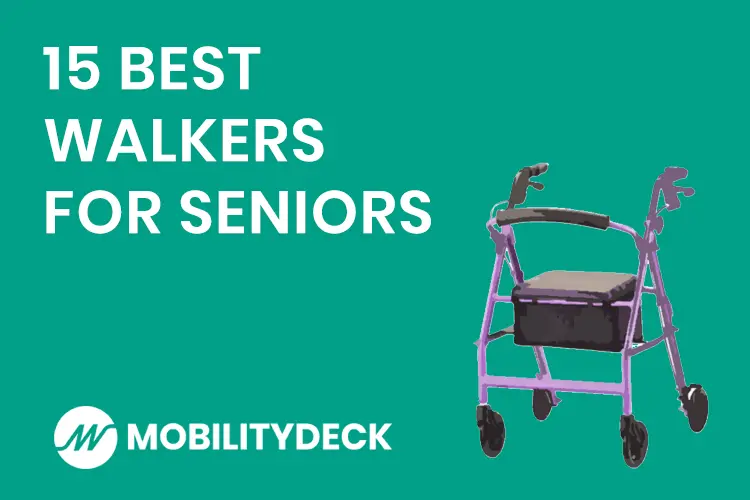
For senior citizens and elderly individuals grappling with mobility, balance issues, and the physical complications that frequently accompany aging, walkers and rollators offer a straightforward and dependable pathway to maintaining an active lifestyle. These mobility devices have become essential tools for preserving independence, yet selecting the appropriate model requires careful consideration of individual needs, physical limitations, and lifestyle requirements. Medical professionals and physiotherapists consistently advise that users with specific medical complications should consult a healthcare provider before making a purchase. However, for the broader public, evaluating the diverse landscape of available equipment is vital to identifying the ideal match.
Industry experts and reviewers have spent considerable time examining dozens of walkers designed for seniors to determine the top options currently available on the market. By analyzing an array of essential features, design styles, and trusted brands, consumer advocates aim to simplify the selection process. Whether navigating tight indoor corridors or seeking a durable companion for outdoor strolls, finding a device that balances personal requirements with budget constraints remains paramount.
When Should an Elderly Person Get a Walker?
Determining the precise moment an elderly person should transition to using a walker is rarely tied to a specific chronological age. Instead, the decision depends entirely on personal circumstances and physical progression. Generally speaking, as individuals age, a time arrives when placing full body weight on one or both legs becomes difficult or painful. When this threshold is crossed, introducing a walker or a similar mobility aid is strongly recommended by medical practitioners.
Furthermore, walkers play a crucial and widely recognized role during post-surgical recovery. Patients recovering from knee replacement surgery or hip replacement procedures frequently find themselves relying on mobility aids to regain their footing safely. Physicians and physical therapists routinely recommend walkers and rollators during these rehabilitation windows, as these devices provide vital support while fostering a sense of independence. Exploring and researching these options prior to undergoing scheduled surgeries can significantly reduce post-operative stress, ensuring that patients are well-prepared the moment they return home.
Beyond surgical recovery, individuals dealing with persistent balance issues or general mobility friction can rely on walkers as a practical and cost-effective solution. Whether assistance is required strictly indoors to navigate living spaces safely or outdoors to manage uneven sidewalks, these mobility aids successfully bridge the gap between dependency and freedom.
Important Features to Consider When Choosing a Walker or Rollator
The most effective walker is ultimately the one that complements the user’s physical stature while addressing their unique daily challenges. With a vast array of options populating the marketplace, understanding the critical features to look for can prevent costly mistakes.
Weight and portability represent primary considerations. While walkers are substantially lighter than wheelchairs, significant weight variances still exist among models. For seniors, lightweight configurations are generally preferred because they actively support mobility rather than hindering it. A heavy walker quickly becomes cumbersome, particularly if the user intends to travel or frequently load the device into a vehicle. Lightweight alternatives are typically much easier to fold, carry, and store.
Walker width is another vital factor, particularly for indoor use. The ideal width allows the user to pass through every doorway in their home without friction or awkward maneuvering. While this metric matters less for individuals who plan to use their device exclusively outdoors, seat dimensions and overall frame size still dictate comfort. Similarly, seat height is crucial for four-wheeled rollator models, which almost universally feature built-in cushioned seating. Buyers must cross-reference product dimensions with their own height to ensure proper alignment.
Braking systems differentiate standard walkers from wheeled rollators. While standard models require no braking mechanisms, rollators rely on them heavily. Most rollators utilize loop brakes that require the user to squeeze a lever. Although standard, this design can pose challenges for individuals suffering from hand weakness or diminished dexterity, as loop brakes can sometimes feel stiff. To accommodate users with reduced hand strength, certain models offer push-down brakes that demand very little force to operate.
Weight capacity must also be verified prior to purchase. Most standard walkers and rollators support up to 300 pounds, accommodating a large portion of seniors. However, individuals exceeding this limit require specialized bariatric models, such as heavy-duty rollators capable of supporting up to 500 pounds. Using an inadequately rated device introduces severe safety risks.
Foldability and price round out the primary evaluation criteria. Compact, easily foldable models benefit frequent travelers and those with limited storage space. Meanwhile, pricing generally ranges from $80 to $200 for standard, high-quality devices. Spending above this range often yields diminishing returns unless specialized medical requirements dictate otherwise. Seniors whose healthcare providers deem a walker a medical necessity may also find their equipment partially or fully covered by Medicare Part B.
Evaluating Top-Rated Models on the Market
Among the top-rated devices evaluated by reviewers, several distinct models have emerged as leaders in specific categories. The Helavo Bariatric Walker with Large Seat holds a prominent position as the best overall walker for seniors, earning high marks for stability and user comfort. For those prioritizing portability, the Hugo Mobility Explore Side-Fold Rollator Walker stands out as the premier lightweight choice, tipping the scales at just 15.4 pounds while offering effortless side-folding capabilities and robust 8-inch wheels.
When narrow navigation is required, the Planetwalk Premium 3 Wheel Rollator excels by providing a slim profile that glides through tight indoor spaces. For budget-conscious buyers, the Medline Folding Rollator delivers essential features, including a built-in seat and 6-inch wheels, at an accessible price point. Finally, for users who prefer a traditional approach without wheels, the OasisSpace Compact Folding Walker serves as an exceptional standard option, offering reliable balance and stability.
Further expanding the market choices, the NOVA Vibe 6 Rollator Walker has garnered widespread acclaim as a balanced top pick, combining a comfortable padded seat, a storage pouch, and feather-touch brakes backed by a strong warranty framework. For outdoor enthusiasts, models like the Medline Premium Empower Rollator offer specialized additions such as antimicrobial memory foam seats and integrated cup holders, while heavy-duty alternatives like the Medline Heavy Duty Rollator Walker cater safely to larger users with steel-reinforced frames capable of handling significant weight loads.
Ultimately, whether an individual requires a standard zimmer frame for basic indoor balance or an advanced euro-style rollator for active outdoor travel, the modern mobility market provides a wide spectrum of reliable choices designed to preserve dignity, safety, and independence in everyday life.