For many first-time cruisers, booking a dream vacation at sea comes with an unexpected financial surprise long before they ever pack their bags or step foot on the gangway. Among the most common points of confusion is cruise ship tipping culture, a landscape defined by daily service fees, hidden or bundled charges, and a shifting industry standard that varies wildly from one cruise line to the next. While major commercial operators tack automatic service charges onto passenger bills every single day, an increasing number of luxury and all-inclusive operators are choosing to fold gratuities directly into their base fares, fundamentally altering how travelers budget for a voyage.
The extra cost of automatic gratuity charges can easily catch newcomers off guard. On some prominent mainstream cruise lines, these daily service fees can run as high as $25 per person. Unlike typical resort or service fees encountered at land-based hotels—which are usually billed on a per-room basis—automatic cruise ship gratuities are assessed per person, per day.
For a family of four staying in a single cabin on a major line like Royal Caribbean, it is entirely common to see more than $70 a day in service fees added directly to their onboard accounts. Over the course of a typical seven-night cruise, that translates to approximately $500 in mandatory fees alone. That substantial sum is calculated before factoring in any additional cash tips passengers might wish to hand out to their room service providers, favorite bartenders, or the automatic gratuities routinely tacked onto bar tabs, specialty restaurant bills, and spa treatments.
Despite these steep additions across the mass-market sector, not all cruise operators maintain such high fees, and a notable segment of the industry does not charge them at all. Furthermore, in many cases, these service charges remain adjustable for passengers who encounter specific service issues during their travels. Understanding the broader picture of how cruise lines handle labor costs and tipping is essential for travelers hoping to budget appropriately and avoid unwelcome shocks when their final onboard bill arrives.
Examining the big picture of cruise ship tipping reveals a clear division within the global travel market. Most of the largest mainstream cruise lines automatically append some form of service or gratuity fee to passenger accounts. This practice is standard across industry giants like Royal Caribbean and Carnival Cruise Line, as well as the next three largest operators: MSC Cruises, Norwegian Cruise Line, and Princess Cruises.
At the same time, the total number of lines utilizing separate service fees has gradually decreased over the years. Many smaller and higher-end cruise operators have opted to eliminate automatic gratuity fees entirely, instead rolling tips and service compensation directly into the base fare paid at the time of booking. Oceania Cruises, for instance, eliminated its separate automatic gratuity fee, ensuring that gratuities paid to shipboard staff are part of the upfront ticket price.
Other prominent lines that now fully cover gratuities within their standard fares include Azamara, Ponant Explorations, Explora Journeys, Regent Seven Seas Cruises, Scenic Luxury Cruises and Tours, Seabourn, SeaDream Yacht Club, Silversea Cruises, and Virgin Voyages. For lines that continue to itemize these fees, automatic service charges are routinely presented as a convenient alternative to the cash-tipping customs that once dominated the maritime industry.
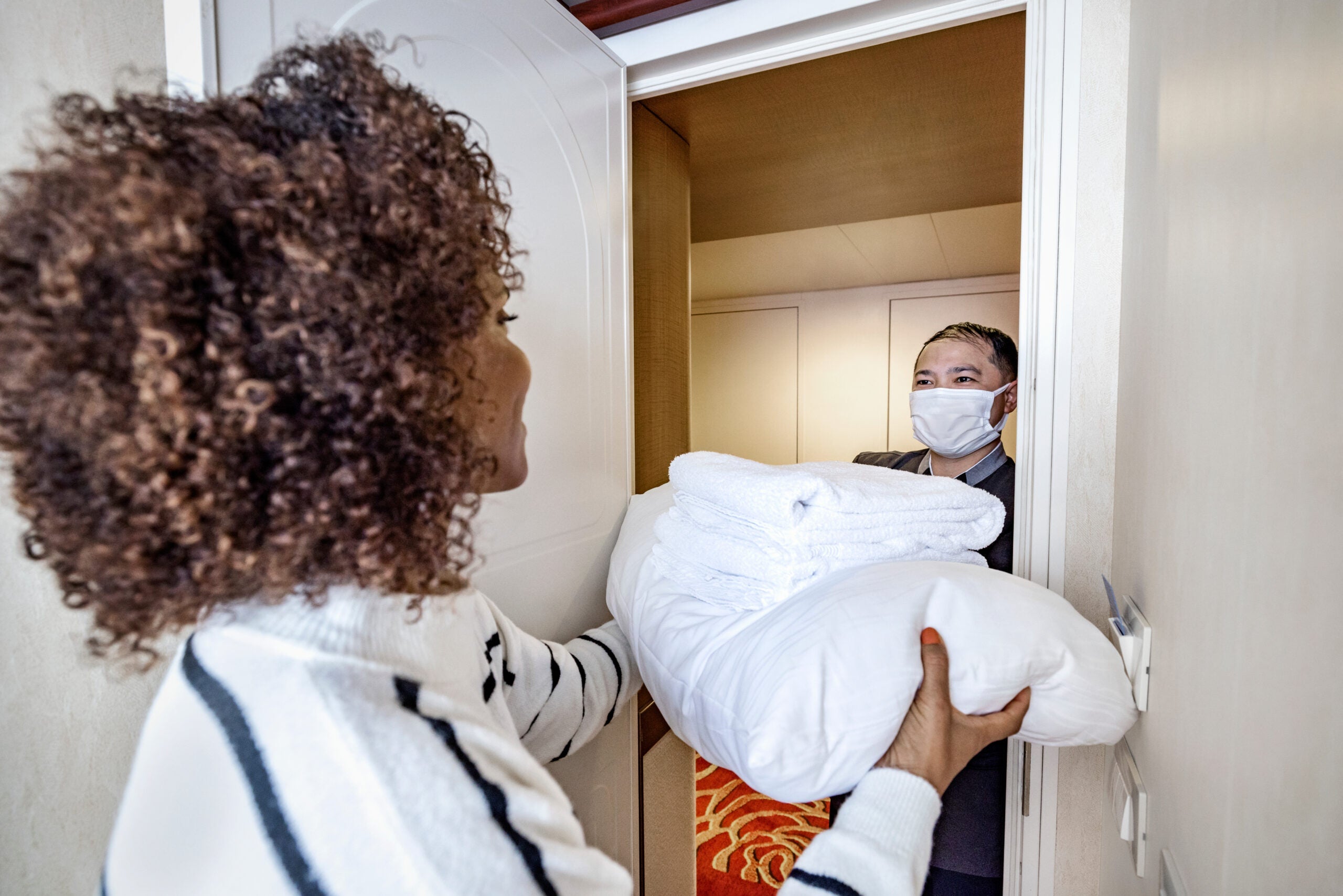
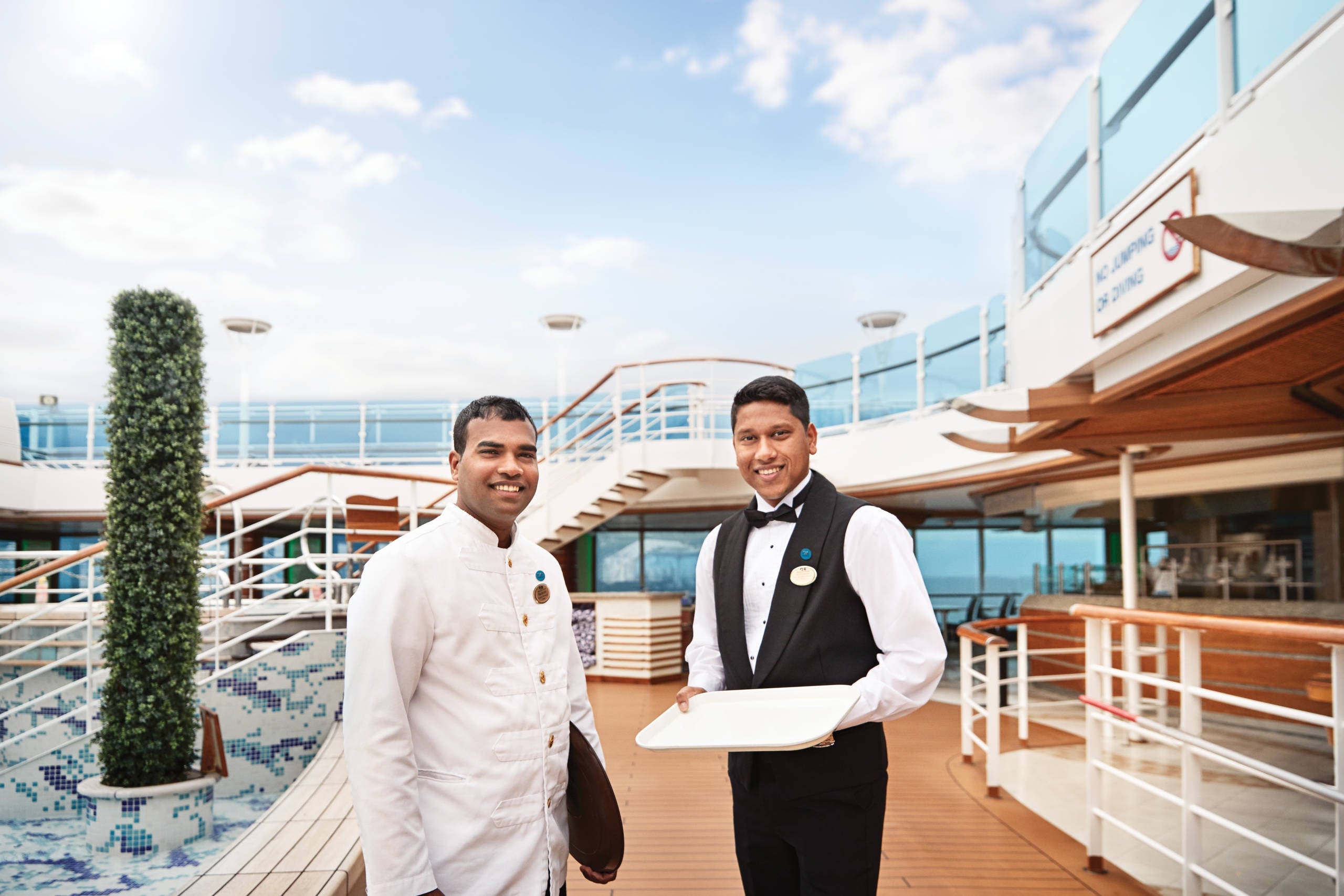
A persistent misconception among travelers is that cruise gratuities go exclusively to the visible front-line workers, such as the cabin steward who makes up the stateroom each morning or the dining room waiter who serves dinner every evening. In practice, the vast majority of the money collected through automatic daily service charges is pooled and distributed broadly among a wide range of crew members. Depending on the specific policies of the cruise line, this shared pool typically supports cabin attendants, dining room servers, assistant waiters, housekeeping personnel, and numerous behind-the-scenes workers whose labor is vital to keeping the vessel operating smoothly. Supporters of this system argue that it offers a more equitable distribution of compensation compared to traditional cash tipping, which historically favored certain visible roles over others.
Conversely, critics often view these automatic fees as a subtle tactic employed by cruise lines to keep their advertised base fares artificially low. Under this perspective, segregating a substantial portion of onboard labor costs into a separate daily line item allows cruise operators to market more attractive headline prices. Because distribution formulas vary significantly from one company to another, cruise operators generally do not disclose the exact mathematical formulas used to disburse gratuity pools.
When it comes to the mechanics of how these service charges are levied, passengers usually have multiple options. Many lines allow travelers to prepay their service charges prior to sailing, often at the exact time they settle their initial cruise fare. The primary advantage of paying these fees in advance is rate protection; if a cruise line increases its daily service rate between the time of booking and the actual departure date, pre-paying passengers are shielded from the price hike. Additionally, pre-payment appeals to travelers focused on strict budgeting, as it removes a major variable expense from their final onboard statement.
For travelers who prefer to handle these costs while on board, the process is entirely automated. Gratuities simply appear on the stateroom account statement at regular intervals without requiring any active intervention from the passenger. Once these automatic service charges are in place, travelers are generally not expected to leave supplemental tips for their room attendants or main dining room waiters, as the service charge is designed to cover those core interactions. Similarly, guests sailing aboard all-inclusive or luxury ships where gratuities are explicitly included in the fare are not expected to distribute additional cash gifts, as the line has already compensated the staff on their behalf.
Even so, some passengers choose to leave modest extra tokens of appreciation for crew members who go above and beyond standard expectations. Others opt to tip room service personnel or favorite bartenders early in the voyage in the hope of securing attentive service, or at the end of the trip to reward a memorable vacation experience. Because additional tipping on top of automatic service charges is entirely optional, the decision rests solely with the individual traveler.
Passengers who wish to contest or modify their automatic service charges usually have the ability to do so by visiting the guest relations desk while on board. Crew members managing these desks can adjust charges upward or downward, though requesting a reduction typically prompts polite inquiries regarding the reasons behind the adjustment, as management seeks to identify any service failures that may have occurred during the voyage. While some operators make these adjustments straightforward, others implement stricter policies regarding the reduction or removal of service fees, particularly for guests who chose to prepay their gratuities before boarding. Because these funds support a wide array of unseen staff, experienced travelers generally view gratuity adjustments as a remedy reserved for genuine service deficiencies rather than a standard method for cutting vacation expenses.
To capture travelers who dislike managing separate tipping fees but cannot afford traditional all-inclusive luxury lines, many mainstream operators now feature promotional booking incentives that bundle gratuities into broader packages. Over the past few years, several major cruise lines have introduced tiered pricing structures allowing customers to combine daily service charges, internet access packages, and beverage plans into a single upfront price, often at a discounted rate compared to purchasing each component separately.

Princess Cruises, for instance, offers a popular bundled booking option known as the Princess Plus plan. This package covers prepaid crew appreciation fees, a single-device Wi-Fi plan, and a basic beverage package for a unified daily rate, with slightly adjusted pricing for newer vessels in the fleet. An upgraded option, the Princess Premier bundle, incorporates gratuities alongside additional perks such as unlimited specialty dining for a higher daily rate booked in advance. Cruise operators emphasize that offering these promotional bundles does not diminish the compensation received by the crew; the lines continue to distribute standard gratuity equivalents to the staff on behalf of the passengers.
Beyond daily service charges, travelers must also account for additional automatic tipping practices integrated into specific onboard purchases. Many cruise lines automatically append a service gratuity ranging from 15% to 20% to the cost of extra-fee drinks, specialty restaurant meals, and spa treatments. A common pitfall for unsuspecting cruisers is encountering an additional signature line on receipts where a tip has already been automatically added, which can easily lead to accidental double-tipping. Furthermore, guests who purchase beverage or dining packages are often required to pay automatic gratuities calculated against the retail value of those packages, even if the packages themselves were acquired as "free" promotional booking perks.
Cash tipping remains relevant in specific contexts outside of the ship’s main interior operations. Standard practice dictates tipping porters who handle baggage during embarkation, typically around $2 per bag. Similarly, local tour guides and drivers leading excursions in ports of call generally expect modest cash tips, ranging from $5 to $10 for half-day excursions, up to $20 for full-day tours, and smaller amounts for drivers. Aboard the ship itself, small denomination bills such as ones, fives, and tens remain useful for tipping piano players to request favorite songs or for rewarding individual staff members who deliver exceptional personal care throughout the journey.