NEW DELHI — As the Indian traveller becomes increasingly discerning, globally mobile, and financially empowered, leading figures from the aviation, hospitality, and diplomatic sectors have issued a collective call for stronger connectivity, destination-led tourism, and infrastructure capable of matching national ambitions.
India’s tourism landscape is undeniably entering a transformative new chapter. Domestic travel has solidified its position as a powerful, resilient engine of economic growth, while a growing segment of Indian travellers ventures abroad in unprecedented numbers. Simultaneously, international visitors are looking far beyond conventional sightseeing, demanding immersive, authentic, and modern experiences. However, as the demands of the modern tourist evolve at a rapid pace, a critical question looms over the sector: is India’s broader tourism ecosystem—spanning airports, airlines, hotels, destinations, and public infrastructure—keeping pace with this monumental shift?
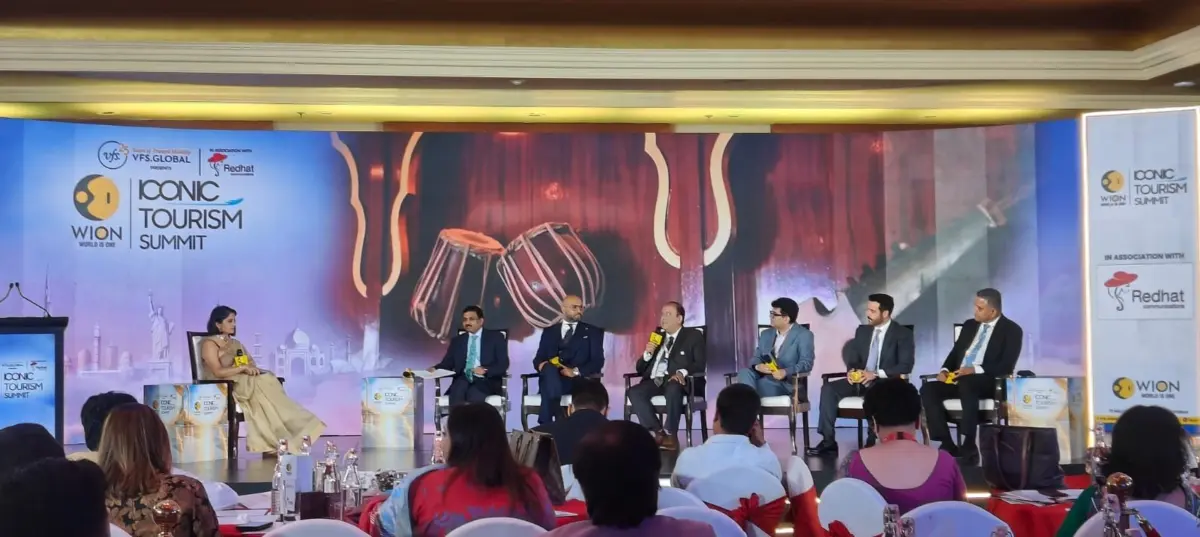
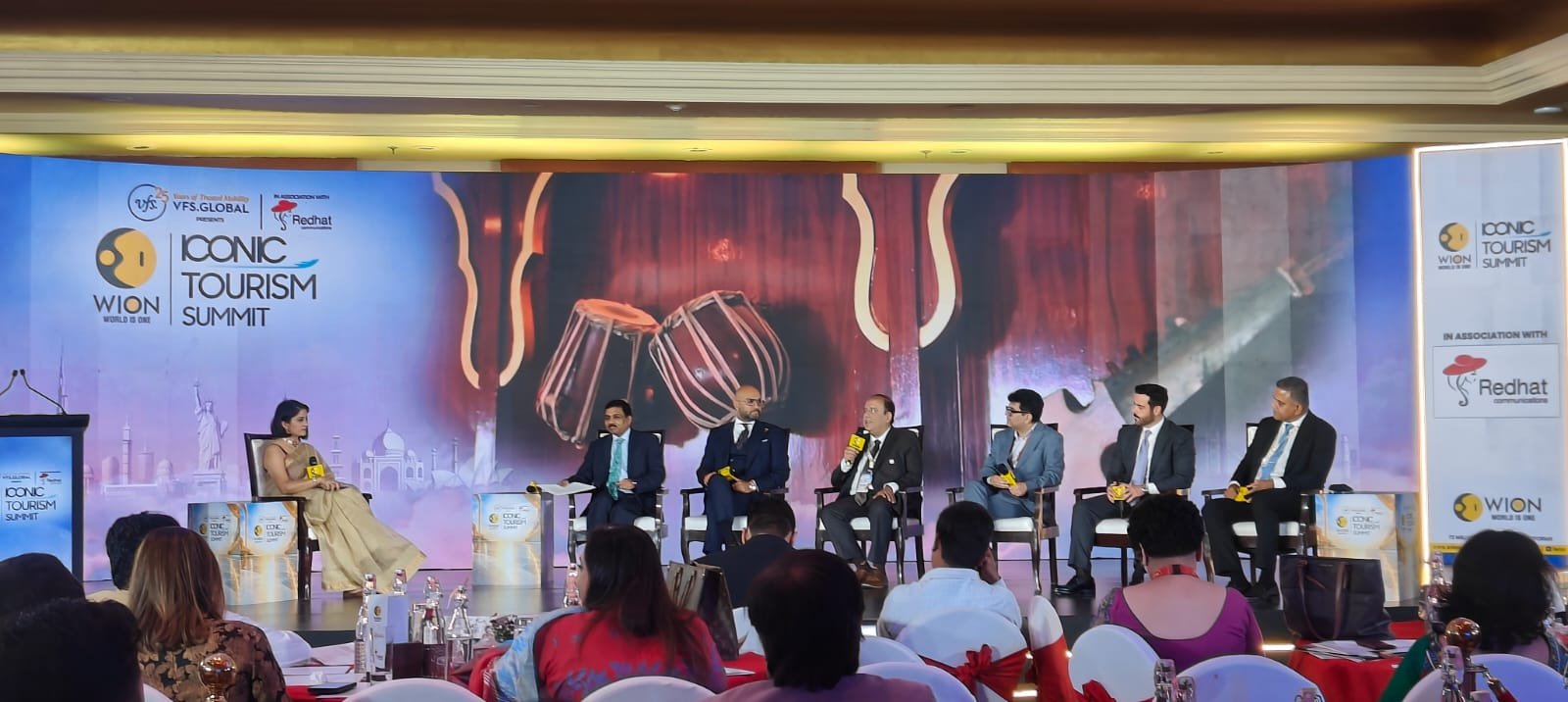
That central question drove high-level discussions at the WION Iconic Tourism Summit in New Delhi on September 23. Industry experts, corporate leaders, and diplomatic voices gathered for a prominent panel discussion titled "The Business of Travel: Aviation, Hospitality & India’s Tourism Infra Story."
Moderated by Shreya Upadhyay, the panel brought together a powerhouse of expertise: Vikram Lalvani, Managing Director and CEO of Sterling Holiday Resorts; Saurabh Tiwari, Vice President for the Middle East, Maldives, and Sri Lanka at IHCL; Muktesh Pardeshi, former Secretary to the Government of India and former Ambassador/High Commissioner to Mexico, New Zealand, and Türkiye; Manish Puri, Head of Global Sales for Air India and Air India Express; Ahmed Hamed Sharbak, Regional Manager for APAC at Visit Qatar; and Kamal Munasinghe, Senior Vice President of Colombo Hotels at Cinnamon Hotels & Resorts and General Manager of Cinnamon Life at City of Dreams.
Vikram Lalvani: Tourism Must Become Destination-Led
Opening the discussion on the evolution of domestic and leisure travel, Vikram Lalvani asserted that the next chapter of Indian tourism will be driven less by simply adding new coordinates to the map and more by engineering compelling, multi-faceted reasons for travellers to visit them.
"The way the industry is moving and should move is more destination-led," Lalvani said, emphasizing that the intrinsic motivation to travel matters just as much as the geographic coordinates of the destination itself.
Addressing the shifting dynamics of family travel, where different generations often seek divergent holiday experiences, Lalvani pointed out that the true commercial opportunity lies in developing destinations and integrated circuits capable of seamlessly combining multiple offerings—such as hill stations, wildlife sanctuaries, cultural landmarks, local gastronomy, and leisure pursuits—into a single, cohesive holiday package.
Furthermore, Lalvani underscored the paramount importance of looking at the sector through the vast lens of India’s massive domestic market. "The core issue here is domestic tourism," he stated, reminding the audience that the post-COVID recovery phase vividly demonstrated the immense backbone provided by domestic travellers. While international tourism serves as a vital "force multiplier" for the economy, India’s long-term tourism narrative cannot rely solely on foreign arrivals.
Lalvani also advocated for a unified national narrative that positions India as a year-round, 365-day destination. Rather than concentrating visitor traffic around a narrow window of peak seasons or traditional tourist magnets, the broader industry must actively promote and communicate the diverse experiences available across varying regions and seasons, encouraging travellers to explore deeper into the country.
Saurabh Tiwari: The Indian Traveller is Changing the Global Hospitality Equation
Representing the hospitality sector, Saurabh Tiwari focused on how the explosive growth of outbound Indian travel is fundamentally reshaping the operational and strategic priorities of global hospitality companies.
"The global hotels and the hospitality industry in general don’t have a choice," Tiwari remarked, pointing to the expanding purchasing power and increasingly sophisticated expectations displayed by Indian guests abroad.
Today’s Indian traveller is no longer satisfied with basic accommodation. Brand reputation, service consistency, culinary excellence, modern amenities, and immersive experiences play critical roles in driving booking decisions. Tiwari noted that contemporary guests are exceptionally well-informed, digitally connected, and deeply conscious of design aesthetics, culinary authenticity, and sustainable practices.
"They want the best experiences in terms of culinary," Tiwari observed, explaining that signature restaurants, celebrity chef partnerships, and distinct gastronomic offerings can heavily influence hotel selection. Additionally, sustainability has climbed to the top of corporate agendas, with guests frequently inquiring about hotel water management, food waste policies, and resource conservation. Visual appeal, driven largely by the influence of social media and digital platforms, has also become a baseline requirement for modern properties.
Yet, Tiwari cautioned that technological advancements must never overshadow the foundational pillar of the hospitality industry: human interaction. "AI is in the neighbourhood; the human touch and human warmth are the most important thing," he noted, emphasizing that technology should be deployed to streamline and enhance the guest journey rather than replace the irreplaceable warmth of human connection. This reality places a heavy premium on continuous investment in workforce training, ensuring employees are equipped to cater to a clientele whose standards continue to rise.
Amb Muktesh Pardeshi: Tourism as an Instrument of Economic Diplomacy
Bringing a diplomatic perspective to the stage, Ambassador Muktesh Pardeshi framed tourism not merely as a commercial enterprise, but as an indispensable component of India’s broader economic diplomacy and soft power strategy.
"Tourism is an important component of economic diplomacy," Pardeshi stated, defining it as a powerful catalyst for grassroots people-to-people contact and international goodwill.
Drawing upon his extensive diplomatic career representing India in Mexico, New Zealand, and Türkiye, Pardeshi offered an optimistic yet candid assessment of India’s latent tourism capabilities. He noted that the country possesses all the foundational ingredients required of a global superpower in tourism—ecologically diverse landscapes, deep-rooted heritage, vibrant cultural traditions, rich wildlife, and the unique ability to offer varied experiences throughout the calendar year.
However, he cautioned that fundamental challenges regarding infrastructure quality and service delivery must be systematically addressed. Pardeshi called for deep, institutionalized cooperation between government bodies, private industry enterprises, and civil society, stressing that the impending growth phase cannot be successfully managed by any single sector acting in isolation.
Reflecting on his frontline experience organizing the G20 Summit and more than 200 associated meetings across 60 distinct Indian locations, Pardeshi highlighted how mega-international events serve as powerful accelerators for local infrastructure development while introducing lesser-known domestic destinations to a global audience.
At the same time, he emphasized that infrastructure extends far beyond physical concrete such as roads, highways, and airport terminals. Cleanliness, public hygiene, urban mobility, linguistic proficiency, and frontline hospitality training are equally crucial to shaping a visitor’s perception. Recalling an incident involving a foreign ambassador staying at a prominent Delhi hotel where reception staff struggled to communicate in English, Pardeshi illustrated how minor service lapses can disproportionately impact the national image.
"Unless industry and government work together, we cannot move to the next stage," he concluded.
Manish Puri: Unlocking India’s Potential as a Global Aviation Hub
Focusing on the arteries of modern travel, Manish Puri detailed the massive capacity expansion currently underway across Indian airlines and airport networks, positioning aviation as the central catalyst for tourism growth.
Puri characterized India’s current aviation trajectory as a classic "chicken-and-egg" scenario: robust air connectivity stimulates tourism demand, while surging passenger volumes justify further investments in airline fleets and airport expansion. He expressed strong confidence that India is exceptionally well-positioned to cement its status as a premier global aviation hub over the next five to ten years, backed by aggressive fleet acquisitions by domestic carriers and major airport modernization projects.
Nevertheless, Puri pointed out that seamless transit infrastructure and an elevated passenger experience remain critical prerequisites if India intends to successfully compete with established international transit hubs in the Middle East, Southeast Asia, and Europe. The core strategic objective, he suggested, should be to make the transit process so efficient and pleasant that international travellers actively choose Indian hubs for their connections rather than merely viewing them as endpoints.
Under Puri’s leadership, Air India and Air India Express have integrated their sales organizations, establishing a unified sales function that bridges domestic and international markets. He also noted a noticeable behavioural shift among contemporary travellers, who are increasingly booking trips closer to departure dates—a trend often accelerated by shifting geopolitical conditions or evolving visa frameworks. This volatility demands a highly agile, responsive market structure where streamlined connectivity and frictionless entry policies directly dictate demand flows.
Ahmed Hamed Sharbak: Deepening Travel Flows Between India and Qatar
Looking at cross-border bilateral partnerships, Ahmed Hamed Sharbak highlighted the significant potential for strengthening tourism and travel corridors between India and Qatar.
Sharbak outlined strategic opportunities spanning family leisure holidays, corporate business travel, and multi-destination stopovers, emphasizing the importance of giving Indian travellers compelling reasons to explore Qatar as an independent destination rather than treating it solely as a transit point.
Qatar’s national tourism strategy relies heavily on major international events and sports tourism. By leveraging a robust calendar of global events alongside world-class aviation connectivity, the country aims to attract visitors for both short-duration stopovers and extended vacations. Sharbak noted that 48-hour and 72-hour stopover initiatives are particularly appealing to travellers journeying between India and Western destinations such as Europe, the UK, or North America, allowing them to add a rich secondary experience to their journey.
Complementing this connectivity is a progressive visa policy. Visit Qatar’s current guidelines permit citizens of more than 100 countries to enter via visa-free arrangements or visa-on-arrival options, subject to standard regulatory conditions. For Sharbak, the ultimate goal is to convert raw aviation connectivity into memorable family experiences.
Kamal Munasinghe: The Imperative for Regional Tourism in South Asia
Bringing the discussion to a broader sub-continental scale, Kamal Munasinghe argued that the future of South Asian tourism lies in regional collaboration rather than isolationist competition.
For Sri Lanka and its neighbors, the next logical commercial opportunity involves moving away from competing directly with established global hubs like Dubai or the Maldives, and instead developing integrated regional tourism circuits that allow travellers to combine multiple countries and diverse experiences into a single itinerary.
"Regional tourism is very, very important," Munasinghe emphasized. He illustrated the immense potential of combining India’s vast cultural trails and wildlife sanctuaries with Colombo’s modern urban luxury and entertainment offerings, eventually extending travel paths into broader South Asian destinations.
Robust connectivity remains the bedrock of this vision. Munasinghe pointed to expanding air corridors between India and Sri Lanka, noting that balanced, two-way passenger traffic is essential for maintaining commercial viability. However, he echoed earlier sentiments that connectivity transcends physical flights; streamlined visa frameworks, interoperable digital payment systems, cultural synergy, aligned food preferences, and cross-border human resource exchanges are equally vital for functional tourism corridors.
Highlighting corporate initiatives at Cinnamon Hotels & Resorts, Munasinghe pointed to ongoing staff exchange and cross-market training programs designed to foster regional integration. He also spotlighted Cinnamon Life at City of Dreams as a flagship development cementing Colombo’s rising status as a premier destination for luxury hospitality, corporate business, and entertainment.
Munasinghe’s overarching message resonated with the broader theme of the summit: South Asia must collectively market itself as an interconnected, multi-faceted regional destination rather than a collection of fragmented national stops.