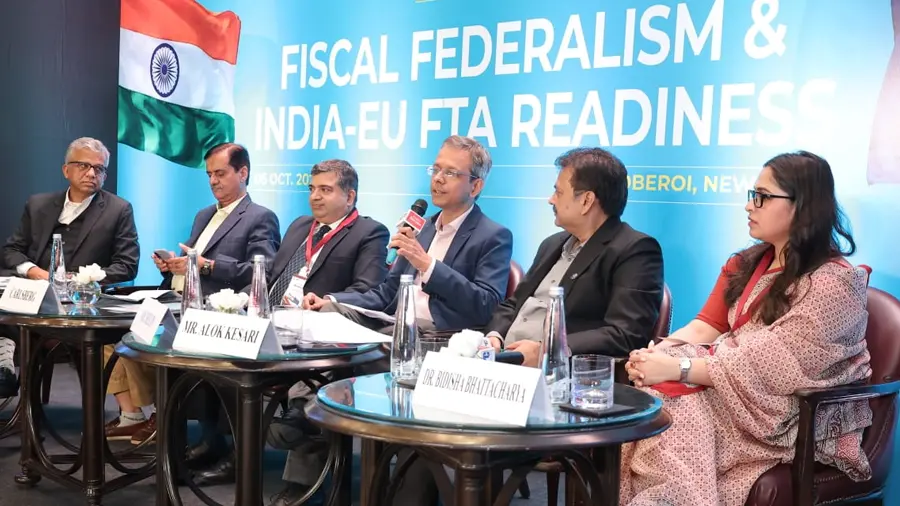
As India and the European Union move closer to cementing a comprehensive free trade agreement, industry leaders are shifting their focus from broad national-level trade projections to practical implementation on the ground. At a high-level policy roundtable held in New Delhi, corporate executives and trade experts argued that the true measure of the India–EU Free Trade Agreement (FTA) will not be decided solely in negotiating rooms, but rather in the digital networks, regulatory frameworks, infrastructure systems, and workforce skills cultivated across India’s various states.
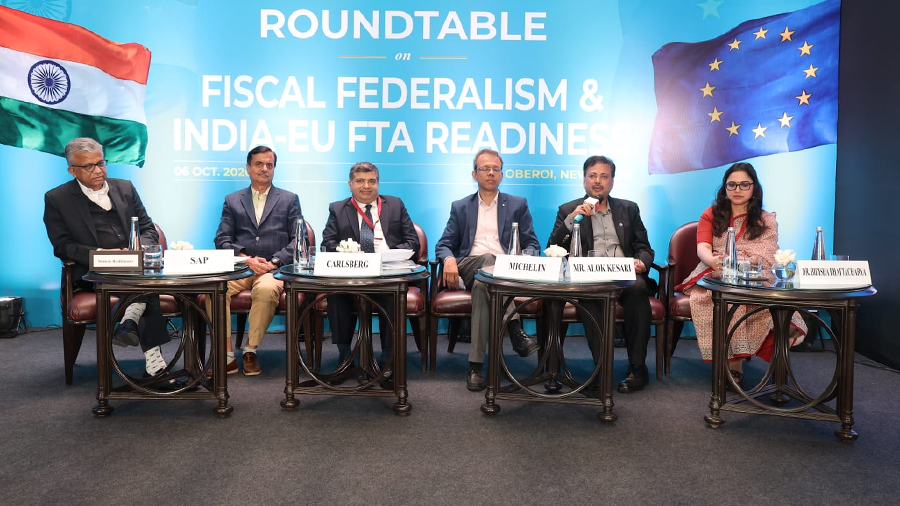
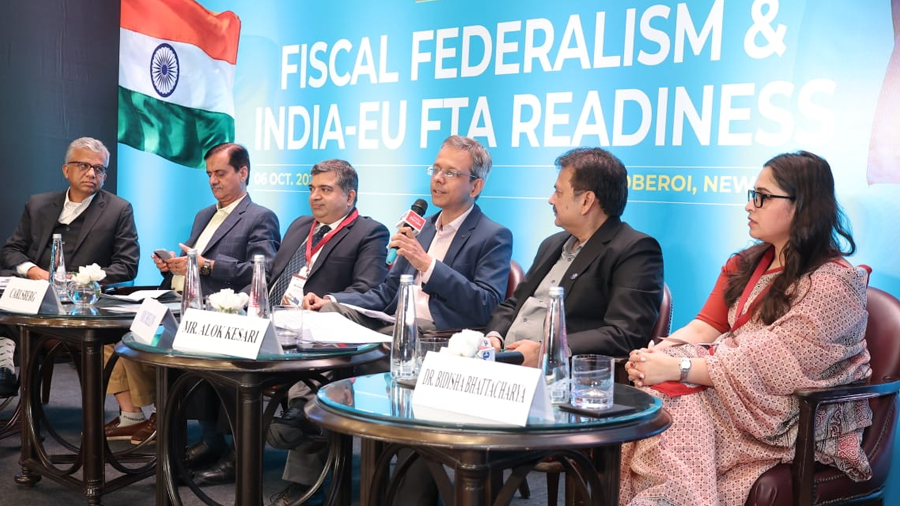
The National Policy Roundtable on Fiscal Federalism and India–EU FTA Readiness was organised on October 6, 2026, by the Services Export Promotion Council (SEPC) in collaboration with the Hanns Seidel Foundation India, the Federation of European Business in India (FEBI), and institutional partners. Titled “From Market Access to Market Presence: What Businesses Need from States to Make the India–EU Implementation Effective,” the gathering brought together key industry perspectives from the technology, beverage, automotive, and medical technology sectors to evaluate the readiness of India’s sub-national economies.
Moderated by Alok Kesari, Director of Policy Advocacy and Trade Facilitation at FEBI, the dialogue moved beyond the traditional enthusiasm surrounding tariff reductions to address a more complex, operational question: What must Indian states do to ensure that local businesses can genuinely utilize the market opportunities unlocked by the trade pact?
The panel featured prominent industry voices, including Bikas Kr. Singh, Vice-President and India Head of Government Affairs at SAP; Rishi K. Chawla, Vice-President of Corporate Affairs at Carlsberg India; Sidharth Prasad, Director of Public Affairs and CSR at Michelin India; and Vineet Gupta, Head of Government Affairs at Siemens Healthineers. Context-setting remarks for the session were delivered by Dr. Bidisha Bhattacharya, Associate Fellow and Head of Research at the Centre for Economy and Trade, Chintan Research Foundation.
Digitalisation as the Starting Point
Opening the discussion, Alok Kesari directed the panel’s attention toward digitalisation, emphasizing its critical role in enabling small and medium-sized enterprises to successfully integrate into complex European value chains.
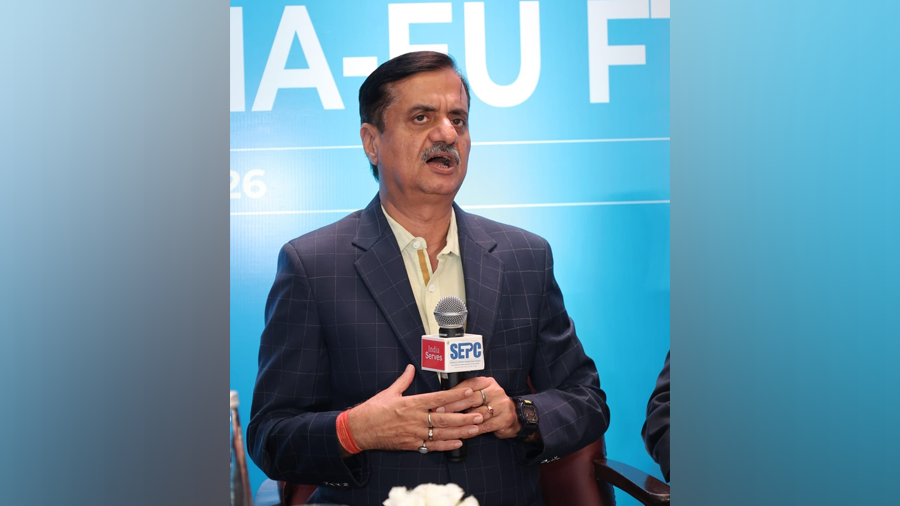
For Bikas Kr. Singh of SAP, digitalisation transcends being a mere tool for trade readiness; it serves as the foundational backbone required to help businesses navigate an increasingly intricate web of regulatory demands. These include stringent mandates concerning data governance, corporate compliance, environmental sustainability, and comprehensive supply-chain integration.
"Digitalisation, in our opinion, is a great starting point," Singh noted, cautioning against viewing the India–EU FTA purely through the traditional metrics of tariff cuts and bilateral trade volumes. He emphasized that deeper economic integration inevitably triggers profound investments, alongside much tighter manufacturing and services linkages between the two economic powerhouses. "The FTA, especially the India–EU FTA, is not just about trade," he added.
Singh highlighted the expanding universe of European regulatory requirements that Indian exporters will inevitably confront. These include rigorous technical standards, product safety protocols, conformity assessments, sanitary and phytosanitary measures, comprehensive sustainability reporting, the EU deforestation regulation, eco-design requirements, packaging and packaging-waste directives, and digital product passports.
While multinational corporations possess the internal resources to build sophisticated compliance infrastructure, smaller enterprises face a significantly steeper burden. According to Singh, digital systems can bridge this gap by streamlining data management. European companies operating within India, familiar with both commercial environments, are uniquely positioned to help local partners decode these standards. However, the ultimate challenge lies in achieving interoperability—ensuring that the digital platforms utilized by suppliers, manufacturers, buyers, and regulatory authorities can communicate seamlessly.
The Business Case for Predictability
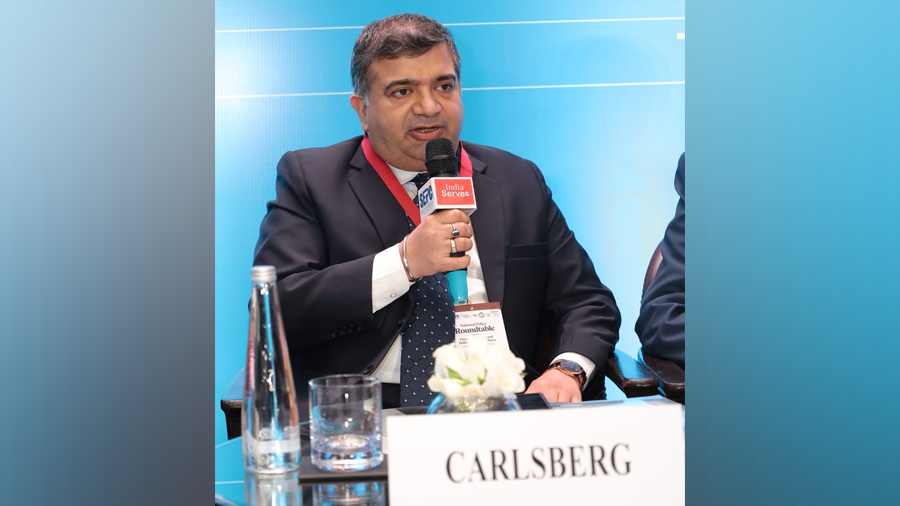
Shifting the conversation toward regulatory consistency, Kesari engaged Rishi K. Chawla of Carlsberg India to examine how sub-national policy variations impact multi-state operations. Given that the alcoholic-beverage industry is governed heavily by state-level frameworks—with licensing, taxation, distribution routes, and permit systems varying sharply across jurisdictions—Chawla brought a unique perspective on the complexities of India’s federal structure.
Beyond sector-specific hurdles, Chawla underscored that regulatory predictability remains the single most critical determinant of long-term capital allocation. "Investors see ease of doing business as the first priority; predictability comes first," he stated.
Global investors look past short-term incentives, seeking assurance that they can secure administrative approvals within promised timelines, tap into reliable physical infrastructure, recruit skilled labor, build local supplier networks, and maintain operational stability across a decadal horizon. "Predictability of the regulations, or transparency of the regulations, is the number one ask," Chawla emphasized.
He also challenged the common assumption that European investments are confined strictly to a handful of traditional industrial hubs like Maharashtra, Tamil Nadu, Gujarat, Karnataka, Andhra Pradesh, and Telangana. Noting that an increasing number of states are actively courting European enterprises, Chawla suggested that the primary opportunity lies in widening the geographical footprint of foreign direct investment rather than concentrating it exclusively in established centers. To achieve this, states must compete on the strength of their governance and operational environment rather than relying solely on fiscal sops.
From Automotive Exports to Global Supply Chains
For Sidharth Prasad of Michelin India, the prospective trade agreement represents a transformative catalyst for the broader automotive ecosystem, spanning component manufacturers, chemical producers, plastics suppliers, and ancillary industries. He argued that the resulting gains will extend far beyond European firms, empowering Indian manufacturers and suppliers to deepen their integration into international supply networks.
India’s expanding domestic consumer base, improving transport logistics, and rapidly modernizing manufacturing capabilities provide a strong foundation for this growth. Well-maintained expressways, robust industrial parks, and a swelling pool of technical talent are gradually positioning the country as an exceptionally competitive export hub. However, Prasad cautioned that the strength of the underlying supplier ecosystem is paramount. For Michelin’s own operations, maintaining consistent international standards across a vast tier-of-suppliers network is essential.
"All in all, it is a win-win for the EU industry, for Indian industry, for suppliers and, of course, for consumers," Prasad observed.
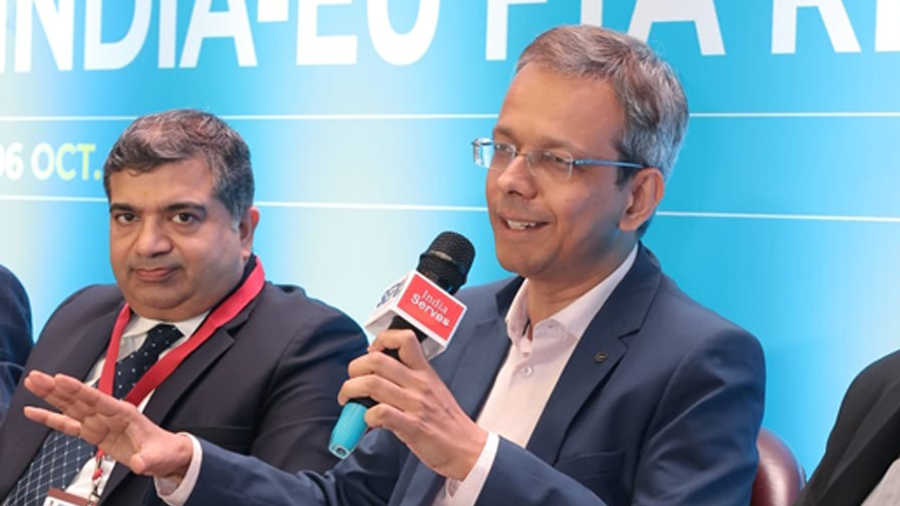
When queried about what makes a specific state attractive to industrial investors, Prasad reiterated that ease of doing business is non-negotiable. He pointed to dedicated investor-facilitation agencies, streamlined single-window clearance mechanisms, well-managed manufacturing zones, secure land availability, strategic incentives, skilled labor pools, and strong local vendor bases as indispensable components. While citing Tamil Nadu and Maharashtra as successful models of institutional infrastructure support, he reinforced the principle that incentives alone cannot sustain long-term industrial growth. "States should compete not only on incentives, but on ecosystem," he asserted.
Medical Technology: From Market Access to Manufacturing
The dialogue subsequently shifted to the healthcare and medical technology sectors through Vineet Gupta, Head of Government Affairs at Siemens Healthineers. Gupta discussed how the trade pact could fundamentally alter the economic landscape of the medical-device industry, shifting India’s role from a massive consumer market into a prominent hub for advanced manufacturing and global exports.
"The FTA can fundamentally change the economics of the Indian medical-device industry," Gupta remarked, pointing to the immense potential of blending India’s manufacturing cost-competitiveness with cutting-edge European engineering and medical technology. Such synergies could encourage European multinational firms to expand their production footprints within India while simultaneously enabling domestic medical-tech companies to climb higher up the global value chain.
However, Gupta reiterated that nominal market access remains largely theoretical unless businesses possess the requisite operational capacity to leverage it. In the medical technology sector, this capacity depends on specialized infrastructure, advanced testing laboratories, specialized logistics, and deep regulatory expertise.
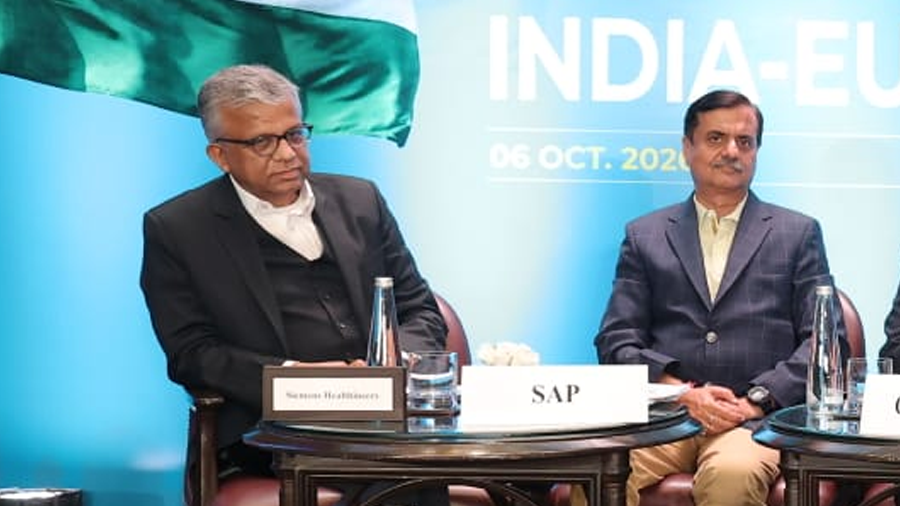
Highlighting the Andhra Pradesh MedTech Zone (AMTZ) as a prime example, Gupta illustrated how specialized industrial ecosystems provide medical-device enterprises with shared testing facilities and common infrastructure, significantly reducing time-to-market. For other state governments aiming to attract high-tech healthcare investments, building collaborative industrial ecosystems yields far greater returns than relying exclusively on financial subsidies.
Testing, Standards, and the MSME Challenge
Throughout the roundtable, the imperative of quality infrastructure emerged as a central recurring theme. As Indian enterprises seek deeper access into European markets, compliance with stringent international standards is non-negotiable. While large corporations can absorb the costs of sophisticated in-house testing and compliance machinery, smaller businesses frequently lack the capital and proximity to certified laboratories.
Bikas Kr. Singh noted that European regulatory mandates often demand vast quantities of verifiable data concerning production inputs, energy consumption, and environmental footprints. For Indian micro, small, and medium enterprises (MSMEs), the absence of accessible digital compliance systems and local testing facilities can easily confine them to the domestic market, barring them from lucrative international supply chains. Consequently, panellists advocated for the expansion of decentralized testing and certification infrastructure at the state level, ensuring that smaller businesses outside major metropolitan centers can readily access compliance verification.
States as Partners and Skill Builders
Panellists also underscored the evolving relationship between private enterprises and state administrations. State authorities must increasingly view corporations not merely as applicants seeking regulatory permits or tax concessions, but as long-term strategic partners contributing to employment generation, capital formation, technology transfer, and regional economic development.
Effective investor-facilitation agencies must possess the institutional clout and administrative capacity to coordinate smoothly across disparate government departments, transforming digital single-window portals into genuinely functional grievance-redressal and facilitation mechanisms.
Furthermore, workforce development was highlighted as an inseparable component of investment readiness. If Indian states intend to attract sophisticated investments in advanced manufacturing, medical engineering, and digital services, they must ensure a steady supply of appropriately trained talent. This necessitates proactive partnerships between industry associations, universities, technical training institutes, and state governments. For specialized domains like medical devices and digitalized manufacturing, workers must possess multidisciplinary competencies spanning engineering, clinical safety, regulatory compliance, and digital systems operation.
As the discussion drew to a close, Alok Kesari reiterated that the true test of the India–EU FTA will be measured by tangible economic outcomes realized across India’s diverse states. The collective consensus of the industry leaders highlighted that while the international trade agreement establishes the necessary legal framework, the responsibility of capturing its full potential rests squarely on sub-national foundations. Through robust digitalisation, regulatory predictability, world-class testing infrastructure, collaborative skill-building, and proactive state-level partnerships, India can successfully translate high-level market access into enduring economic growth as the nation marches toward its long-term developmental milestones.