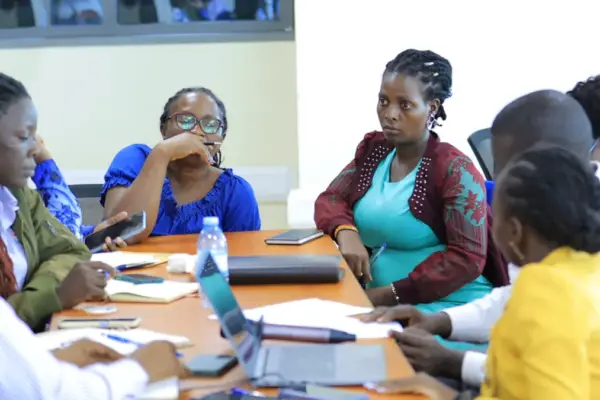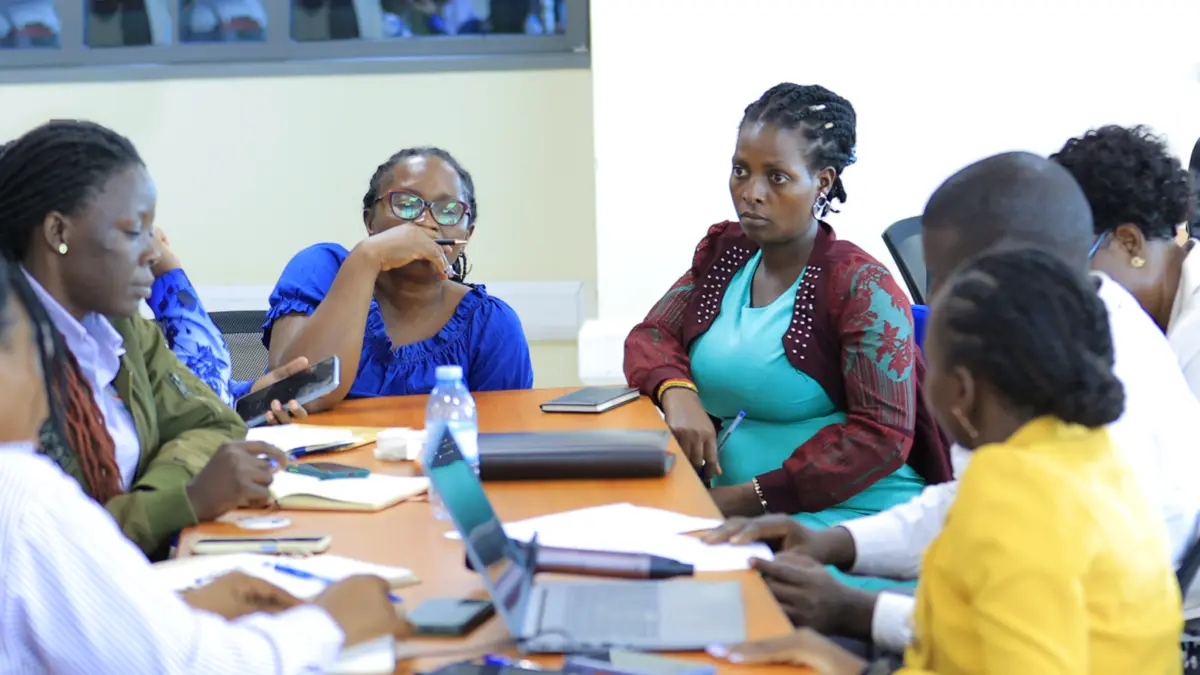
When the Ufahamu Women Group first entered the competitive arena of public contracting within Tanzania’s construction sector, the deck was stacked against them. Women-led businesses in the industry are far too frequently treated as outliers, while the procurement process itself can feel purposely engineered for seasoned insiders who already know how to navigate its labyrinthine rules.
Rather than turning away, the group persisted. They went on to secure and successfully execute 12 public tenders, repaying their loans and reinvesting the proceeds into their long-term growth. The advice they offer to fellow entrepreneurs is hard-won and pragmatic: keep applying, ensure your documentation is consistently prepared, and treat every initial rejection as a valuable lesson.
That brand of resilience is undoubtedly vital, but industry experts emphasize it should never stand as the primary barrier between a capable business and a public contract. Public procurement represents one of the largest commercial markets in any nation, serving as a remarkably powerful lever for governments to bolster small businesses, foster local job creation, and meaningfully improve livelihoods.
Yet, for a multitude of firms—particularly those steered by women, young people, and other underrepresented groups—the public market frequently remains out of reach. Even when procurement opportunities exist and statutory rules are published publicly, they are rarely drafted in plain, accessible language. Often published too late for effective action, these opportunities are routinely hosted on digital systems that require high-end desktop access, making them nearly impossible to navigate for entrepreneurs relying on basic, shared mobile devices in rural districts.
This persistent chasm between what public procurement promises on paper and what it actually feels like for everyday suppliers is precisely what open procurement initiatives seek to eliminate. As detailed in the Opening Doors and Opening Markets report by the Open Contracting Partnership, true reform extends far beyond the mere digitization or publishing of data. It represents the comprehensive, ongoing labor of rendering public markets genuinely visible, functionally usable, and well worth the engagement for all qualified market participants.

Public Does Not Always Mean Accessible
A superficial version of procurement transparency often satisfies formal legal definitions without offering any tangible benefit to the average supplier. In these scenarios, information is published, but with debilitating delays. Tenders appear on portals optimized for government office desktops rather than mobile platforms, and documentation is choked with dense procurement jargon that requires years of specialized experience to decode. By the time a small, independent business figures out exactly what is being requested, the submission deadline has usually passed, or restrictive bid bond requirements have disqualified them from the outset.
Tanzania’s recent national reforms represent a pragmatic and deliberate attempt to dismantle these systemic roadblocks. Prior to the rollout of the National e-Procurement System of Tanzania, widely known as NeST, the country’s earlier electronic platform suffered from severe fragmentation. It covered only isolated phases of the contracting lifecycle and lacked full compatibility with broader public financial management systems, leaving suppliers caught between disconnected bureaucratic gears.
This operational friction is far from unique to Tanzania. Across East Africa, a strikingly similar pattern manifests in neighboring countries. In Uganda, for instance, women-owned and women-led enterprises account for nearly 40 percent of all registered businesses nationwide, yet they historically capture a meager one percent of government contracts. The Open Contracting Partnership has collaborated closely with government stakeholders and civil society organizations in Uganda to help bridge this wide divergence, targeting critical deficiencies in the legal framework, data quality, and the practical bidding capacity of local entrepreneurs. This stark mismatch between female economic participation and public contracting success is no accident; rather, it is the direct legacy of administrative systems designed without these enterprises in mind.
Kenya has sought to confront these structural imbalances head-on through targeted policy interventions. Its Access to Government Procurement Opportunities program legally reserves 30 percent of all public procurement contracts exclusively for businesses owned by marginalized groups. Simultaneously, Kenya’s complementary open contracting reforms have focused heavily on making procurement data substantially more accessible and interoperable across sectors. The country’s open government action plans have consistently pushed further, committing to raise public awareness of the reservation scheme and simplify bureaucratic compliance for the exact enterprises the policy aims to champion. Yet, even with formal set-asides embedded in law, the critical question remains whether the targeted beneficiaries can successfully surmount the remaining operational hurdles to claim them.
Across Uganda, Kenya, and Tanzania, empirical evidence demonstrates that inclusive procurement policies alone cannot guarantee inclusive commercial outcomes. True inclusion must be deliberately engineered directly into the daily machinery of public procurement, woven seamlessly into the rules, digital systems, technical support mechanisms, and feedback loops that ultimately determine who gets to participate in the economy.
The Distance Between a Policy and an Opportunity
Tanzania’s 30 percent reservation scheme for designated special groups—which encompasses women, youth, persons with disabilities, and elders—represents a serious, formal policy commitment by the state. However, a comprehensive study supported by the German development agency GIZ revealed that during the evaluated period, special groups secured 1,468 contracts valued at approximately 39 billion Tanzanian shillings, or roughly 15 million US dollars. While this figure accounts for 7.6 percent of total contract value, it falls notably short of the ambitious 30 percent statutory target.
The underlying reasons for this gap are far more instructive than the headline percentages alone. Nearly half—specifically 47 percent—of the surveyed members of these designated special groups reported that they were entirely unaware the reservation scheme existed. Among those who did know of its existence, more than half pointed to procedural barriers formidable enough to discourage them from applying. These barriers included tender documents laden with language meant for entrenched contractors, qualification requirements that systematically excluded newer enterprises, and complex multi-agency registration systems lacking any intuitive coordination.
These complaints are hardly niche grievances. They paint a vivid picture of a procurement architecture constructed for a specific, traditional class of supplier that has yet to be fully overhauled to serve the broader public described in national policy declarations.
For an independent small business owner, accessing a public contract functions as an intricate chain of dependencies: discovering the tender, comprehending the technical requirements, registering without getting lost in administrative paperwork, preparing a competitive bid, securing financing to execute the project, and finally, getting paid on time. If even a single link in this chain snaps, the commercial opportunity vanishes entirely, rendering the high-level policy commitment meaningless on the ground.
What Turns Openness Into an Opportunity
Open contracting initiatives can undoubtedly make the broader market easier to visualize and monitor, but pure visibility alone cannot pay for raw materials, draft technical bids, or help a first-time supplier evaluate whether a specific tender is realistic for their capacity. The findings from Tanzania underscore the types of targeted, hands-on support that genuinely move the needle for micro-enterprises. These include mobile outreach clinics that travel directly to where business communities operate, dedicated customer service desks, train-the-trainer workshops, peer-to-peer learning networks, tailored online training modules, and reduced administrative registration burdens.
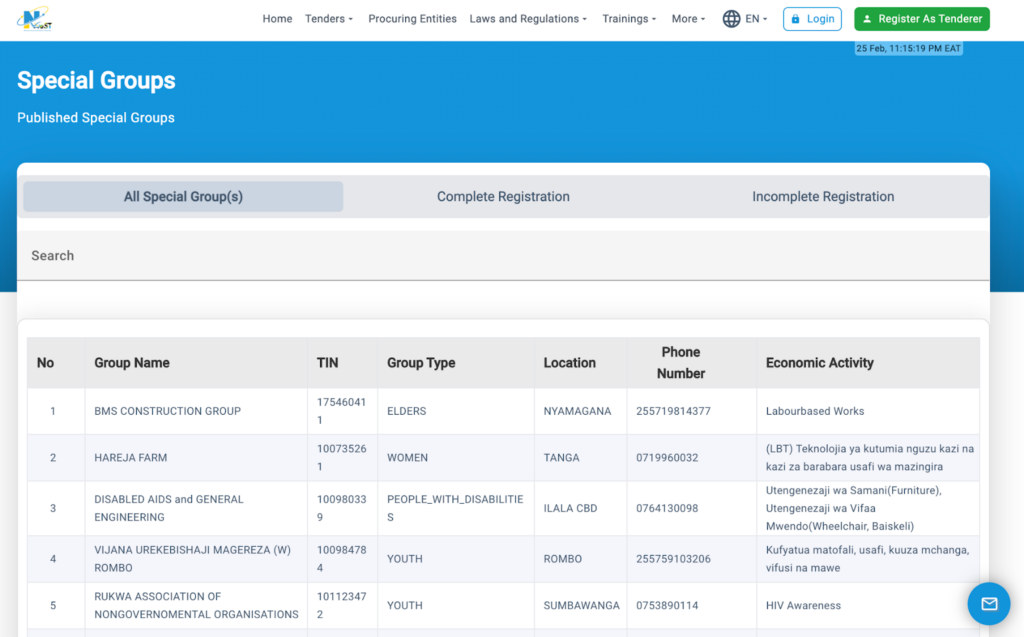
In Tanzania, the Open Contracting Partnership has supported these grassroots efforts in collaboration with the Public Procurement Regulatory Authority and the civil society organization WAJIBU Institute of Public Accountability. These initiatives encourage local government authorities to engage entrepreneurs directly within their local markets, demystify the procurement process using plain language, and systematically dismantle the hurdles that drive potential suppliers away before they even begin.
Access to working capital represents yet another critical missing link in the ecosystem. Crossing the finish line with a winning bid constitutes only half the battle; without upfront financing to cover essential materials and labor costs, many successful suppliers find themselves unable to deliver on the contracts they fought to win. The study revealed that 69 percent of surveyed respondents had failed to access a dedicated 10 percent local council loan specifically established to resolve this financial bottleneck, while 13 percent had never even heard of the facility. A financial support mechanism unknown to the vast majority of its intended beneficiaries ceases to function as a safety net, transforming instead into a glaring operational failure within the reservation framework.
The Bid for Success initiative, developed in partnership with Tanzania’s Public Procurement Regulatory Authority to assist women in breaking into public markets, offers a modest yet illuminating example of how dynamics shift when institutional support becomes genuinely practical and hands-on. By training 200 participants, the program enabled them to secure 29 million Tanzanian shillings, equivalent to roughly 11,000 US dollars, in public tenders. While the absolute monetary figures may appear modest, the underlying principle is profound: when targeted, supportive capacity-building meets a genuine, open entry point in the market, businesses step forward and succeed.
From Open Data to Open Markets
Tanzania’s ongoing transformation makes it abundantly clear that opening public procurement is not a single, isolated administrative switch, but rather an interconnected chain of systematic changes. Procurement data must be published openly, digital systems must function smoothly for individuals who are not specialized procurement officers, suppliers require robust practical support to participate effectively, and governments must establish responsive feedback loops to evaluate whether market competition is genuinely broadening or if specific groups continue to be marginalized.
Each of these foundational elements is entirely achievable, yet none of them occurs organically without deliberate, sustained effort.

The collaborative initiatives undertaken by the Open Contracting Partnership and UN Women to empower female entrepreneurs through public procurement reinforce a broader, fundamental truth: open, accountable, and data-driven procurement can only fulfill its ultimate promise if it is intentionally engineered to include the commercial actors who have historically been locked out. The technical mechanics of procurement reform matter immensely, but getting them right transcends mere bureaucratic procedure. At its core, it is about determining who holds a stake in the national economy.
Kusunkwa Hussein’s counsel—to keep applying, to maintain constant readiness, and to treat every initial setback as an institutional lesson—reflects the hard-earned wisdom of frontline experience rather than bureaucratic theory. Yet, that kind of relentless endurance should never remain the primary qualification required to win a public contract. The ultimate objective of open procurement is to reach a future where persistence serves as a competitive advantage rather than an exhausting prerequisite; where administrative processes are transparent, institutional support is robust, and the market is genuinely accessible enough that a wider array of businesses can secure their rightful opportunity. For women, young people, persons with disabilities, elders, and small-scale enterprises across Tanzania and the wider region, that remains the defining purpose of the work.