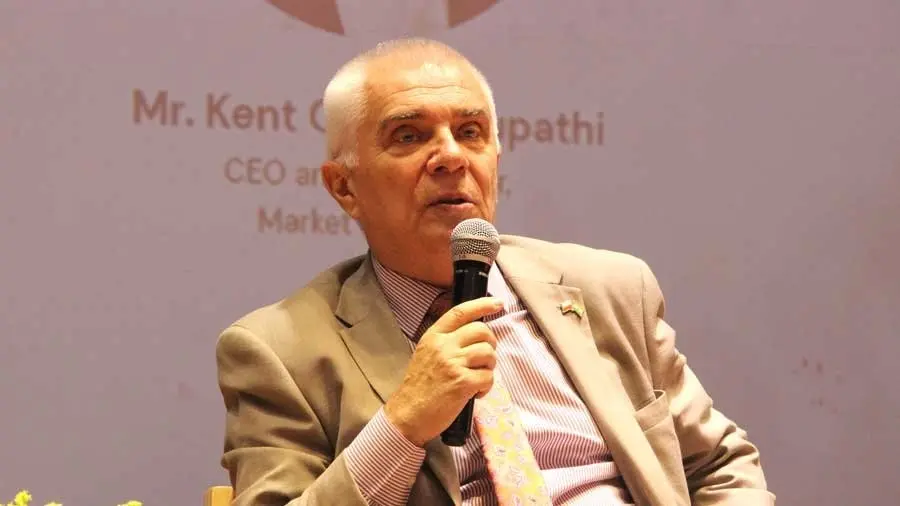
NEW DELHI — Amid a shifting global landscape marked by rising economic uncertainties and geopolitical turbulence, Poland has issued a strong call for a broader, more ambitious partnership between India and the European Union. Speaking at the India–EU Diplomatic Dialogue, Dr. Piotr Antoni Świtalski, the Chargé d’Affaires a.i. of the Republic of Poland in India, emphasized that bilateral cooperation must transcend traditional commercial boundaries to encompass advanced technology, green innovation, and resilient global governance.
The high-level dialogue, organized by Diplomatist Magazine, was held on October 15, 2026, at Symbiosis International (Deemed University) in Noida. During his address, Dr. Świtalski focused heavily on the strategic weight of the ongoing India–European Union free trade agreement negotiations, framing the pact not merely as a commercial arrangement, but as a historic opportunity to anchor stability and predictability between two of the world’s major economic entities.
Describing the prospective agreement as the beginning of a transformative new journey, Dr. Świtalski urged stakeholders, particularly the younger generation and students in India, to look beyond Europe’s traditional appeal as a tourist destination. Instead, he encouraged them to view the continent as an enduring, long-term partner for comprehensive economic, technological, and political cooperation.
Poland’s Experience of European Integration
To illustrate the profound benefits of large-scale economic and political cooperation, Dr. Świtalski drew directly from Poland’s own national journey. Having joined the European Union in 2004, Poland has experienced firsthand how integration acts as a powerful catalyst for economic modernization and institutional security. He highlighted the remarkable trajectory of Poland’s economic progress over the past two decades, noting how EU membership fundamentally strengthened the nation’s institutional confidence and solidified its position within the broader European economic architecture.
According to the Polish diplomat, the true value of such integration extends far beyond financial transfers or mere market access. Rather, its core strength lies in the rich, interdependent network of cooperation and stability that it fosters among participating nations.
Applying this lesson to the global stage, he urged both Indian and European policymakers to approach their bilateral free trade agreement with an equally expansive and visionary outlook. Dr. Świtalski famously remarked that the trade agreement should serve as the "floor, not the ceiling" of the bilateral relationship. Trade liberalisation and tariff reductions, he argued, must act merely as the foundational baseline upon which deeper cooperation in advanced technology, strategic investments, national security, and global governance can be built.
The ultimate potential of the agreement, he suggested, will be unlocked only when businesses, entrepreneurs, and investors on both sides actively identify tangible opportunities for collaboration, and when these commercial ties are vigorously reinforced by broader strategic engagement at the governmental and institutional levels.
India–Poland Ties: Expanding the Bilateral Agenda
Building upon the multilateral framework of the European Union, Dr. Świtalski underscored the vitality of the bilateral strategic partnership established between India and Poland in 2024. He noted that strong bilateral relations between individual member states and New Delhi actively reinforce and enrich the broader India–EU framework.
Outlining ambitious economic targets, he expressed hope that bilateral trade—which currently stands at approximately US$6 billion—could successfully double well before the year 2030. To achieve this milestone, he pointed to several high-potential sectors offering considerable scope for mutual cooperation, including defence, space exploration, artificial intelligence, high-technology manufacturing, and the rapidly expanding green economy.
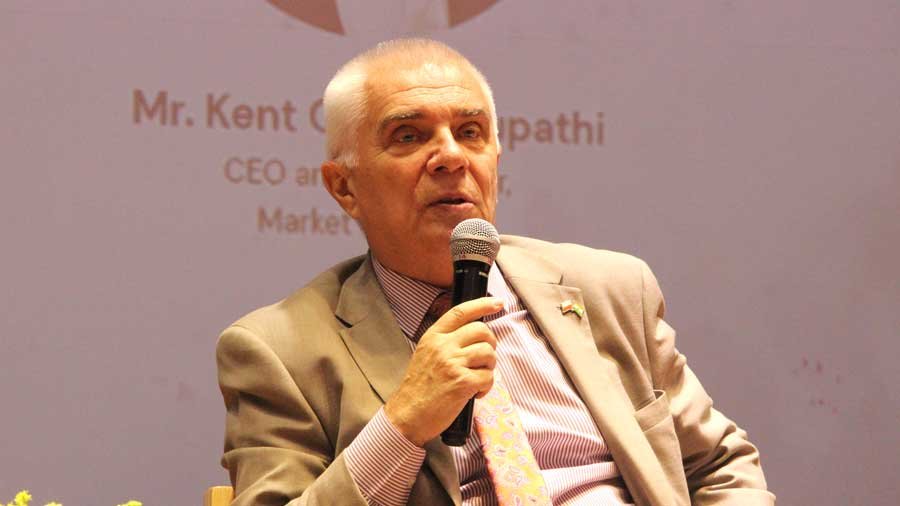
Elaborating on commercial synergies, Dr. Świtalski explained that Polish companies are increasingly looking beyond traditional export models. Rather than simply seeking to sell finished products to the Indian market, Polish firms are eager to forge deep, collaborative partnerships with Indian counterparts for joint research, development, and manufacturing. He specifically pointed to emerging opportunities in clean energy sectors, such as hydrogen and green ammonia technologies, as well as advanced battery recycling and other sustainable green-economy solutions.
Space cooperation emerged as another exceptionally promising frontier for the two nations. Highlighting the collaborative spirit of modern space exploration, Dr. Świtalski referenced the participation of Indian and Polish astronauts in a joint Axiom Space mission as a striking, symbolic illustration of what closer technological engagement can achieve. Furthermore, he outlined concrete prospects for collaborative ventures between national space agencies and joint efforts in advanced satellite monitoring and Earth observation.
Medical technology and digital healthcare were also cited as thriving areas of existing collaboration. Dr. Świtalski drew attention to innovative Polish firms that are already working alongside Indian partners in the field of AI-enabled medical diagnostics, suggesting that such pioneering ventures could easily serve as a foundational blueprint for broader technological exchanges across other industrial sectors.
Connectivity as an Economic Priority
Beyond technological innovation and traditional trade volumes, Dr. Świtalski placed heavy emphasis on the critical necessity of physical connectivity. Recent global disruptions to major international transport routes—particularly those stemming from persistent instability and conflict in West Asia—have starkly demonstrated how vulnerable supply chain logistics can severely impact the global competitiveness of international trade.
To mitigate these systemic vulnerabilities, he called for renewed international attention and investment directed toward the India–Middle East–Europe Economic Corridor (IMEC). He highlighted the strategic importance of exploring potential extensions of the corridor toward the Baltic and Nordic regions, as well as Moldova, to create a more resilient and diversified trade network.
In addition to maritime and land corridors, Dr. Świtalski underscored the indispensable role played by direct air links in supporting ongoing business exchanges, corporate mobility, and the strengthening of deeper people-to-people contacts between India and Central Europe. True connectivity, he argued, must be treated as a paramount strategic priority if the theoretical benefits of trade liberalisation are to successfully translate into reliable, long-term commercial relationships on the ground.
A Wider Global Partnership
Concluding his comprehensive address at the India–EU Diplomatic Dialogue, Dr. Świtalski contextualized the growing partnership between India and Poland within the much broader, ongoing global debate concerning the future of international governance. He issued a clear call for closer diplomatic and strategic cooperation aimed at reforming outdated international institutions, while formally acknowledging India’s rapidly expanding and indispensable role in shaping the modern global order.
For Warsaw, Dr. Świtalski emphasized, India is viewed not simply as an attractive, fast-expanding consumer market, but as a reliable, long-term strategic partner whose collaboration spans across political, economic, cultural, educational, and tourism-related fields.