India is currently gripped by a profound wave of civil unrest that goes far beyond typical political dissent, striking directly at the foundational commitments of the nation’s democracy and threatening the political dominance of Prime Minister Narendra Modi. What began in the summer as student demonstrations over perceived unfairness and systemic irregularities in national academic examinations has rapidly metastasized into a massive national struggle over the integrity of India’s elections. The catalyst for this escalation was a sweeping administrative purge that stripped over 130 million people from draft voting lists over the past year.
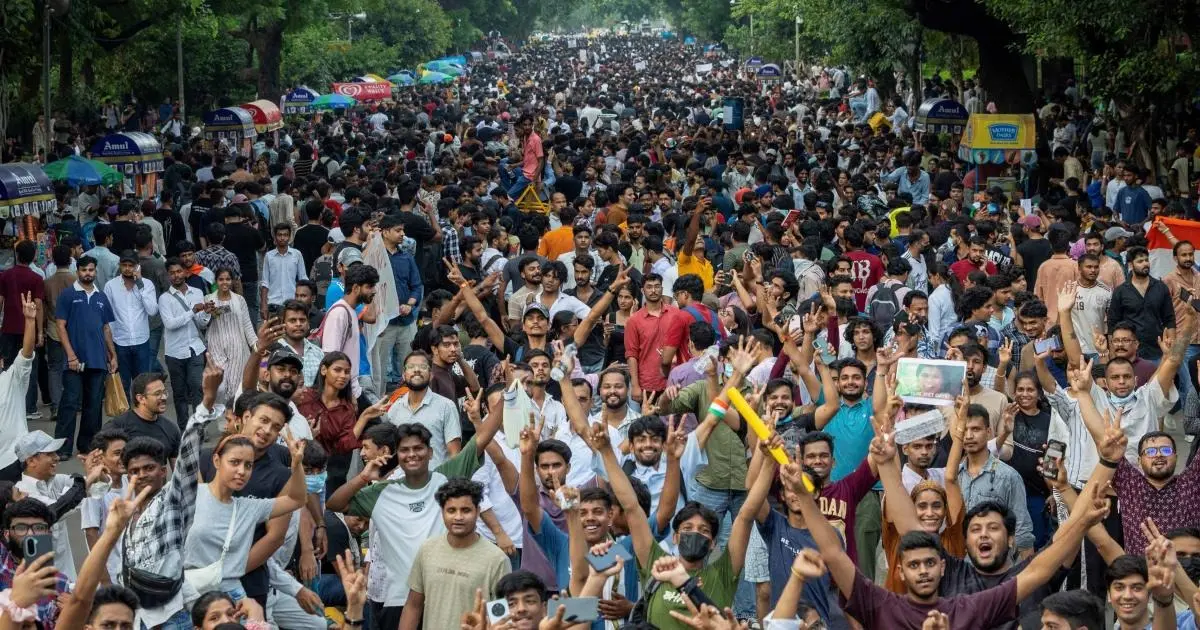
Although many citizens caught in the purge are attempting the laborious and complicated process of appealing their removal, the threat of mass disenfranchisement remains very real. Over the past week, tens of thousands of predominantly young citizens have flooded the streets of New Delhi, with demonstrations swiftly cascading into other major urban centers across the country. The protesters are openly demanding the resignation of India’s chief election commissioner, questioning the institutional credibility of bodies long assumed to be independent, and holding Prime Minister Narendra Modi directly accountable. Accusing the administration of "stealing democracy," these demonstrations represent the most formidable and sustained challenge to Modi’s authority since he assumed power in 2014.
While traditional opposition parties have attempted to project a united front under the leadership of Rahul Gandhi, head of the Congress party—culminating in a notable show of force at an October 12 rally in Delhi—the genuine beating heart of the movement is the raw political energy, wit, and organizational inventiveness of Generation Z students. Defying strict prohibitions on public assembly, breaching heavy security clampdowns, and enduring physical detentions, these young activists have relentlessly challenged the government’s authority.
The federal government has responded with equal intensity, treating the confrontation as an existential threat to its rule. Authorities have deployed more than 40,000 security personnel to the capital, shut down key metro and train stations, erected heavy barricades around central Delhi, suspended mobile internet services, and detained more than 7,000 individuals. Furthermore, the administration has stubbornly defended the chief of the Election Commission while refusing to open dialogues with either the opposition parties or the youthful protesters regarding their core demands.
While Modi’s immediate hold on power is secure—this is not a direct rerun of the recent youth-led uprisings that successfully toppled governments in neighboring Bangladesh and Nepal—the Indian government faces a subtler and more insidious danger. A strongman leader like Modi relies heavily on projecting unquestioned personal authority and centralized control. Since 2014, his ruling Bharatiya Janata Party (BJP) has consolidated power to an unprecedented degree. The open, fearless defiance of young people hailing from diverse class, religious, and caste backgrounds makes them difficult to dismiss or marginalize as an "antinational" fringe group. This public pushback makes the government’s once-adamantine grip on power appear increasingly fragile, leaving the future of Indian democracy hanging in the balance as the nation weighs greater openness against intensified state repression.
The Promise of Equality
Modern India is founded on two core legitimizing institutions: elections and exams. Ever since gaining independence in 1947, the country has maintained a proud global reputation for conducting free and fair elections. The Election Commission of India, designed as an independent constitutional body, wields sweeping powers to keep national and regional polls entirely beyond reproach, making its institutional credibility a pillar of Indian democracy itself.
Simultaneously, India relies on competitive national examinations to handle recruitment for public-sector jobs and admissions to public and select private colleges. For millions of young citizens, the stakes attached to these tests are extraordinarily high. Success provides a vital ladder of social and economic opportunity, while failure can permanently trap individuals at the bottom of a rigid socio-economic hierarchy. Consequently, maintaining the absolute integrity, honesty, and impartiality of these examinations is paramount.
India remains a deeply unequal society where money, kinship networks, and political power frequently distort institutions. In this challenging context, competitive exams and elections stand as the only two processes that give tangible meaning to the state’s constitutional promises of equal treatment. Elections grant even the poorest citizens a sense of dignity and political agency, which explains why voter turnout rates in India have historically remained robust. Exams sustain a parallel promise: the enduring belief that hard work and academic performance can override traditional forms of social capital. While neither system has ever been entirely flawless, their overall integrity had never been seriously doubted until recently.
Over the past year, however, a series of government actions has shattered public trust in both institutions. In 2024, the primary nationwide entrance examination for medical schools was engulfed in a massive scandal involving widespread irregularities, most notably the advance leak of question papers. The resulting student protests raised profound questions about the operational reliability of the entire examination system. The crisis placed intense scrutiny on the National Testing Agency, a central body empowered under Modi to conduct major national exams. Centralization, originally promised as a means to ensure greater efficiency and regularity, instead exacerbated the crisis by concentrating all responsibility directly at the federal level. By July, mounting antigovernment sentiment and widespread student frustration forced the resignation of the education minister.
Concurrently, the Election Commission initiated a process known as Special Intensive Revision (SIR), designed to assess and clean up India’s voter rolls to ensure accuracy. While conducting such revisions falls well within the commission’s legal powers—with the last major review occurring between 2002 and 2004—this year’s effort has triggered immense controversy. Critics point to the excessive administrative burdens placed on ordinary citizens to prove their eligibility, a lack of transparency regarding additions and deletions, and the deployment of new software that enables the commission to remove names on trivial grounds while routinely overriding established verification procedures and local officials.
According to critics, Chief Election Commissioner Gyanesh Kumar acted unilaterally and recklessly, violating standard operational procedures. Since June 2025, the SIR process has flagged roughly 130 million names for removal from the voting registries. Although many of these deletions accounted for duplicates, deceased individuals, or people who had permanently emigrated, millions of legitimate Indian citizens suddenly found themselves stripped of their voting rights and burdened with the difficult task of appealing to specialized tribunals to verify their citizenship. Ironically, the protests have already yielded one constructive concession: the election commission is now attempting to placate its critics by streamlining the appeal process for those excluded.
Opposition leader Rahul Gandhi has alleged that the SIR is being weaponized to manipulate election outcomes. In the state of West Bengal, where nine million names were scrubbed from the rolls, millions of citizens were unable to participate in regional elections in March because their appeals remained unheard. Those elections resulted in the BJP securing power in the state for the first time. Yet even if the Election Commission is not systematically targeting specific demographics based on political preference or identity, the sheer scale of the bureaucratic ineptitude risks disenfranchising millions.
Compounding the crisis, India’s Supreme Court has played a controversial role in the unfolding events. The high court effectively enabled voter disenfranchisement in West Bengal by dismissing concerns, suggesting that citizens whose appeals were pending could simply vote in future elections after their cases were adjudicated, dismissing the immediate loss of their franchise.
The perception of institutional callousness deepened in May when Chief Justice Surya Kant compared a group of young lawyers advocating for judicial and administrative reform to "cockroaches." That single remark ignited a viral social movement. Initially launched as a satirical joke, the "Cockroach Janata Party" rapidly coalesced into a genuine political force, galvanizing young Indians across social media platforms and city streets. This movement played a pivotal role in forcing the July resignation of Education Minister Dharmendra Pradhan following mass protests in Delhi and nationwide, and it is now driving youth demands for the resignation of Chief Election Commissioner Kumar.
Most significantly, the movement has directly linked the national credibility crisis to Prime Minister Modi himself, sparking an unprecedented wave of public mockery and satire across the internet and social media. This digital backlash has punctured Modi’s carefully cultivated image of an invincible leader who unfailingly delivers on his promises. Despite priding himself on dominating digital spaces, the administration’s loss of control over the political narrative—particularly on visual platforms like Instagram—became glaringly obvious. Feeble attempts by the prime minister to post his own video reels in response failed entirely to stem the tide of public irreverence.
This widespread ridicule goes beyond mere political satire; it has effectively lifted the heavy pall of fear that hung over Indian democracy since Modi took office, a period during which critics were frequently silenced through intimidation and opposition figures targeted via legal proceedings. By mocking institutional power, young Indians have rediscovered their collective voice.
The threat these activists pose to Modi is substantial. Unburdened by historical ties to conventional opposition parties, these young citizens focus on tangible issues—exams and elections—that cut across traditional social divisions and partisan affiliations. Their grit, wit, inventiveness, and fearlessness have dented Modi’s political authority in a manner unseen in the past dozen years.
Their Own Future
Despite their momentum, the protest movement must still contend with the brute reality of state power currently visible on the streets of Delhi. Authorities have consistently attempted to suppress dissent by prohibiting gatherings and blocking public spaces. In response, young Indians have taken to the streets not only to voice their original grievances but to actively defend their fundamental right to protest and reclaim public spaces. The government’s deployment of thousands of security personnel in the national capital—resembling preparations against an invading foreign army rather than citizens making reasonable demands—indicates that Modi intends to maintain a hardline stance.
For the government, the protesters’ primary demand—the removal of Chief Election Commissioner Kumar—is not merely about one official’s tenure. Modi has cultivated deep loyalty within the BJP through the implicit promise that party members and loyal functionaries acting on the government’s behalf will be shielded from the consequences of their actions. If that guarantee begins to fray, ministers and party officials may worry about their own vulnerability should leadership protection fail. Consequently, Modi’s staunch defense of Kumar may be less about the technicalities of the voter revision process and more about preserving internal party loyalty.
Furthermore, Modi has built much of his political persona around converting perceived vulnerabilities into displays of strength. Yielding to public mockery would be profoundly out of character, and removing Kumar could be interpreted as an admission of administrative guilt. Such a retreat might embolden political rivals, fuel further demonstrations, and raise the specter of a galvanized opposition successfully unseating the prime minister in the next parliamentary elections scheduled for 2029.
The electoral consequences of the current unrest remain deeply uncertain, as public anger does not automatically translate into shifts at the ballot box. The Election Commission may yet blunt the controversy by reinstating pending voters or offering procedural concessions that alleviate immediate grievances. Moreover, the BJP continues to benefit from a fractured political opposition and the reality that India’s vast electorate is rarely unified in its motivations.
The next major electoral test will arrive in the state of Uttar Pradesh in March 2027. A BJP victory there would allow the party to claim its authority remains unassailable, while a defeat would make containing the political fallout exceptionally difficult. In the interim, the government is expected to double down on nationwide crackdowns against dissent, betting that heavy-handed enforcement can successfully suppress public expressions of anger.
At the same time, the BJP hopes that ongoing disruptions in Delhi will allow them to frame the upheaval as the work of anarchists and rabble-rousers, thereby rallying the broader public behind the prime minister. Government supporters have already begun dismissing the movement as the product of foreign interference, invoking conspiracy theories and drawing parallels to youth-led uprisings that recently toppled governments in Bangladesh and Nepal.
The greater danger facing the Indian government, however, is that it may fall victim to its own propaganda and choose to ignore genuine, systemic discontent. In both Bangladesh and Nepal, the depth of popular grievance was glaringly obvious to anyone willing to observe—much as it is in India today. Despite impressive headline economic growth rates, young Indians remain deeply anxious about their economic future. Graduate unemployment currently hovers at 23 percent, white-collar job growth has slowed to a meager one percent, and nearly a quarter of all Indians aged 15 to 29 are entirely outside employment, education, or training programs.
At the same time, the very institutions built to safeguard their future—elections, courts, and independent agencies—are steadily losing their public trust. While the strongman model shows signs of strain and the conventional opposition struggles to inspire deep enthusiasm, the true power of the current moment lies in the spectacle of young citizens who, lacking easy alternatives, continue to fight for their democracy using the only tools available: energy, aspiration, and the enduring belief that they can forge their own collective future.