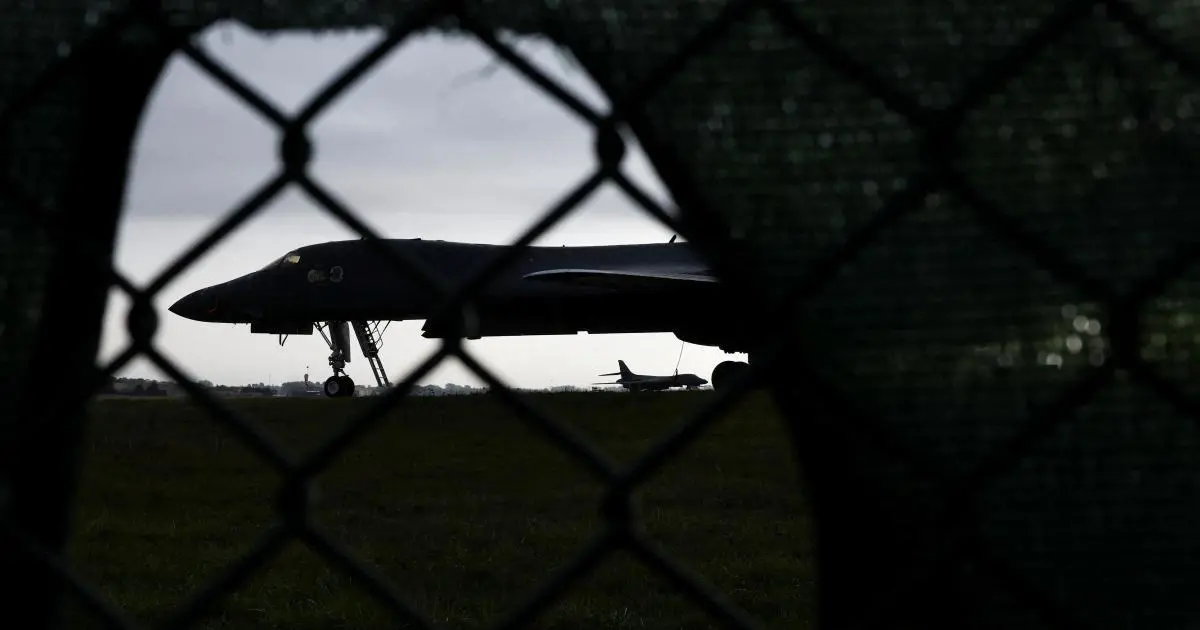
For months, Iran’s surprising resilience in its ongoing conflict with two of the world’s most formidable militaries has left politicians perplexed and confounded public expectations. Despite thousands of precision strikes by the United States and Israel that have systematically decimated much of the nation’s military infrastructure and eliminated several of its top leadership figures, the Islamic Republic has not only managed to survive but has also continued to project significant offensive capabilities.
Observers and defense analysts have offered various explanations to account for this staying power. Some point to Tehran’s effective deployment of low-cost, precise mass weapons, such as the Shahed-136 one-way attack drone, which have complicated air defense calculations. Others emphasize the decentralized and self-replacing nature of the Iranian political regime itself.
While these factors have undeniably played a role, they mask a more straightforward reason for Iran’s persistent endurance: the fundamental strategic choice made by American and Israeli leadership to rely on a sustained air and stand-by naval campaign to bring the regime to its knees.
This approach did not emerge in a vacuum. Air supremacy has long been the defining tenet of U.S. and broader Western military strategy for decades. In the post-Cold War era, the United States perfected the art of airpower—securing control of the skies so thoroughly that enemy armies, navies, and territories could be bombed at will—to a degree unmatched by any other nation or coalition. When pitted against an adversary’s deployed ground forces, this doctrine has consistently yielded impressive operational results. Furthermore, the U.S. ability to achieve rapid air superiority has long served as a powerful deterrent to would-be aggressors worldwide.
Yet, historical precedent offers very few examples of adversaries conceding to maximalist political demands solely in the face of punitive bombing campaigns, even when executed by the world’s most powerful air force. Indeed, Operation Epic Fury joins a roster of recent and ongoing conflicts—including Russia’s war in Ukraine and the international responses to the Houthi threat in Yemen—that have exposed the inherent limitations of relying heavily on airstrikes to unseat a government or defeat embedded insurgent forces.
For American military strategists, distinguishing between the different applications of airpower has never been more critical. The current campaign against Iran has proven to be a stark misuse of military resources, laying bare the strict policy limits of what airpower can achieve on its own. At the same time, experts caution that it would be a severe mistake to abandon the long-standing doctrine of prioritizing air superiority as Washington, alongside NATO and Asian allies, prepares for vastly different strategic threats in the coming years.
The Wages of Destruction
During the major conventional wars of the twentieth century, U.S. and Allied air superiority was undeniably critical to securing battlefield victories. However, airpower alone consistently failed to force the political capitulation of adversaries.
During World War II, Nazi Germany fought to the bitter end despite the systematic, pulverizing Allied bombing campaigns targeting its cities, industrial base, and vital transport and fuel networks. In the Korean War, North Korea fought the United States and its allies to a standstill, even after massive fleets of American bombers obliterated the vast majority of its cities and physical infrastructure. Later, in the Vietnam War, North Vietnamese forces outlasted the United States despite enduring successive punitive air campaigns that saw the U.S. military drop more than a million tons of ordnance on urban centers, factories, and supply routes.
In the defining counterinsurgency conflicts of the twenty-first century, there is similarly little evidence to suggest that air superiority proved any more decisive in achieving political ends. In Afghanistan and Iraq, the United States and its allies quickly established total air dominance over the enemy, retaining the ability to call in precision airstrikes at will and granting allied ground troops a massive tactical advantage. Yet, in both cases, these extensive campaigns ultimately failed to achieve their overarching political objectives.
A similar dynamic is playing out in modern conflicts. Despite near-daily aerial barrages directed at Ukrainian cities, power grids, and industrial centers, Russia remains no closer to vanquishing the nation more than four and a half years after its brutal invasion began.
In Iran, U.S. and Israeli airstrikes have generated virtually no sign of the kind of popular domestic pressure required to end the war. This lack of internal revolt persists despite major anti-government protests that erupted across the country shortly before the campaign began—protests that were ultimately stamped out only through sweeping state violence. Given the regime’s historical willingness to slaughter thousands of its own citizens to maintain power, inflicting further hardship on the general population appears exceptionally unlikely to alter the calculus of Iran’s leadership.
If anything, contemporary geopolitical realities suggest that winning modern wars has become even more difficult than it was in the twentieth century. Due to the increasingly multipolar nature of the global order, targeted nations can frequently rely on international support to mitigate the catastrophic damage of a sustained enemy strike campaign.
In Ukraine, this international lifeline is visible in the continuous influx of American and European weaponry, alongside economic, military, and technological assistance, since Russia’s 2022 invasion. While this aid has not spared Ukrainians from terrible loss and hardship, it has successfully enabled the national economy to function and the military to systematically replace lost and expended equipment and ammunition over time.
In the case of Iran, China has long provided a stable market for Iranian oil and gas exports, helping to keep the economy afloat prior to the tightening of a U.S. naval blockade in April. More recently, Beijing has also extended military support in the form of short-range air defense systems, bolstering Tehran’s capability to threaten U.S. and Israeli aircraft operating at medium or low altitudes. Russia, too, has remained a steadfast Iranian ally, supplying critical intelligence for targeting U.S. forces in the Gulf and assisting in the development of advanced military capabilities, such as supersonic anti-ship missiles. In both theaters, external support has rendered sustained air and missile strike campaigns far less likely to result in political capitulation or economic and military collapse.
Sitting Ducks and Hidden Jackals
Despite the poor historical record of punitive bombing campaigns in forcing political surrender, air superiority has repeatedly proven decisive in conventional warfare through its direct impact on the battlefield.
The U.S. military’s overwhelming success against the well-equipped and battle-hardened Iraqi army during Operation Desert Storm in 1991 remains the defining example of how an air-centered approach can shatter an enemy. The initial U.S. air campaign in January and February of that year sufficiently degraded Iraqi forces and their command-and-control infrastructure to allow coalition ground forces to decisively defeat the enemy in less than 100 hours of ground combat.
Other partial successes include NATO’s intervention in Kosovo in 1999, where a 78-day air campaign ultimately compelled Serbian President Slobodan Milosevic to withdraw his forces. Similarly, the European-led air campaign over Libya in 2011 rapidly destroyed government tanks and artillery threatening the city of Benghazi, paving the way for a subsequent rebel advance toward Tripoli.
In each of these instances, air superiority rendered the battlefield situation untenable for enemy ground forces, forcing them into retreat. The fundamental factor distinguishing these effective uses of airpower lies in the specific objectives the enemy sought to achieve. When an adversary pursues goals that require the large-scale deployment and maneuver of ground forces—such as an invasion to seize neighboring territory—establishing air superiority over that adversary confers an immediate and decisive military advantage.
During World War II, the combined Anglo-American bomber offensive against German cities failed to force a political surrender, but once the Allies achieved local air superiority, the operational defeat of Axis armies in the field became inevitable. Roving fighter-bomber patrols quickly made daytime movement by armored vehicles and supply columns prohibitively dangerous, while providing devastating close air support whenever Allied ground units encountered heavy resistance.
In 1991, Saddam Hussein’s strategic objectives required the Iraqi army to hold captured territory in Kuwait against an advancing coalition, a task made impossible once U.S. tactical airpower systematically dismantled Iraqi air defenses, armored vehicles, and supply lines. In Libya, Muammar al-Qaddafi’s forces deployed heavy armor to crush local uprisings, but these assets were easily located and destroyed by European combat aircraft. While the ultimate rebel victory did not deliver long-term political stability in Libya, Qaddafi’s military forces were decisively broken, neutralizing his objective of crushing the uprising by force.
By contrast, in counterinsurgency conflicts like those in Afghanistan and Iraq, Washington’s adversaries did not need to field regular military forces in the open to achieve their goals. By maintaining a steady tempo of improvised explosive device attacks and ambushes against coalition patrols before melting back into the civilian population, insurgent groups successfully denied occupying forces the security required for nation-building. Whenever militant forces attempted large-scale operations to overrun bases or towns, they were met with overwhelming airstrikes, but these tactical victories alone could not secure broader political aims. The Taliban and Iraqi insurgent groups merely had to maintain a security vacuum long enough to exhaust Western patience for protracted "forever wars."
Today, the United States confronts a parallel problem in Iran. Washington is attempting to use airpower to enforce maximalist aims against an adversary capable of keeping its conventional military forces dispersed, hidden, or deep underground. While the initial U.S. and Israeli campaign to establish air superiority was executed with remarkable success, and advanced aircraft and tactics performed as intended, subsequent months of airstrikes have run into physical limitations. Although some ballistic missile stockpiles have been destroyed, the vast majority of Iran’s remaining inventory and production capacity remains secured inside deeply buried "missile cities" impervious to conventional munitions. Furthermore, following a brief 12-day war in June 2025—during which U.S. forces targeted nuclear infrastructure with specialized 30,000-pound bunker-busting bombs—Iran’s highly enriched fissile material, movable equipment, and scientific personnel were likely dispersed and hidden long before Operation Epic Fury began.
To defeat American war aims, the regime does not need to deploy regular armed forces in the open. It simply needs to maintain internal control over the population, a task efficiently managed by the Islamic Revolutionary Guard Corps through pervasive domestic repression. Along the rocky and extensive coastline of the Strait of Hormuz, Iran can easily conceal small vessels used for laying naval mines, mobile anti-ship missile launchers, and drone launch sites. Consequently, airpower alone remains unlikely to deliver victory against Iran, despite months of continuous strikes across the country.
This operational frustration mirrors ongoing difficulties faced by the United States and its allies in halting anti-ship drone and missile strikes by Houthi forces in Yemen. While airpower can reliably destroy exposed Houthi assets, it cannot prevent the group from posing a sustained threat to commercial shipping from concealed launch sites along coastal territories under their control.
The Bomb Power NATO Needs
The war in Iran has undeniably tarnished the global aura of U.S. airpower. It remains unlikely that the current administration would have launched Operation Epic Fury had it foreseen that, months later, it would still be bogged down in an inconclusive slugging match—one that has depleted a massive share of Washington’s complex munitions stockpiles at exorbitant economic and geopolitical costs. Combined with the ongoing war in Ukraine, where neither side has managed to establish enduring air superiority, there is a tangible risk that policymakers and the public may lose faith in advanced air capabilities as the central pillar of Western military advantage.
That outcome would be a profound strategic error. The core lesson of the conflict with Iran, much like previous struggles in Vietnam, post-2003 Iraq, and post-2006 Afghanistan, is that conventional military superiority gained through overwhelming airpower cannot substitute for realistic political objectives.
However, the secondary lesson is that these failures stem from strategic overreach, not from inherent weaknesses in U.S. air capabilities. On the contrary, airpower remains the most potent component of the United States’ conventional forces, serving as the primary anchor for both deterrence and warfighting advantage against hostile states. Had the stated goals of Operation Epic Fury been limited to defeating a conventional Iranian invasion of a neighboring country, the air campaign almost certainly would have achieved that objective within weeks.
This hypothetical scenario directly addresses the most pressing non-discretionary threats the United States may face in the coming years. In the event of a Russian invasion of a NATO member state in Eastern Europe or a Chinese military move against Taiwan, an aggressor would be forced to deploy massive regular ground forces to seize and hold territory. In either scenario, advanced U.S. and allied airpower capabilities would be absolutely essential to blunting and defeating the attack rapidly. Much like Saddam Hussein’s invasion of Kuwait, such acts of aggression could be rendered militarily untenable if NATO or U.S.-led forces rapidly seize and exploit air superiority over the contested terrain.
To prevent larger, catastrophic wars between Western powers and major rivals like China or Russia, convincing both adversaries that NATO and U.S.-led coalitions can rapidly establish air superiority in the event of an attack is vital. Achieving this requires targeted investments and force-structure decisions. Urgent priorities include restocking and expanding inventories of air-launched munitions, scaling up production of missile interceptors to defend critical airbases and naval task forces, and accelerating the development of next-generation fighter, bomber, and support aircraft.
While establishing air superiority over airspace contested by advanced Chinese or Russian forces will prove far more difficult than operations over Iran, it remains an indispensable task for the United States and its allies to preserve conventional deterrence and avert great-power conflict. Air superiority cannot win every war on its own, but when credibly maintained, it provides a formidable defense against state-sponsored territorial aggression.