Federal Bureau of Investigation agents have arrested a high-profile executive at a Canadian cybersecurity firm in connection with an intensifying, high-stakes investigation into the notorious "ShinyHunters" cybercrime syndicate. The arrest follows a brazen breach by the hacking collective that compromised sensitive records belonging to thousands of federal agents.
According to multiple sources familiar with the matter, the suspect was taken into custody in Pennsylvania while attending a prominent industry gathering. The ongoing crackdown highlights a dramatic escalation in federal efforts to dismantle the group, which has increasingly targeted corporate infrastructure, software-as-a-service providers, and government agencies alike through aggressive phishing campaigns and credential theft.
The New York Times first reported that federal authorities had apprehended a Canadian man in Pennsylvania on suspicion of providing assistance to ShinyHunters. Neither that initial report nor a public statement shared on X by FBI Director Kash Patel explicitly identified the individual in custody. However, sources close to the unfolding investigation confirmed to KrebsOnSecurity that the man arrested this week is a prominent figure in the Canadian cybersecurity sector who was visiting Pennsylvania to participate in a specialized cyber insurance event.
According to these sources, the suspect’s professional background includes specialized work in handling sensitive ransomware negotiations and extortion advisories on behalf of corporate clients facing digital coercion. Furthermore, investigators indicated that overall operational control and coordination of the sprawling ShinyHunters case have now been centralized under the direction of an FBI field office in Texas.
An online review of industry events reveals that the annual Cyber Risk Summit was held at the Loews Philadelphia Hotel. While the conference featured numerous sponsors from across the risk management and insurance sectors, summit documentation indicates that its largest financial backer was a Canadian security firm known as Cypfer.

Public professional profiles and corporate records show that one of Cypfer’s former leaders was Edward Dubrovsky, an industry veteran who transitioned to another Canadian security firm and conference sponsor named CyberSteward. Approximately one month prior to his arrest, Dubrovsky shared posts on professional networking platforms announcing his intention to attend the Philadelphia summit alongside members of the CyberSteward team.
In a subsequent statement addressing the executive’s professional history, a spokesperson for Cypfer clarified that Dubrovsky had not been a founder or co-founder of the firm as indicated on his public profile, but rather served in the capacity of a managing director prior to his resignation.
Prior to his detention, Dubrovsky maintained a visible public profile within the digital security community, frequently commenting on the complex dynamics of digital extortion. In a recent professional post, he emphasized his ongoing focus on global, threat-agnostic strategies surrounding compliant-driven coercive advisory work, ransomware negotiations, and settlement services. Federal court records subsequently revealed that an individual named Edward Dobrovsky—with a minor spelling variation in the surname—was formally arrested in Pennsylvania on October 8 on charges related to cyber extortion and conspiracy.
While several crucial documents associated with the federal case, including the core criminal complaint, remain under judicial seal, a portion of the docket has been publicly indexed through legal tracking platforms. These available documents include a summary of charges accusing the defendant of participating in a conspiracy intended to threaten the confidentiality of proprietary information for the purpose of extorting funds, alongside charges alleging interference with commerce through threats.
Inmate tracking databases maintained by the U.S. Bureau of Prisons confirm that a 54-year-old Edward Dubrovsky is currently being held at a federal detention facility in Philadelphia. However, court filings indicate that the legal proceedings are already shifting geographic centers. On October 9, a formal notice was filed to transfer the case to the U.S. District Court for the Eastern District of Texas, which sources point to as the primary nexus for the government’s comprehensive ShinyHunters probe. The FBI has consistently declined to comment on the specifics of the ongoing prosecution.
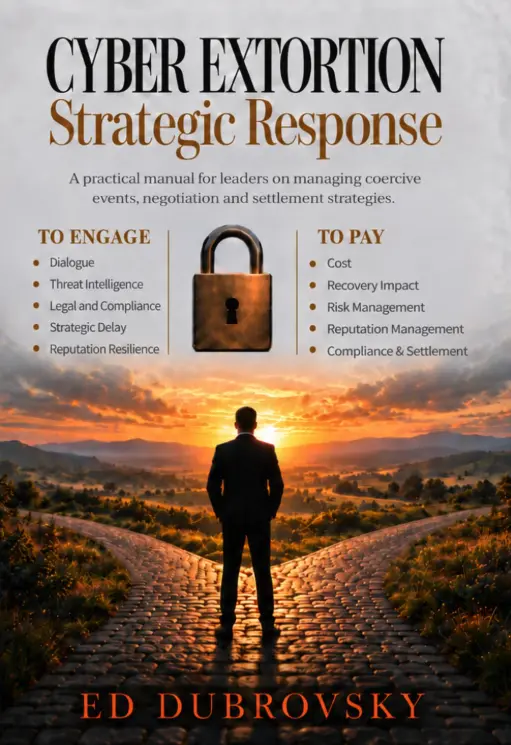
Beyond his corporate advisory roles, Dubrovsky is the author of a 252-page volume titled Cyber Extortion Strategic Response, a publication designed to guide organizations through the complex decision-making processes required during major digital ransom incidents. Promotional materials for the book emphasize a core strategic distinction that the author frequently championed: that active communication with digital extortionists is distinct from negotiating a payout, and that entering into dialogue does not constitute an agreement to yield to financial demands. The text posits that such engagement can serve alternative defensive objectives, such as verifying attacker claims, gathering intelligence, buying operational time, and preserving options while corporate leadership evaluates its next steps.

At the time of his court appearance, available federal records indicated that Dubrovsky had not yet retained private legal counsel, and a public defender had yet to be formally appointed by the court. Representatives for CyberSteward could not be reached immediately for comment regarding the arrest of their colleague.
The federal crackdown comes as investigators grapple with the scale of disruption caused by ShinyHunters over the past year. The hacking group typically relies on sophisticated phishing schemes and stolen credentials to infiltrate corporate environments, siphon proprietary data from software-as-a-service platforms, and subsequently threaten public disclosure unless substantial extortion demands are met. Federal estimates suggest the group has successfully extorted more than $70 million from corporate victims throughout the year.
Law enforcement pressure on the syndicate has intensified significantly following a series of international arrests. Sources indicate that federal investigators have spent recent weeks combing through electronic devices seized last month when Dutch law enforcement authorities apprehended Pepijn van der Stap, a reformed hacker linked to the ShinyHunters network. Investigators suggest that these digital forensics could pave the way for additional charges against key figures operating within firms specializing in ransomware mediation.
The urgency of the federal response was further underscored following Van der Stap’s arrest, when another prominent member of the hacking collective, operating under the alias "Rey," stepped forward to assume control of the group’s operations. This faction quickly launched public taunts directed at federal law enforcement agencies, highlighting a particularly sensitive breach that compromised the FBI’s own online recruitment portal. The stolen data included personal identifiers, unit assignments, professional specializations, and confidential medical and psychiatric records belonging to thousands of prospective and current agents.
Subsequent international reporting identified the individual operating as Rey as a teenage suspect named Saif Al-din Khader. Authorities confirmed that Khader was subsequently detained and has begun cooperating with federal investigators. The apprehension occurred as the cybercrime unit allegedly attempted to execute an extortion plot targeting a specialized digital aviation and navigation unit that had recently been divested by Boeing.
As federal authorities continue to pursue leads across multiple international jurisdictions, the investigation into the intersection of corporate ransomware negotiation and high-level cybercrime remains fluid. Further developments are expected as the case moves forward in federal court.