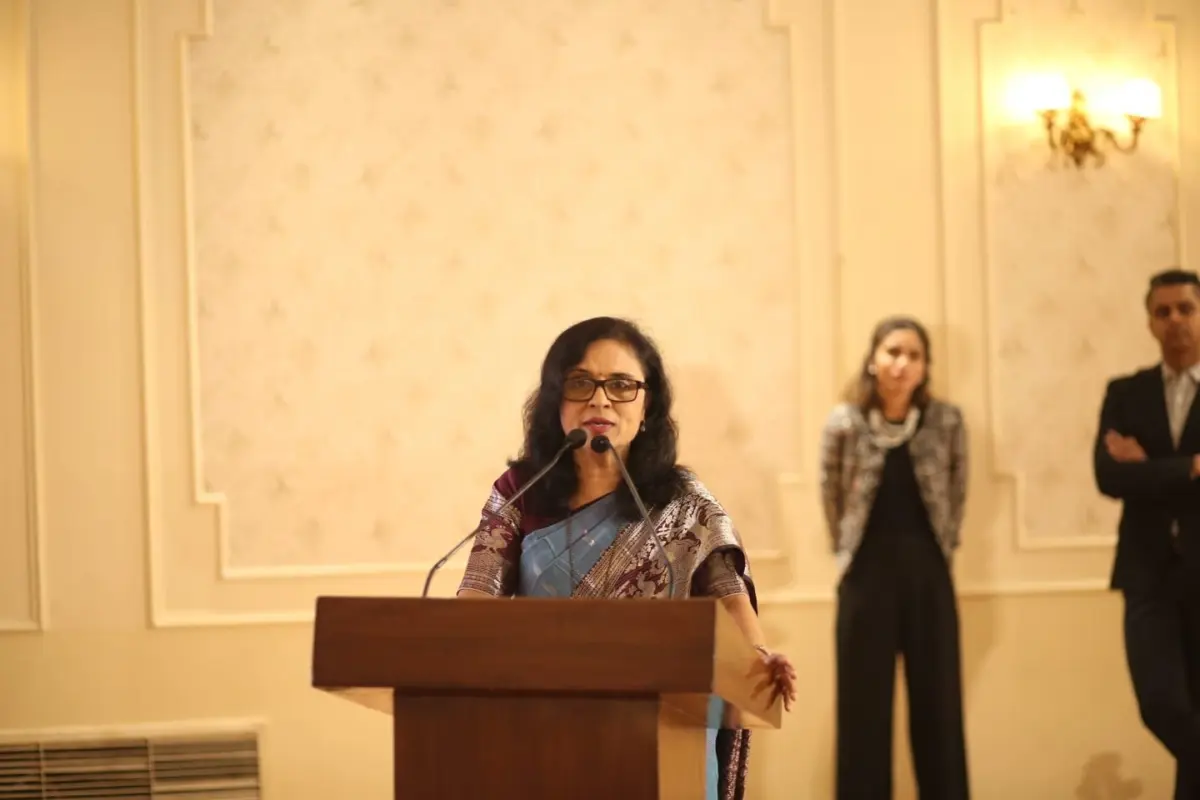
NEW DELHI — At a high-profile annual diplomatic dinner hosted in New Delhi, Dr. Vidya Yeravdekar, Chancellor of Symbiosis International (Deemed University), delivered a compelling address highlighting the institution’s remarkable five-decade journey in international education. Against the backdrop of an increasingly interconnected world, Dr. Yeravdekar emphasized the university’s expanding global footprint, its deep-rooted commitment to fostering cross-cultural understanding, and its foundational philosophy that education possesses the unique power to transcend borders, build lasting international relationships, and bring diverse nations closer together.
The prestigious gathering, held on October 9, 2026, brought together an influential assembly of ambassadors, high commissioners, diplomats, and key international stakeholders. Set against an atmosphere of diplomatic warmth and academic celebration, the evening served as both a reflection on past achievements and a look forward to the evolving future of higher education in India and abroad.
Welcoming the distinguished gathering of international delegates, Dr. Yeravdekar reflected upon the visionary principles that led to the establishment of Symbiosis in 1971. Long before the internationalisation of higher education became a prominent global theme and a strategic priority for universities worldwide, the founders of Symbiosis recognized an urgent need to create inclusive, welcoming spaces for international scholars arriving in India.
The institution was originally founded by Prof. (Dr.) S.B. Mujumdar, who at the time was a dedicated teacher at Fergusson College in Pune. Recognizing the unique challenges and opportunities faced by international students pursuing their studies in India, Professor Mujumdar envisioned an educational sanctuary where students from vastly different countries, cultures, and socioeconomic backgrounds could study, live, and learn collaboratively. The core ambition of this vision was simple yet profound: to ensure that international students would carry overwhelmingly positive, enriching memories of India back to their respective home countries upon the completion of their academic journeys.
As Dr. Yeravdekar eloquently explained during her address, these international students were envisioned by the founders as "unofficial ambassadors." Through their personal lived experiences, academic achievements, and cross-cultural friendships forged on campus, these young scholars would naturally strengthen bilateral and multilateral relationships between India and their home nations.
This enduring founding philosophy continues to serve as the guiding compass for the university today. Even the very name "Symbiosis" was carefully chosen to reflect a mutually beneficial, harmonious relationship between different organisms, mirroring the symbiotic exchanges that occur when diverse human cultures interact in an academic setting. Furthermore, the university’s guiding motto—Vasudhaiva Kutumbakam, which translates from Sanskrit to mean "The world is one family"—captures its broad, humanitarian commitment to global citizenship and universal understanding.
Emphasizing the holistic nature of this educational mission, Dr. Yeravdekar noted that academic rigor must always be complemented by genuine cultural immersion. "Students should carry good memories, not just of the education that they went through, but also of the country they studied in," she emphasized, underscoring the vital importance of cultural exchange as an equal partner to traditional classroom learning.
From an Indian Institution to a Global Community
Over the course of the past five decades, Symbiosis has undergone a profound transformation, evolving from a localized initiative into a comprehensive, multidisciplinary university boasting modern campuses spread across six major Indian cities, alongside a strategically positioned international campus in Dubai. Today, the institution proudly welcomes a vibrant student body hailing from more than 85 different countries, creating a rich, multicultural ecosystem where young people from diverse backgrounds interact, collaborate, and learn from one another daily.
During her remarks, Dr. Yeravdekar drew special attention to the city of Pune, where the university first originated and established its deep roots. Pune has long held a reputation as a premier educational, cultural, and industrial hub within India. The city’s dynamic manufacturing sector, robust services industry, and rapidly expanding start-up ecosystem provide international students with invaluable opportunities to experience contemporary India far beyond the traditional confines of the classroom. These real-world engagements are further enriched through structured short-term academic programmes and professional internships that bridge the gap between theoretical knowledge and practical application.
The university’s ongoing international expansion reached a major, historic milestone with the official establishment of its Dubai campus in 2024. Explaining the strategic rationale behind selecting Dubai as the site for the institution’s first major overseas campus, Dr. Yeravdekar described the city as a quintessential global gateway and a vibrant meeting point for people representing a multitude of nationalities, languages, and cultures.
Expressing deep satisfaction with the rapid progress of the Dubai campus, she noted that it has already succeeded in attracting a diverse cohort of students from several different countries, thereby extending Symbiosis’s educational reach and brand reputation well beyond South Asia.
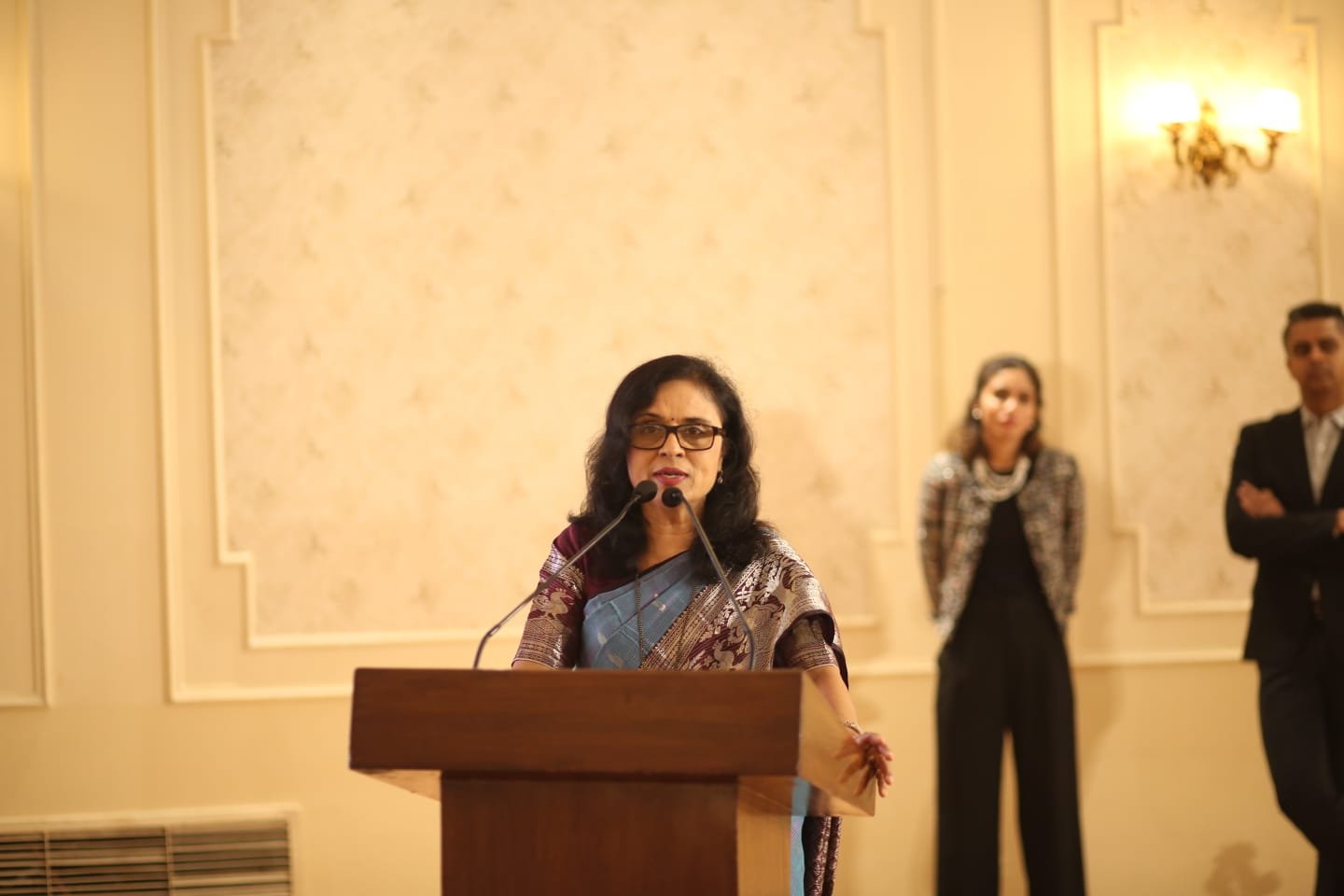
Addressing the assembled members of the diplomatic corps directly, Dr. Yeravdekar took the opportunity to formally acknowledge and thank them for their continuous contributions to the institution’s ongoing journey. She highlighted the instrumental role played by various embassies, high commissions, and diplomatic missions in encouraging educational mobility and facilitating cultural exchanges between India and the rest of the world.
"The success that Symbiosis has achieved today is possible because of the blessings and support of each one of you," she remarked, expressing heartfelt gratitude to the ambassadors, high commissioners, and diplomatic representatives in attendance for their unwavering partnership.
Expanding Horizons: Healthcare, Research, and Entrepreneurship
While international education and cross-cultural dialogue remain absolute centerpieces of the Symbiosis identity, Dr. Yeravdekar used the platform to outline the institution’s rapidly expanding strategic priorities, with a particular emphasis on healthcare, advanced medical education, and cutting-edge technology.
She drew particular attention to the university’s extensive work and investments in medical and health sciences, encompassing specialized training in nursing, allied health sciences, and advanced medical technology. These academic programmes hold immense relevance not only for India but especially for students arriving from nations across Africa, South Asia, and Southeast Asia, where building robust healthcare infrastructure and developing skilled healthcare professionals remain critical national priorities.
The continuous evolution of the university’s academic portfolio reflects a broader institutional ambition to respond proactively to changing societal needs while making meaningful contributions to capacity-building across developing nations.
In addition to healthcare, Dr. Yeravdekar underscored the university’s intensified institutional focus on fostering entrepreneurship and driving impactful research. Backed by a dynamic incubation ecosystem that currently supports and nurtures more than 80 innovative start-ups, Symbiosis is actively encouraging its students to look beyond conventional employment pathways and instead develop their own entrepreneurial ventures. She pointed out with pride that international students have frequently collaborated with their Indian peers to conceptualize and establish successful start-ups within this supportive environment.
Describing this structural transition, she explained that the institution is progressively shifting from being primarily an employment-oriented university toward a modern, entrepreneurship-led model, while simultaneously strengthening its institutional commitment to high-impact research.
For Symbiosis, this ongoing evolution represents a deliberate effort to equip young people with the adaptive skills, self-confidence, and global outlook required to successfully navigate an increasingly complex and rapidly changing world.
Education as a Bridge to Global Understanding
Throughout her comprehensive address, Dr. Yeravdekar repeatedly returned to the foundational premise that the true achievements of the university must be understood and evaluated within the context of its original purpose. For Symbiosis, international education is never merely about recruiting students from overseas; rather, it is about purposefully cultivating an environment where cultural differences are transformed into unique opportunities for mutual learning, empathy, and deep-seated respect.
She also spoke warmly of the institution’s vast and expanding global alumni network. Over the decades, Symbiosis graduates have progressed into influential professional roles across diverse industry sectors, governments, and international organizations worldwide. Their ongoing professional achievements, she suggested, remain a profound source of institutional satisfaction because they serve as tangible proof of the lasting, transformative impact of an educational experience that extends far beyond the acquisition of formal academic qualifications.
Concluding her remarks, Dr. Yeravdekar warmly invited the diplomats, ambassadors, and high commissioners who had not yet visited the university to personally experience its campuses in Pune and witness its unique, multicultural academic environment firsthand.