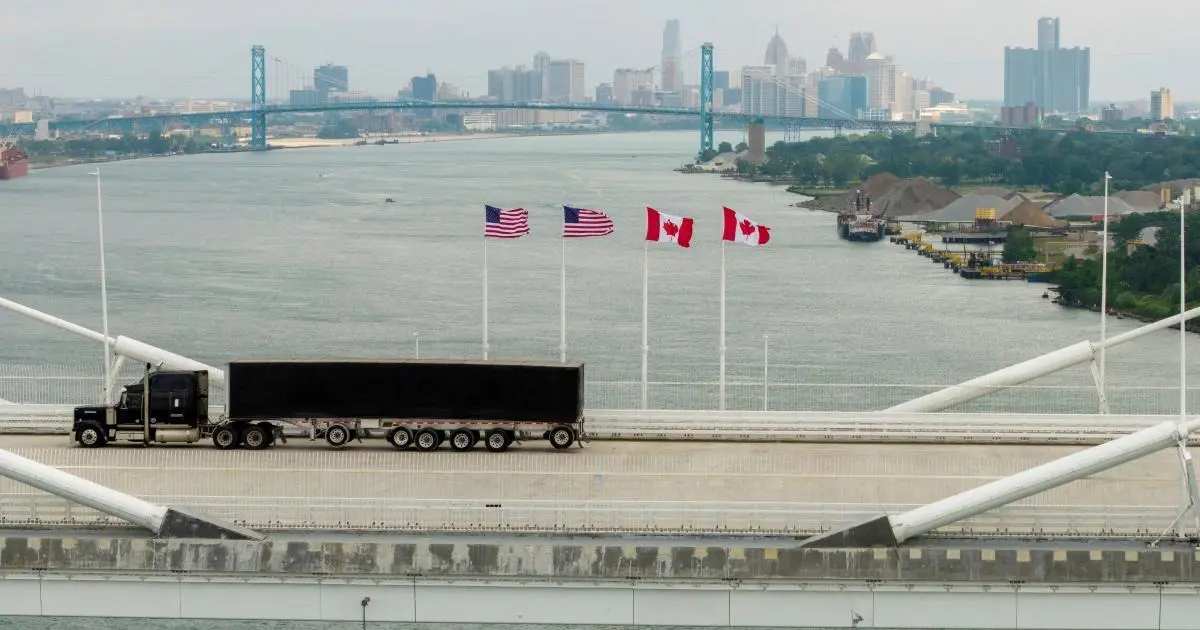
The aggressive trade policies and confrontational rhetoric directed by the Trump administration toward Canada and Mexico are steadily eroding the foundational bedrock of United States global power. For generations, Washington’s strategic planners understood a fundamental geopolitical truth: friendly, stable relations with immediate geographic neighbors enhance national security, stimulate mutual economic growth, and simplify the management of complex transnational challenges. Conversely, weak and unstable neighbors inevitably export trouble. Today, however, that historic partnership is under severe strain. In Canada, President Donald Trump’s imposition of steep tariffs and his belittling characterization of their nation as a prospective "51st state" are viewed by the public as direct assaults on Canadian economic stability and national independence. Simultaneously, in Mexico, a combination of economic coercion and threats of military intervention has reawakened deep-seated historical anxieties regarding American hegemony and interventionism.
This robust North American partnership did not materialize overnight; it took generations of careful diplomacy, economic integration, and strategic foresight to forge. During the nineteenth century, U.S. foreign policy was overwhelmingly concentrated on its home continent, where Washington competed fiercely with France, Mexico, Russia, Spain, the United Kingdom, and various indigenous populations for territorial dominance. As the United States ascended to the status of a global superpower in the twentieth century, however, successive generations of U.S. strategists began to take North American relations entirely for granted. Washington shifted its primary diplomatic and military attention toward Europe, the Asia-Pacific, and the Middle East.
Yet, since the closing years of the Cold War, pragmatic U.S. presidents have periodically recognized the imperative need to reinvest in North America. Ronald Reagan articulated this strategic rationale with exceptional clarity when launching his presidential campaign in 1979. "The key to our own future security may lie in both Canada and Mexico becoming much stronger than they are today," Reagan explained to the American public, adding, "It is time we stopped treating our nearest neighbors as foreigners."
Geopolitics invariably begins with geography, and America’s geography grants it an extraordinary advantage over every other major global power. Consider the strategic predicaments of China and Russia: each must manage delicate, often volatile relationships with fourteen distinct neighbors, many of whom harbor deep resentments stemming from long histories of conflict. India, similarly, must navigate relations with six neighbors, including a heavily armed nuclear rival. Furthermore, the access of all three of these major Eurasian powers to the world’s open seas is vulnerable, relying heavily on passage through narrow maritime chokepoints.
By contrast, the United States shares its borders with two benign, cooperative neighbors and enjoys unhindered, open sailing across two vast oceans. Close cooperation with Canada and Mexico fundamentally enhances U.S. homeland security, attracts robust foreign investment, promotes technological innovation, and creates a massive continental market rich in natural resources and specialized talent. Furthermore, this trilateral cooperation is essential for effectively combating transnational criminal networks, managing migration patterns, and safeguarding clean air, water, and shared wildlife habitats.
A safe, resilient, and adaptive North America serves as the indispensable starting point for any coherent U.S. global strategy. Washington is positioned to navigate an unpredictable and dangerous world when the United States, Canada, and Mexico present a unified, common front. Yet, the current reliance on bullying tactics is driving these vital, natural partners away. The administration is actively dismantling a precious geopolitical asset: a strong, secure continental base from which Washington derives and projects its international power.
A Continental Vision
The historical realization that robust, friendly relations with its immediate neighbors would directly amplify the country’s global influence first took root with William Seward, who served as U.S. secretary of state from 1861 to 1869. Seward firmly asserted that to have "control of this continent is to be . . . the controlling interest in the world." When negotiating the historic U.S. purchase of Alaska in 1867, Seward famously observed that Alaska and the Aleutian Islands "extend[ed] a friendly hand to Asia." He also pursued the acquisition of Greenland, Iceland, the Hawaiian Islands, and various strategic territories in the Caribbean, believing these acquisitions would effectively secure the maritime approaches to the United States.
Seward recognized, however, that the United States could substantially boost its power just as effectively by strengthening economic and diplomatic links, rather than simply expanding its territorial footprint through conquest. A vocal opponent of European imperial conquests, Seward had previously opposed the 1846–1848 U.S. war with Mexico. At the conclusion of the American Civil War in 1865, he actively prevented Generals Ulysses S. Grant and Philip Sheridan from launching an invasion of Mexico to depose the Habsburg archduke whom the French government had installed as emperor. Seward reasoned correctly that a direct U.S. invasion would inevitably arouse fierce Mexican hostility, and that the Mexican people were fully capable of deposing the foreign interloper themselves—a feat they accomplished in 1867.
Seward managed relations with the northern neighbor through similarly diplomatic means. In 1867, the British government united its North American colonies to establish the Canadian Confederation, a move motivated in part by a desire to deter a potential U.S. invasion of Canada in retaliation for London’s material assistance to the Confederacy during the Civil War. Seward responded by choosing the peaceful path of international arbitration to resolve wartime claims against the United Kingdom.
Ultimately, Seward envisioned a North American union built upon the foundation of free choice, deliberately rejecting coercion or military conquest. He placed his faith in the attractive power of the United States, maintaining that commerce would act as a new "god of boundaries," capable of quietly redrawing political lines and pulling neighboring countries together. Ernest Paolino, Seward’s biographer, aptly termed this foundational concept Seward’s "law of imperial gravity."
The simultaneous restoration of Mexican President Benito Juárez and the formation of the Canadian Confederation in 1867 offered a promising horizon of a democratic North America bound by increasingly close economic ties. While peaceful relations were established, Seward’s grand continental vision faded in the ensuing decades as American ambitions turned decisively westward, resulting in diminished diplomatic attention toward the nations immediately to the north and south.
A Search for Stability
By the dawn of the twentieth century, the United States had grown accustomed to taking continental harmony for granted. That sense of domestic security was abruptly shattered by the Mexican Revolution of 1910. The decade of violent conflict that followed featured frequent armed incursions across the border and the seizure of American-owned property by various revolutionary factions and bandits, ultimately prompting Washington to launch two separate military expeditions into Mexico.
The United States narrowly avoided becoming hopelessly bogged down in a prolonged military quagmire. Indeed, President Woodrow Wilson’s successful reelection campaign slogan in 1916—"He kept us out of war"—referred just as much to the perilous situation in Mexico as it did to the unfolding catastrophe in Europe.
The persistent instability on America’s doorstep left the nation deeply vulnerable to foreign subversion. In 1917, imperial Germany transmitted a secret proposal of alliance to the newly established Mexican government—a communication famously intercepted by British intelligence—which promised German military and financial assistance to help Mexico recover Arizona, New Mexico, and Texas if Mexico chose to side with Germany in the event that the United States entered World War I.
Despite these tensions, the United States eventually managed to stabilize its relationship with the one-party authoritarian state that consolidated political control in Mexico during the 1920s. As political scientist Pamela Starr observed, Washington accepted its southern neighbor’s internal autonomy, but strictly "within limits." So long as Mexico refrained from threatening direct U.S. security interests, the United States deliberately chose not to interfere. Securing Mexican stability was ultimately deemed far more important than challenging its stunted democracy, prickly nationalism, and closed economic system.
This diplomatic arrangement endured for roughly half a century, during which both nations discovered practical avenues for bilateral cooperation. Between 1942 and 1964, for instance, the U.S. Bracero Program issued approximately 4.6 million guest worker permits to Mexican nationals, effectively filling critical labor shortages in American agriculture, railroad maintenance, and other demanding industries.
Concurrently, the twentieth century witnessed Canada’s steady transition from a British dominion into a sovereign North American partner and vital global ally. Throughout the 1920s and 1930s, the United States and Canada constructed new bridges and tunnels designed to facilitate expanding economic exchanges. U.S. Secretary of State Cordell Hull successfully negotiated critical reciprocal trade agreements with Canada in 1935 and 1938.
In the wake of World War II, Canadian soldiers fought shoulder-to-shoulder with Americans in the Korean War while Ottawa enthusiastically supported the creation of NATO, the General Agreement on Tariffs and Trade, the United Nations, and other foundational pillars of the postwar international order. During the 1950s, the two countries undertook the massive engineering project of the St. Lawrence Seaway and established a sprawling joint radar network to monitor potential Soviet missile attacks across the Arctic. In 1965, they cemented their economic alignment by signing a landmark pact that created a duty-free, integrated automobile market.
Ties That Bind
The pace of North American economic integration accelerated significantly during the Reagan administration. President Reagan’s warm diplomatic outreach to his Canadian counterpart, Prime Minister Brian Mulroney, encouraged Mulroney to propose a comprehensive free trade agreement in 1985. Mulroney took a substantial political risk; the Canadian public remained deeply wary of becoming economically dependent on or dominated by the United States, yet they simultaneously desired binding rules to discipline unilateral U.S. trade practices and encourage domestic investment. The two nations successfully concluded the agreement in 1987, and the U.S. Congress approved it the following year, transforming the 1988 Canadian general elections into a de facto national referendum on the trade deal—one that Mulroney ultimately won.
Carlos Salinas, who assumed the Mexican presidency that same year, recognized that a similar bilateral arrangement could finally jolt his country’s economy open and attract desperately needed foreign investment. Mexico was then grappling with severe debt crises, declining energy revenues, and the systemic breakdown of the ruling party’s half-century-old corporatist model, which had fostered a centralized, highly closed economy. Seeking an escape route from economic stagnation to spur sweeping internal reforms, Salinas took the bold step of proposing a free trade agreement directly to President George H. W. Bush in 1990.
Canada formally joined these trade negotiations in 1991, and the three nations ultimately signed the North American Free Trade Agreement (NAFTA) in 1992. For Washington, NAFTA represented far more than a simple commercial pact; it served as a monumental step toward historical reconciliation with Mexico, a nation that had remained understandably wary of the United States ever since losing nearly half its sovereign territory in the war that concluded in 1848.
Mexico was now looking explicitly to the United States to help accelerate its ongoing economic, social, and political transformation. Mexican negotiators hoped to import the rule of law by establishing robust protections for foreign investment, commercial competition, and intellectual property rights. At the same time, domestic reformers sought inspiration from U.S. and Canadian institutions as they worked to construct a vibrant multiparty democracy and a more open society.
President George H. W. Bush viewed NAFTA as a critical cornerstone of overarching U.S. post-Cold War strategy, explaining in 1992 that the agreement marked "the beginning of a new era," and formed a vital part of "a new world order" designed to help the United States "prepare for the challenges and opportunity of the next century." His administration firmly believed that the trilateral partnership could simultaneously deliver substantial economic benefits and pave the way for seamless continental cooperation on foreign policy, environmental protection, immigration enforcement, and drug interdiction. Unlike the European Union’s model of shared sovereignty, economic integration through NAFTA was specifically designed to respect national sensitivities concerning independence and sovereignty.
Bush’s successor, President Bill Clinton, faced the formidable political challenge of steering NAFTA through a skeptical U.S. Congress—a feat Clinton accomplished with the crucial backing of strong Republican support. Clinton deepened Washington’s institutional commitment to the North American project, notably extending a massive financial loan to Mexico during the 1995 peso crisis to prevent localized economic instability from spilling across the border into the United States. Furthermore, in the anxious aftermath of the September 11 terrorist attacks, amid widespread fears that heightened security would permanently cripple commercial flows, President George W. Bush launched specialized initiatives to ensure the safe and rapid transit of commercial freight across both the Canadian and Mexican borders.
Better Together
Although outspoken opponents of NAFTA initially asserted that American workers would lose countless jobs to Mexican laborers willing to accept lower wages, those dire predictions were ultimately not borne out by reality. The agreement proved to be an overwhelming economic and strategic triumph. By 2000, six years after NAFTA officially took effect, U.S. unemployment dropped to 3.8 percent, hitting its lowest level in decades. Inflation declined markedly, national productivity rose steadily, and real wages experienced sustained growth, featuring notable economic gains for low-wage workers.
The pact stimulated massive capital investment in railroads, energy pipelines, electrical grids, and modernized border systems, rendering continental supply chains remarkably efficient, particularly within the manufacturing sector. Total U.S.-Canadian trade in goods and services surged from $169 billion in 1988 to approximately $900 billion by 2024. Similarly, total U.S.-Mexican trade skyrocketed from under $100 billion prior to NAFTA to nearly $1 trillion.
Cross-border investment provided the primary engine for this unprecedented growth. U.S. direct investment in Canada climbed from $61 billion before NAFTA to roughly $750 billion, while Canadian direct investment in the United States increased from $27 billion to about $500 billion. Concurrently, American direct investment in Mexico rose from $15 billion to a range of $130 billion to $150 billion, and Mexican enterprise investments inside the United States jumped from $1 billion to between $40 billion and $50 billion.
The United States currently serves as the source for as much as 60 percent of Canada’s imports and roughly 40 percent of Mexico’s imports. Consequently, when their domestic economies grow and their companies and households purchase more goods, the U.S. economy directly benefits. Economic growth in more geographically distant economies yields far lower returns for American exporters; when China imports more foreign goods, for instance, the United States captures a mere six to seven cents of every additional dollar spent.
The original architects of NAFTA also hoped the agreement would generate robust economic opportunities within Mexico, enabling citizens to find stable employment at home rather than undertaking dangerous migrations northward. Due to Mexico’s prior economic difficulties, the population of Mexican-born immigrants residing in the United States had surged from approximately 760,000 in 1970 to nine million by the year 2000.
However, by 2010, net Mexican immigration had fallen entirely to zero. The vast majority of migrants arriving at the southern U.S. border increasingly originated from Central America and points beyond, while Mexico transformed into an essential, cooperative partner in helping the United States enforce its domestic immigration laws.
Although Donald Trump repeatedly vowed to scrap NAFTA entirely during his initial presidential campaign, the agreement had by then become far too economically vital to simply abandon. His administration ultimately settled for a renegotiation, replacing NAFTA with the United States-Mexico-Canada Agreement (USMCA) in 2020. While the updated accord successfully modernized provisions governing digital trade and introduced novel procedures for filing labor complaints, its complex, rigid rules designed to protect regional automotive producers inadvertently undermined the global competitiveness of that vital sector. Moreover, the agreement reduced certain protections for foreign investors operating in Mexico, thereby weakening international confidence in the local rule of law.
Repairing the Rift
Although the USMCA formally remains in effect until 2036, the underlying concept of North American integration is already visibly on life support. The Trump administration recently declined to approve a routine extension of the trade pact out to 2042, and pervasive uncertainty regarding the future of the agreement is actively discouraging critical long-term investment in both Canada and Mexico.
An even more acute problem stems from the administration’s insistence on retaining the unilateral freedom to disregard the treaty whenever politically convenient. Throughout 2025 and 2026, Washington levied punishing tariffs on Canadian automobiles, steel, aluminum, iron, metal-intensive manufacturing equipment, lumber, and pharmaceuticals, arbitrarily claiming that these imports represented a direct threat to U.S. national security. Given that the United States has actively supported the deep integration of those exact industrial sectors for seventy years, and that Canada has stood as a steadfast military partner for over a century, it is hardly surprising that this national security designation was received in Ottawa as both a profound shock and an insult.
The gradual weakening—or potential outright breakup—of traditional U.S. ties with Canada and Mexico would constitute an unmitigated strategic disaster for Washington. Combined, the sovereign assets of these three nations make North America an unmatched global powerhouse. The continent stretches continuously from the frozen expanse of the Arctic almost to the tropics. Together, these three democracies are home to nearly half a billion people, and unlike most advanced industrial economies, their populations continue to experience demographic growth. They possess a highly skilled labor workforce, thoroughly integrated physical infrastructure, and world-class capabilities in agriculture, mining, advanced manufacturing, and service industries. Furthermore, North Americans enjoy unparalleled access to cutting-edge technologies, abundant financial capital, absolute energy self-sufficiency, and the collective capacity to rapidly expand production across oil, natural gas, and renewable energy sources.
This represents an enviable hand to play on the global stage—certainly not one that Washington should casually discard. Rather than antagonizing Ottawa, the United States must immediately resume close cooperation with its northern neighbor on pressing priorities such as Arctic and maritime security, critical mineral extraction and supply chains, and technological innovation. Canada’s world-class artificial intelligence talent, research capabilities, and vast energy reserves perfectly complement those of the United States, echoing the successful resource and manufacturing partnerships of the twentieth century.
Simultaneously, Washington must actively assist Mexico in realizing its full domestic potential. While NAFTA undeniably helped Mexico construct world-class economic institutions and foster a freer society, deep-seated corruption unfortunately continues to pervade state and local governments, legal institutions, police forces, and educational systems throughout the country. Millions of Mexicans remain trapped working within the vulnerable informal economy, leaving openings for drug cartels and transnational criminal enterprises to exploit governmental weaknesses. With consistent U.S. intelligence, technological, and logistical support, however, Mexico can substantially improve internal security and reinforce the rule of law. Building stronger, more trustworthy public institutions will not only accelerate domestic economic growth but will ultimately transform Mexico into an even more reliable and effective strategic partner.
From William Seward to Ronald Reagan, the Bushes, and Bill Clinton, visionary U.S. leaders have consistently recognized that a strong, united North America provides the United States with an indispensable strategic anchor in an increasingly uncertain world. While a transactional approach to economics and a constant drive for personal dominance place the current administration well outside this circle of visionary strategic leaders, the next occupant of the Oval Office will possess a clear opportunity to change course. To successfully restore and expand a constructive continental partnership, the United States must revive its traditional powers of attraction and treat its neighbors with mutual respect.