VILNIUS — In a European nation where more than two-thirds of working-age individuals with disabilities remain unemployed, the Lithuanian government has leveraged its considerable economic buying power to fundamentally reshape public spending. Through a strategic overhaul of its public procurement system, the state is increasingly directing contracts toward businesses that champion social responsibility, workplace inclusion, and the integration of marginalized groups.
The initiative, spearheaded by the Public Procurement Office (PPO) alongside various national institutions and civil society organizations, has already surpassed its initial performance benchmarks. Driven by a combination of voluntary social criteria, co-created policy guidelines, and a real-time public tracking dashboard, Lithuania’s state spending is proving that public contracts can achieve far more than just economic efficiency—they can act as a catalyst for societal equity.
The Challenge of Disability Employment in Lithuania
Statistics compiled prior to the reform highlighted a stark disconnect within the Lithuanian labor market. Approximately 151,600 people of working-age live with some form of disability. Among them, software developers, academics, skilled tradespeople, and numerous other qualified candidates stand ready to contribute to the economy. Yet, more than 67 percent of this demographic have been left without formal employment.
Experts point out that the barrier is rarely a lack of skill or qualification. Instead, prospective employees frequently encounter employers reluctant to provide reasonable accommodations—adaptations that are, in most cases, both simple and low-cost to implement. Lingering misconceptions regarding the actual capabilities of workers with disabilities persist across the private and public sectors, while existing government incentives have historically proven insufficient to fundamentally shift deeply entrenched hiring practices.
Faced with this systemic hurdle, public authorities recognized that the state itself could serve as a powerful corrective force. With close to €10 billion flowing annually through Lithuania’s public procurement system—accounting for roughly 12 percent of the national economy—the government stands as one of the largest indirect employers in the country. By utilizing this massive financial footprint, procuring entities have the leverage to influence wider market trends and foster positive social impact within their communities.

Introducing Social Procurement Criteria
To unlock this potential, Lithuania introduced a framework consisting of eight specialized criteria for socially responsible procurement. Designed to guide government buyers on how to allocate budgets toward the upliftment of marginalized groups, the voluntary requirements and supporting guidelines focus on creating jobs for people with disabilities, advancing gender equality, enhancing staff well-being, and encouraging sustainable, responsible production processes among suppliers.
These criteria are designed for flexible implementation across various stages of the procurement lifecycle. Depending on the nature of the project, public buyers can integrate social considerations directly into technical specifications, bid evaluation criteria, contract performance terms, or supplier qualification requirements.
Greta Ambrutytė, Head of the Socially Responsible Public Procurement (SPP) Department at the Lithuanian Public Procurement Office, emphasized the core mission behind the shift. The objective, she noted, is to ensure that all public buyers across the nation fully recognize the inherent influence of their purchasing power, boosting the utilization of these criteria to foster genuine inclusion through public contracts.
To turn policy into practice, the PPO did not work in isolation. The agency co-created the social criteria and accompanying guidelines alongside a dedicated working group comprising 12 institutions deeply active in disability rights. Key collaborators included the Ministry of Labor and Social Affairs, the Lithuanian Public Employment Service, the Agency of People with Disabilities Rights Protection, and the Data Protection Agency.
Furthermore, support from the Open Contracting Partnership’s (OCP) Lift impact accelerator program enabled the institutions to undergo a comprehensive, people-led policy redesign. Expert recommendations from the Diversity Charter—an NGO focusing on workplace inclusion and diversity—helped refine the criteria and shape specialized training programs tailored for both public buyers and commercial suppliers.

Rygilė Trumpytė, Chief Executive of the Diversity Charter, underscored the importance of early community involvement, noting that immigrants and people with disabilities represent the most vulnerable segments of the labor market. Including these communities in decision-making processes from the outset is viewed as essential for impactful public intervention.
The PPO also engaged directly with major corporate buyers, such as the Ignitis Group and Lithuanian Airports, to ensure social procurement principles were seamlessly woven into their annual planning. Livija Šepetytė, a sustainability partner at the Ignitis Group, cautioned against superficial implementation, noting that blindly inserting social requirements into a tender without prior market consultation is a direct route to failure.
Real-Time Transparency and Measurable Results
A critical component of Lithuania’s strategy was the establishment of robust tracking mechanisms. Building on a similar approach previously deployed to green the nation’s procurement procedures—which successfully embedded environmental criteria into 100 percent of applicable purchases—the Public Procurement Office updated the electronic government procurement (e-GP) system.
The contract reporting subsystem was upgraded with mandatory fields designed to capture precise data: whether social criteria were utilized, which specific criteria were applied, and at what stage of the procurement process they were integrated. To foster positive institutional competition and maintain complete transparency, the PPO launched a publicly accessible reporting dashboard in mid-2024.
The quantitative results of these transparency measures and policy shifts have exceeded initial expectations. Supported by the OCP Lift program, the PPO set a target for at least 7 percent of total procurement value to incorporate socially responsible criteria within an 18-month window.
That threshold was rapidly surpassed. By the end of 2025, the share of public procurement value carrying social criteria rose to 10.9 percent, amounting to approximately €1.2 billion, up from just 4.3 percent (€467 million) in 2024. Data from September 2026 indicates that the figure has continued to climb, reaching 12.6 percent, or roughly €955 million.
Concurrently, the proportion of individual contracts utilizing social criteria grew from 1.1 percent (representing 1,657 contracts) in 2024 to 2.1 percent (3,336 contracts) in 2025, and further advanced to 2.5 percent (2,587 contracts) in the year up to September 2026.
While hundreds of public entities have embraced the framework—with 376 public buyers, or about 15 percent of active procurement entities, awarding at least one social contract in 2025—some institutions have integrated the practice comprehensively. For instance, the social care home Jasiuliškių socialinės globos namai awarded all 83 of its contracts using social criteria in 2025, totaling more than €2.5 million.
Economic Impact on Social Enterprises
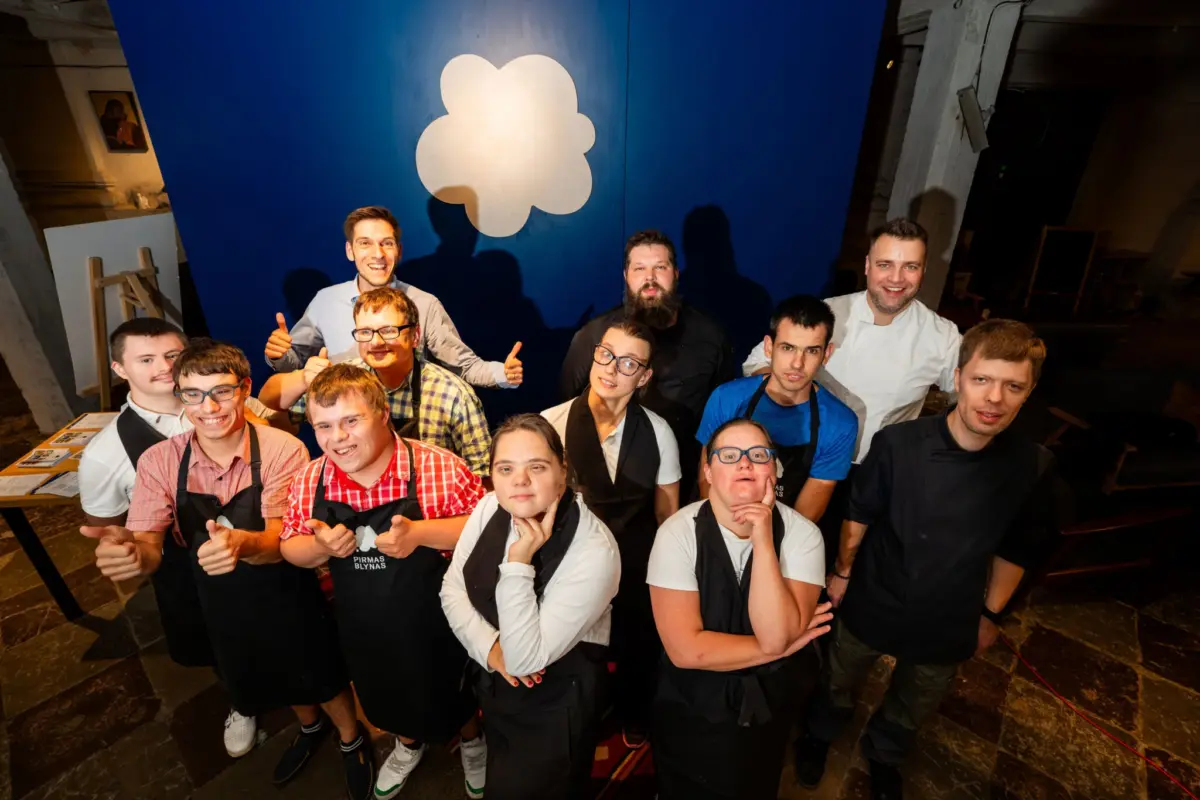
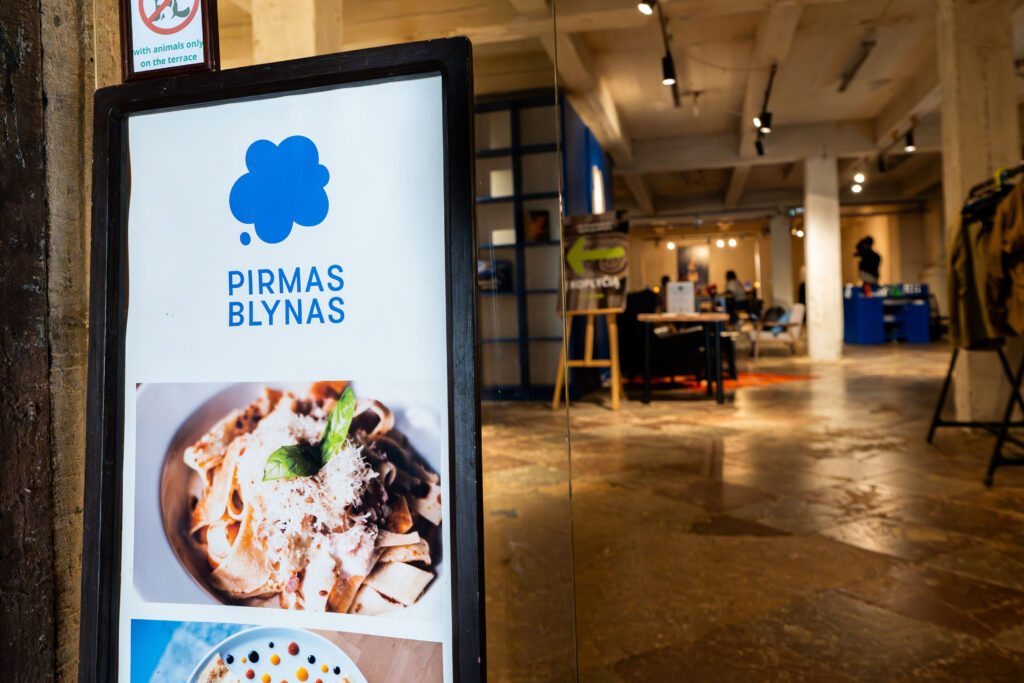
The practical beneficiaries of these systemic reforms extend directly to specialized businesses operating on the ground. Among them is Pirmas Blynas, a catering enterprise and coffee shop located in Vilnius that employs individuals with disabilities.
When founder Tim Van Wijk launched the business in 2018 as the first of its kind in Lithuania, its name—translating to "First Pancake"—served as a philosophical nod to the reality that initial attempts at innovation are rarely flawless, but provide essential lessons for refinement. Over the years, the enterprise has focused on helping both its employees and society develop continuously.
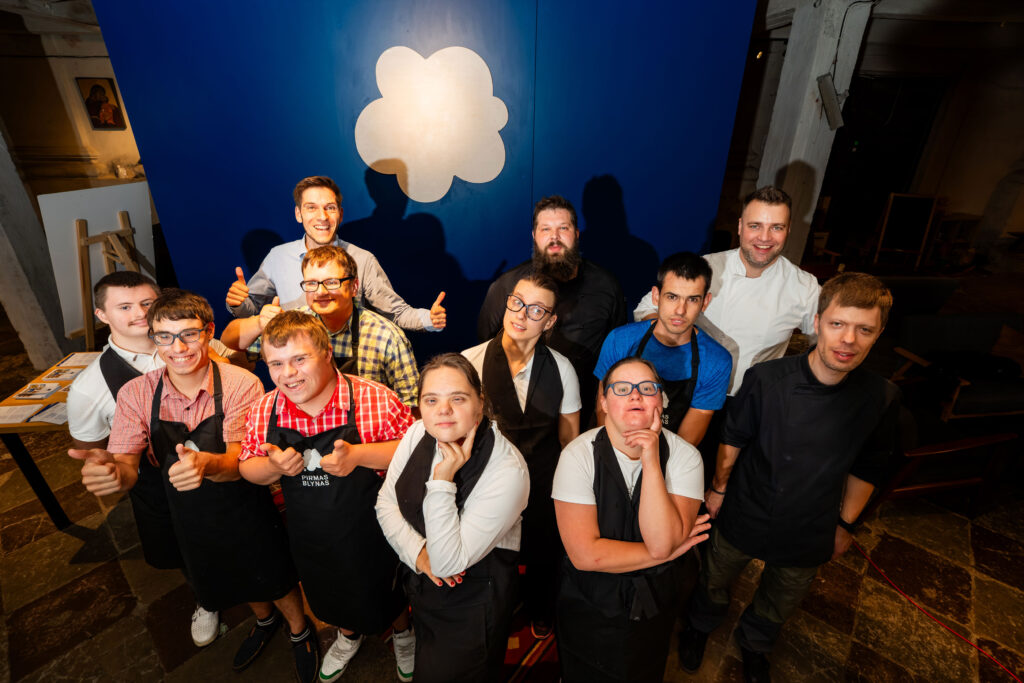
Securing government catering contracts has provided Pirmas Blynas with a vital avenue to diversify its revenue streams, reducing its reliance on traditional state subsidies that many social enterprises heavily depend upon. According to Van Wijk, winning public tenders has granted the company expanded operational opportunities, allowing staff to gain valuable experience working within government institutions. Employees are able to undertake new tasks, acquire fresh professional skills, and apply their expertise within diverse environments, ultimately increasing the business’s broader societal footprint.
At the same time, enterprise leaders emphasize the importance of maintaining balanced expectations for how social procurement functions. Van Wijk notes that social criteria should serve as a complementary advantage rather than the sole determinant for contract awards, maintaining that commercial selection must fundamentally rest on the quality of what companies offer.
Cultural Shift and Future Outlook
Because social criteria are frequently embedded in the performance terms of contracts—historically the most challenging aspect of procurement to police—the national dashboard currently records the application of criteria rather than the minute details of implementation. In response, the PPO continues to update its guidelines to clarify what social procurement requires in concrete terms, addressing issues ranging from physical building accessibility and universal design to wage transparency.
Beyond immediate policy adjustments, observers note that the reforms represent a profound cultural transformation regarding how public administration creates value for society. Authorities are currently exploring ways to measure the broader socio-economic ripples of the initiative, seeking to demonstrate that social procurement is not merely an optional initiative, but a sustainable driver of inclusive economic growth.
Reflecting on the trajectory of the reform during a recent social procurement conference in Vilnius, Darius Vedrickas, Director of the Lithuanian Public Procurement Office, observed that change within public purchasing is occurring naturally. It is happening, he noted, not because external mandates compel it, but because institutions are increasingly realizing that public procurement possesses the capacity to deliver across multiple public policy objectives simultaneously.