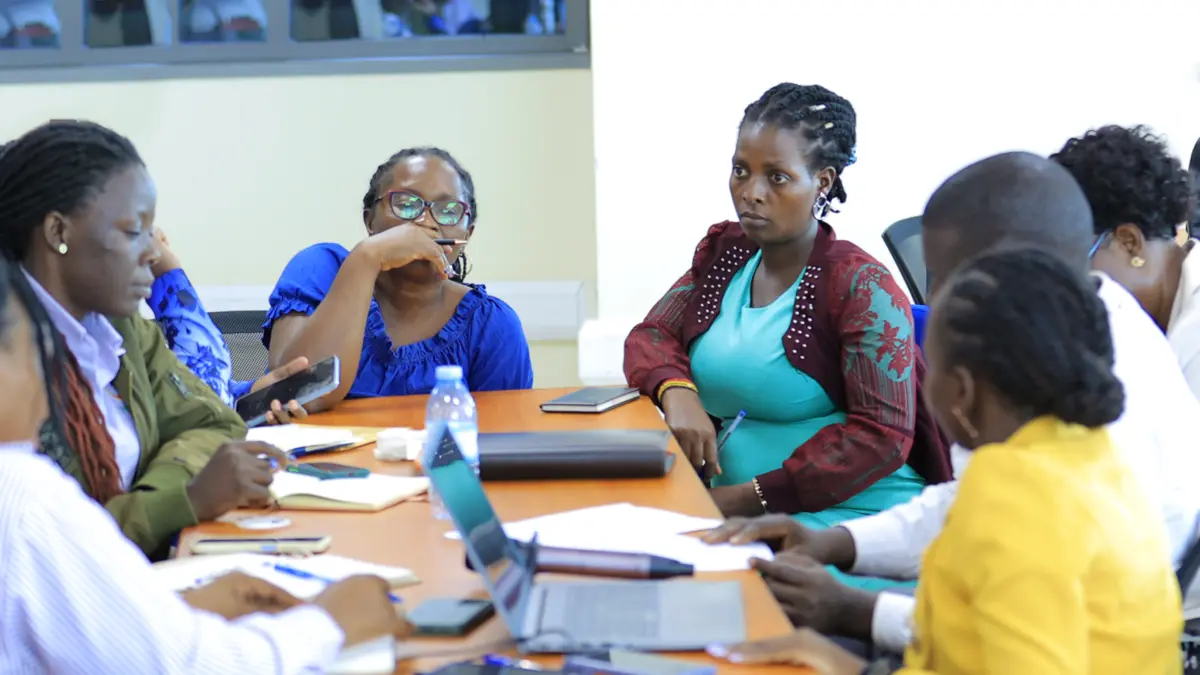
When the Ufahamu Women Group first entered the competitive arena of public contracting within Tanzania’s construction sector, the deck was stacked heavily against them. Women-led businesses in the industry are still too frequently treated as the exception rather than the norm, and the traditional procurement process itself can often feel intentionally designed exclusively for established insiders who already know how the system operates. Despite the systemic hurdles, they persisted. Since breaking into the market, they have successfully won 12 tenders, faithfully repaid their loans, and consistently reinvested in their enterprise growth. The hard-won advice they offer to fellow entrepreneurs today is rooted in that resilience: keep applying, keep your documents ready, and treat every initial rejection or setback as a valuable learning lesson.
That kind of dogged persistence matters immensely in a challenging economic landscape. Yet, industry advocates argue, it should not serve as the primary filtering mechanism standing between a capable, qualified business and a public contract. Public procurement represents one of the largest economic markets in virtually any country and serves as one of the most powerful structural levers governments possess to support small and medium enterprises, foster local job creation, and meaningfully improve community livelihoods.
Yet for countless firms—particularly those owned or led by women, young people, people with disabilities, elders, and other historically underrepresented groups—the public contracting market can still feel frustratingly out of reach. Even when procurement opportunities formally exist and the governing rules are publicly available, they are rarely written in plain, accessible language. They are frequently published too late for businesses to act effectively, or hosted on digital systems that require high-speed desktop access and advanced technical navigation rather than being easily accessible through mobile devices used across rural and urban districts alike.
This persistent gap between what procurement transparency promises on paper and what it actually feels like to ordinary suppliers on the ground is precisely what open procurement reforms are intended to close. At its best, as detailed in the Open Contracting Partnership’s Opening Doors and Opening Markets report, open procurement is about much more than simply publishing raw data dumps online. It requires the active, ongoing work of making public markets genuinely visible, completely usable, and truly worth engaging with for suppliers who have traditionally been excluded from the wealth generated by state contracts.

Public Does Not Always Mean Accessible
There is a version of procurement transparency practiced by many institutions that technically satisfies the legal definition of openness without doing very much to help the average independent supplier. Vital information gets published, but often with dangerously compressed timelines. Tenders appear on legacy portals that function adequately on an office desktop computer but fail miserably when accessed via a shared mobile phone in a remote rural district. Tender documents are routinely drafted in dense, bureaucratic procurement jargon that takes years of specialized legal experience to decode. By the time a small, independent business has finally worked out what the contracting authority is actually asking for, the bidding deadline has already passed, or prohibitive bid bond requirements have disqualified them from the start.
Tanzania’s recent sweeping administrative reforms represent a practical, nationwide attempt to confront and change this exclusionary dynamic. Prior to the official launch of the National e-Procurement System of Tanzania, widely known as NeST, the country’s earlier electronic procurement platform covered only isolated segments of the contracting lifecycle and lacked full compatibility with broader public finance and management systems. The introduction of NeST was envisioned as a unified digital gateway designed to streamline the entire process, making it transparent, trackable, and open to scrutiny from both regulators and the taxpaying public.
A Regional Challenge Across East Africa
Tanzania’s ongoing struggles and reform efforts resonate deeply across the region because nearly identical patterns appear in neighboring countries. In Uganda, women-owned and women-led enterprises are estimated to account for nearly 40 percent of all registered businesses in the country, yet they historically capture a meager one percent of all government procurement contracts. The Open Contracting Partnership has collaborated closely with national government agencies and civil society organizations in Uganda to help bridge this wide chasm, focusing heavily on reforming the underlying legal frameworks, improving data quality, and building the practical capacity of women entrepreneurs to successfully compete. The stark mismatch between who is running the nation’s small businesses and who is actually winning lucrative government contracts is not a random coincidence. It is the direct structural result of commercial systems that were historically designed without those enterprises in mind.
Kenya has attempted to address these structural disparities more directly through targeted policy reservations. Its Access to Government Procurement Opportunities program, commonly known as AGPO, officially reserves 30 percent of all government procurement contracts specifically for businesses owned by marginalized groups, including women, youth, and persons with disabilities. Meanwhile, parallel open contracting reforms in Kenya have concentrated on making public procurement data far more accessible, structured, and interoperable across government departments. Kenya’s open government action plans have gone even further by committing the administration to aggressively raise public awareness of the AGPO framework and actively simplify the bureaucratic processes for the exact businesses the reservation scheme was created to serve. The policy reservation exists on paper; the central question has always been whether the people it was designed to help can actually reach across the divide to claim it.
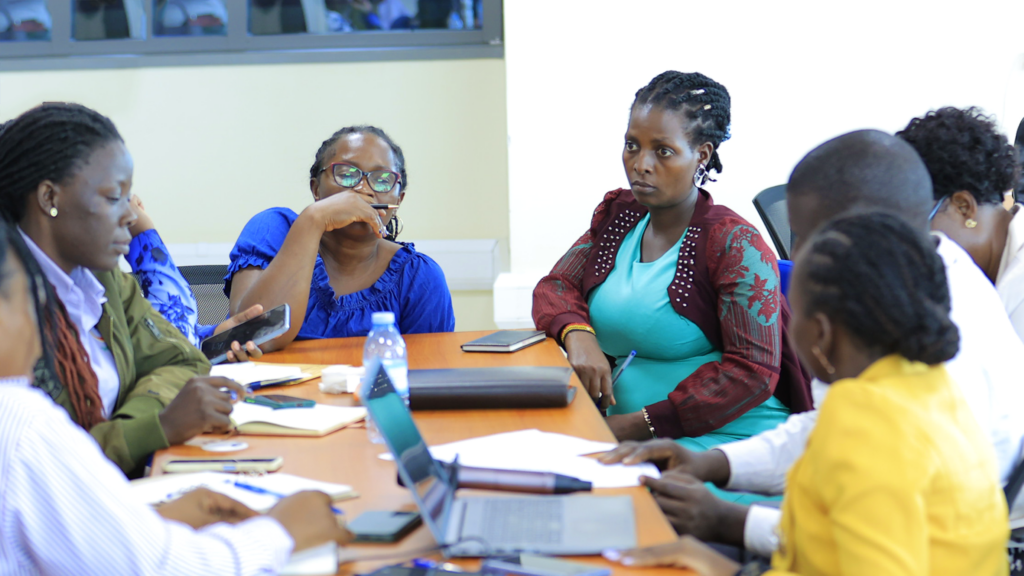
Across Uganda, Kenya, and Tanzania, empirical evidence consistently demonstrates that inclusive procurement policies do not automatically deliver inclusive economic outcomes on their own. True inclusion must be deliberately engineered directly into the daily machinery of public procurement. It has to be woven into the binding rules, the digital systems, the public datasets, the support networks, and the feedback loops that collectively determine who is genuinely empowered to take part in the economy.
The Distance Between a Policy and an Opportunity
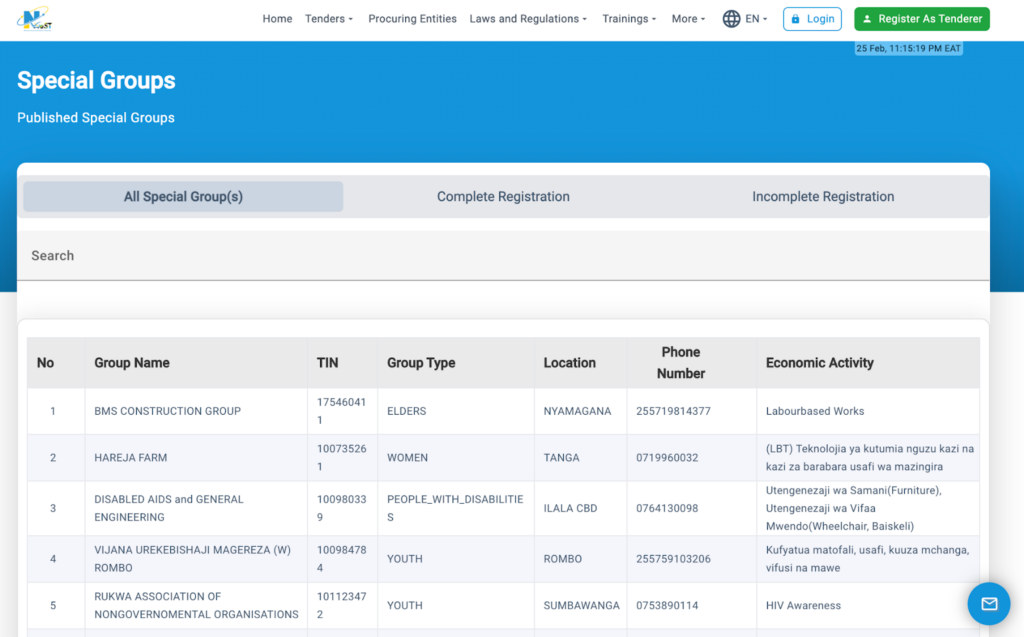
Tanzania’s dedicated 30 percent reservation scheme for special groups—encompassing women, young people, people with disabilities, and elders—represents a serious, formal policy commitment by the state. A comprehensive recent study supported by GIZ found that these designated special groups received 1,468 public contracts with a combined value of 39 billion Tanzanian shillings, equivalent to roughly 15 million US dollars, during the period studied. This financial volume represented approximately 7.6 percent of the total public contract value awarded over that timeframe. While this demonstrates tangible progress and real financial flows reaching new hands, it still falls significantly short of the ambitious 30 percent statutory target.
The reasons behind this shortfall are far more instructive than the headline figures alone. Nearly half—specifically 47 percent—of the special group members surveyed during the research did not even know that the reservation scheme existed. Among those entrepreneurs who were actually aware of the program, more than half identified severe procedural barriers substantial enough to discourage them from applying. These barriers included tender documents written exclusively for seasoned contractors, qualification standards that systematically excluded newer and smaller businesses, and multiple fragmented registration systems that lacked any obvious connection to one another.
These are not minor complaints or niche administrative grievances. They accurately describe a public procurement system that was originally built to serve a very particular kind of established supplier and has not yet been fully redesigned for the diverse population that government policy officially aims to uplift. For an ambitious small supplier trying to break into the market, access is a fragile chain composed of multiple links: hearing about the open tender in time, understanding the technical requirements, registering on government portals without getting lost in endless paperwork, preparing a competitive bid, securing financing to deliver the goods or services, and ultimately getting paid on time by the contracting agency. If any single link in that chain breaks, the business opportunity vanishes entirely, regardless of what the high-level policy says on paper.
What Turns Openness into Real Opportunity
Open contracting can undoubtedly make the broader market much easier to see and monitor, but pure visibility alone does not pay for raw materials, write technical bids, or help a first-time supplier figure out which specific tender represents a realistic chance of success. The Tanzania study points directly to the kinds of practical support mechanisms that actually move the needle for marginalized vendors. These include mobile outreach clinics that travel directly to where business communities operate, dedicated customer service help desks, train-the-trainer workshops, informal peer-to-peer learning groups on mobile messaging applications, tailored online educational courses, and deliberate efforts to reduce burdensome registration fees and paperwork. In Tanzania, the Open Contracting Partnership supported this vital grassroots work, hosted by the Public Procurement Regulatory Authority and the civil society organization WAJIBU – Institute of Public Accountability, to encourage local government authorities to meet business owners where they are, explain complex procurement processes in plain terms, and systematically remove the administrative hurdles that cause people to give up before they even begin.
Access to affordable finance remains another critical missing link in the chain. Getting past the finish line with a winning bid is only half the commercial challenge; without accessible working capital to cover upfront material and labor costs, many successful suppliers simply cannot deliver on the contracts they have won. The study revealed that 69 percent of surveyed respondents had never accessed local council loans specifically designed to help finance contract execution, and 13 percent had never even heard that such financial support existed. A loan program that the vast majority of its intended beneficiaries know nothing about functions less like a genuine financial support mechanism and more like a missed opportunity to make the national reservation scheme operational.
The Bid for Success initiative, developed in partnership with Tanzania’s Public Procurement Regulatory Authority to assist women in accessing lucrative public markets, offers a modest yet telling illustration of what changes when support is genuinely hands-on and targeted. The program successfully trained 200 participants and helped them secure 29 million Tanzanian shillings, or roughly 11,000 US dollars, in public tenders. While those financial figures may appear relatively small in the context of national budgets, the underlying principle is profound: when tailored, practical support meets a real, functioning opening in the market, enterprising businesses will step forward and seize it.
From Open Data to Open Markets
Tanzania’s cumulative experience makes it abundantly clear that opening up public procurement is a complex chain of sequential reforms rather than a single administrative switch that can be flipped overnight. Public data must be published consistently, digital systems must function smoothly for ordinary people who are not specialized procurement lawyers, suppliers require robust practical support to participate effectively, and governments must maintain feedback loops strong enough to reveal whether market competition is actually widening or if certain groups are still being left behind. Each of those structural components is entirely achievable, but none of them happens automatically without sustained effort.

The collaborative work undertaken by the Open Contracting Partnership and UN Women focused on empowering women through public procurement underscores a broader fundamental truth: open, accountable, and data-driven procurement can only deliver on its democratic and economic promise if it is intentionally designed to include the exact businesses that have historically been locked out. The mechanical details of data standards and portals matter enormously, but getting those mechanics right is ultimately about something much larger than routine process reform. It is fundamentally about deciding who gets to participate meaningfully in the national economy.
As Kusunkwa Hussein of the Ufahamu Women Group advises fellow entrepreneurs—to keep applying, to stay operationally ready, and to treat every single attempt as a lesson—she offers counsel forged from hard personal experience rather than abstract policy documents. Yet that level of relentless endurance should not remain the primary qualification required for winning a public procurement contract. The ultimate goal of open contracting and procurement reform is to reach a point where personal persistence is simply an added advantage rather than an exhausting prerequisite; where the administrative process is clear enough, the institutional support is real enough, and the market is open enough that far more businesses finally get their fair shot. For women, young people, people with disabilities, elders, and small business owners across Tanzania and the wider region, that is what the hard work of reform is truly for.