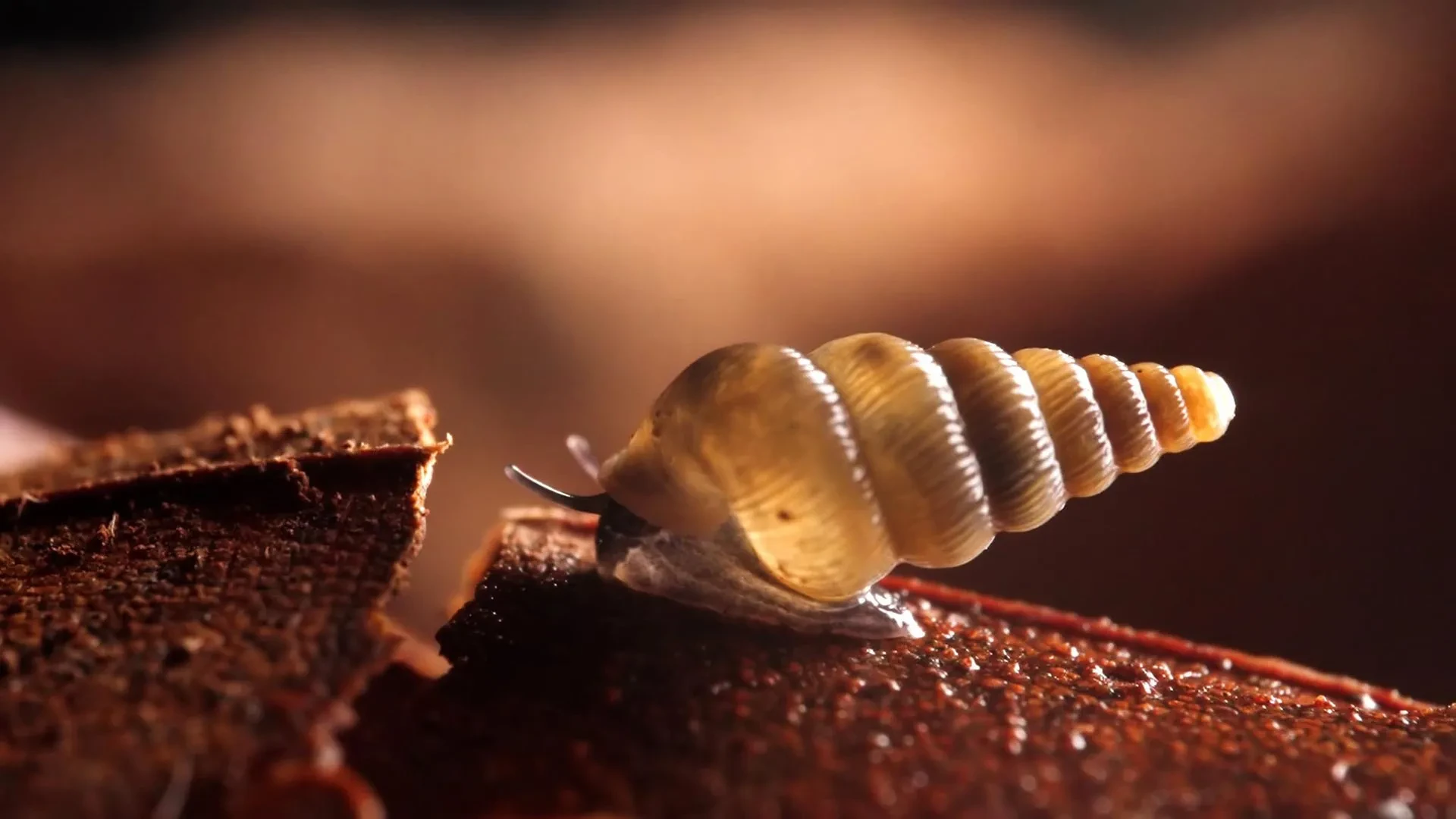
The known diversity of European land mollusks has officially expanded following the scientific description of two newly identified snail species. Formally introduced to the global scientific community in a study published within the open-access journal Biodiversity Data Journal, the newly documented animals have been named Cochlostoma komarnica and Cochlostoma dobrido. While these minute creatures might easily escape the notice of the casual hiker traversing the rugged terrain of the Western Balkans, their discovery underscores how much of Europe’s rich ecological tapestry remains entirely unexplored, cataloged, and understood.
Neither of the newly identified species has yet been assigned an English common name, reflecting their recent arrival in formal taxonomic literature. Both organisms are remarkably small, featuring distinctive cone-shaped shells that measure approximately six millimeters in length. Despite their diminutive stature, they play specialized ecological roles within their native habitats, clinging steadfastly to limestone rock formations where they graze upon microscopic layers of algae and lichens. Their biological characteristics are as fascinating as they are unusual, setting them apart from the vast majority of more familiar terrestrial gastropods found across the European continent.
Unlike typical land snails whose visual organs sit atop prominent, retractable eye stalks, Cochlostoma komarnica and Cochlostoma dobrido possess eyes positioned much lower along the sides of their heads. Furthermore, they are equipped with a specialized biological adaptation: a tiny, circular, door-like disk attached directly to their tails. When environmental conditions turn unfavorable or danger approaches, the snail can retreat deep into its calcareous shell and use this operculum-like disk to seal the opening completely, protecting its soft body from desiccation and predators.
New Species Found in Montenegro’s Mountains
The path to discovering these two unique gastropods began during a series of intensive scientific expeditions organized by Taxon Expeditions, a pioneering international initiative that bridges the gap between professional academia and the general public by allowing everyday citizens to take part in genuine, peer-reviewed scientific fieldwork. Between the years 2018 and 2025, specialized expeditions in Montenegro were systematically carried out through a collaborative partnership involving Taxon Expeditions, the non-profit Taxon Foundation, and dedicated local conservationists and researchers from the Montenegrin Ecologists Society.
These dynamic field teams brought together a diverse cast of participants, uniting seasoned international researchers, enthusiastic citizen scientists, local university students, and passionate conservationists. Together, this collaborative collective set out to investigate and document the complex biodiversity hidden within the protected boundaries of Durmitor National Park and the neighboring, wild expanses of the Komarnica Canyon. Working side-by-side in the field, the teams scoured limestone cliffs, damp crevices, and high-altitude microhabitats to record the myriad forms of life thriving in the region.
Researchers first encountered the snails at several distinct locations while navigating the demanding, rugged mountain terrain of Montenegro. However, in the field, it was not immediately apparent that these small gastropods represented species entirely unknown to science. The visual similarity among members of the genus Cochlostoma often masks deep genetic divergence. The true nature of the discovery only became unequivocally clear after the specimens were carefully dissected and subjected to rigorous genetic analysis within a makeshift field laboratory established during the expedition.
Named After the Places Where They Were Found
True to the traditions of taxonomic science, the responsibility of naming the newly discovered species fell to the expedition members themselves. Rather than relying on a solitary lead researcher to make the final determination, the team engaged in a collaborative democratic process, choosing the official scientific names during a lively vote held right at their base camp. The choices reflect a deep connection to the specific geographical landscapes that sheltered these unique organisms for millennia.
One of the species was formally designated Cochlostoma dobrido, drawing its species epithet directly from the scenic Dobri Do Plateau, an elevated, karst-dominated landscape cradled among the towering peaks of Durmitor National Park. The second species was named Cochlostoma komarnica, taking its moniker from the stunning yet vulnerable Komarnica Canyon, a wild river gorge situated immediately south of the national park boundaries. These names serve as permanent testaments to the specific local ecosystems that sustained the snails and the unique environments that made their discovery possible.
For many participants, the experience of helping discover a species previously unknown to science was a profound revelation. Janine Buisman, a professional musician hailing from The Netherlands, participated in one of the field expeditions as a citizen scientist. Her involvement went far beyond simple observation; she was so deeply engaged in the scientific process that she later became listed as a co-author of the published research paper detailing the new species. Reflecting on the monumental scale of the discovery, Buisman expressed widespread astonishment at the persistence of uncharted biology in a heavily studied continent.
"I was amazed that it is still possible to discover new animal species in Europe," Buisman noted, highlighting the transformative potential of citizen-science initiatives in modern biological research.
Echoing this sentiment, field biologist Jovana Đokić of the Montenegrin Ecologists Society, who also served as a co-author of the study, emphasized that the mountains, deep canyons, and remote gorges of this specific part of the Balkan Peninsula contain an extraordinary wealth of biodiversity. According to Đokić, this ecological richness remains poorly explored by the global scientific community, meaning that countless other species—both large and microscopic—are almost certainly still waiting to be discovered, documented, and officially named.
Komarnica Canyon Faces a Hydropower Threat
This vast, largely unmapped biological wealth, however, faces immediate and severe anthropogenic pressures. Đokić points out that the very characteristics making the region a sanctuary for ancient and endemic species also make its impending destruction all the more alarming. Conservationists and biologists are racing against the clock as industrial and infrastructural developments threaten to permanently alter the fragile ecosystems of the Western Balkans.
"It is all the more worrying that the Komarnica Canyon is targeted to be flooded by a hydropower dam and reservoir," Đokić stated, warning of the irreversible ecological catastrophe that looms over the river basin. "This will destroy this wild river canyon and all the biodiversity in it, including many species still unknown to science."
The looming threat of the proposed dam development has transformed the Komarnica Canyon into a major focus for organized, intensive biodiversity surveys. Recognizing that empirical data is the most powerful tool for halting environmentally destructive projects, researchers, taxonomists, and regional conservation groups are aggressively documenting every facet of the canyon’s flora and fauna. Their collective objective is to build an indisputable, scientifically rigorous case for the permanent legal protection of the entire area before commercial construction can commence.
As part of these ongoing preservation efforts, the Montenegrin Ecologists Society has launched active campaigns, including a formal public call urging authorities to incorporate the threatened Komarnica Canyon directly into the existing UNESCO World Heritage site designation held by neighboring Durmitor National Park. At the same time, conservationists are demanding that regional governments permanently abandon all current plans for the hydropower project, arguing that the long-term ecological cost far outweighs any short-term energy gains.
"Hydropower is neither green nor sustainable energy when it destroys a unique ecosystem like this," Đokić emphasized, drawing a sharp distinction between carbon-neutral energy production and true ecological sustainability. As researchers continue to analyze the genetic secrets of creatures like Cochlostoma komarnica and Cochlostoma dobrido, the fate of the canyon that bears the snail’s name hangs in the balance, serving as a critical battleground for the future of European conservation and biodiversity protection.