NEW DELHI — As Indian cities grapple with the dual crises of deteriorating urban air quality and surging energy demands, the national transition toward electric mobility is increasingly regarded as both an environmental necessity and a strategic imperative. However, simply swapping internal-combustion engine vehicles for electric alternatives will fall short of solving the country’s transportation challenges, according to Dr Amit Kumar Jain, Director (Operations and Services) of the Delhi Metro Rail Corporation (DMRC).
Addressing a high-profile audience in the capital, Dr Jain argued that the true opportunity for India lies far beyond the vehicle itself. Instead, the country must focus on building an integrated, energy-efficient, and public-transport-led mobility ecosystem that harmonizes vehicles, mass transit, physical infrastructure, and modern energy grids with actual commuting patterns.
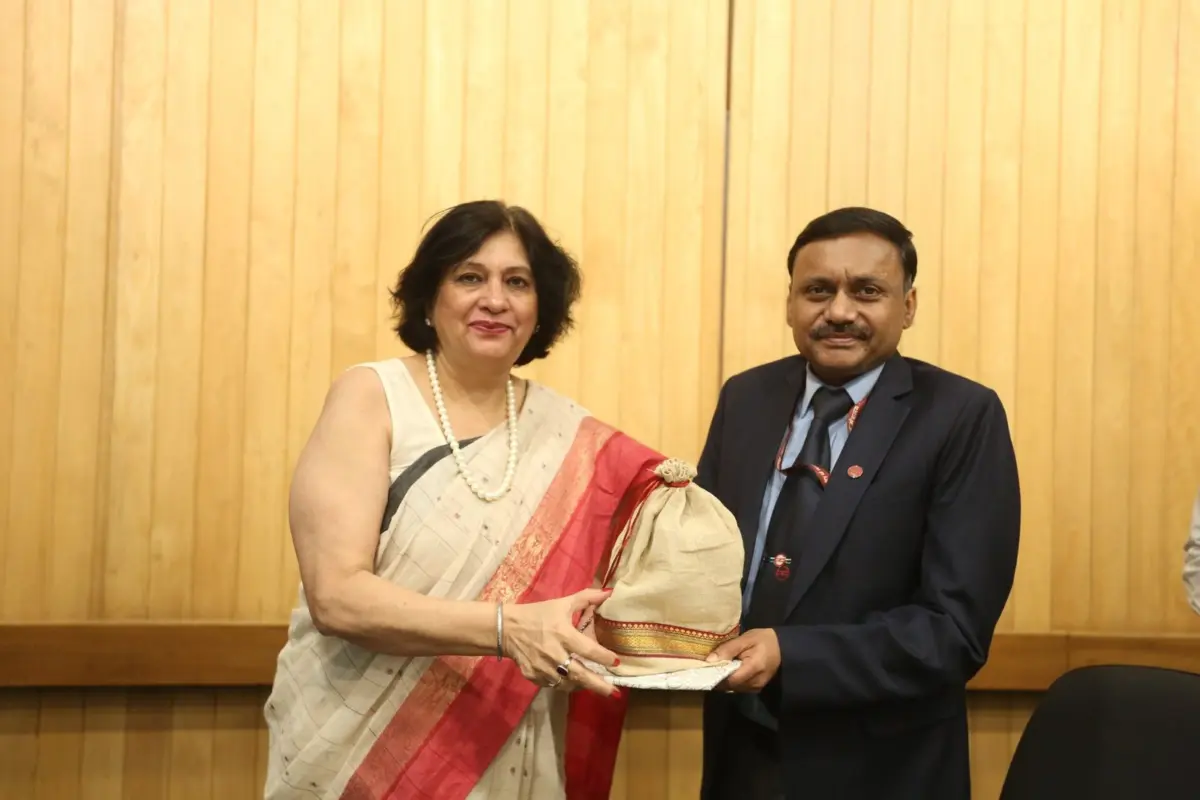
Dr Jain shared these insights during the TERI–India Habitat Centre Lecture and Discussion Series on Sustainable Development in New Delhi. Speaking at a focused session titled “Beyond Tailpipe: Electric Mobility at the Intersection of Air Quality and Energy Security,” he urged policymakers, urban planners, and industry leaders to reframe their approach to the electric vehicle (EV) transition.
“The question is not simply whether we can replace internal-combustion vehicles with electric vehicles,” Dr Jain told the gathering. “The question is whether we can create an integrated mobility system that addresses air pollution, energy security, and the growing demand for transportation.”
The Scale of India’s Urban Transport Challenge
The urgency behind this discussion is underscored by hard data regarding India’s transport and energy sectors. The nation’s transportation network remains heavily tethered to petroleum consumption and imported crude oil, leaving the economy vulnerable to global market fluctuations. Simultaneously, road transport is responsible for the lion’s share of transport-related emissions and urban smog.
According to background materials prepared by The Energy and Resources Institute (TERI) for the lecture, the transport sector contributes approximately 13 percent of India’s total greenhouse gas emissions. Within that figure, road transport alone accounts for roughly 90 percent of emissions. Furthermore, data from the Bureau of Energy Efficiency indicates that transport guzzles about 18 percent of India’s total energy consumption, with road-based vehicles generating the vast majority of the sector’s carbon dioxide emissions.
Given these stark figures, mass public transport emerges not merely as an alternative option, but as a critical backbone for any sustainable national transit strategy.
The Power of Moving Millions Together
To illustrate what electric mobility can achieve when deployed at a massive scale, Dr Jain pointed directly to the operational footprint of the Delhi Metro. Currently, the DMRC network spans approximately 416 kilometers across 303 stations, encompassing 12 operational corridors—including the high-speed Airport Express line. On any given business day, the system facilitates around seven million passenger journeys.
These numbers highlight a powerful and straightforward proposition: the greatest environmental and efficiency gains in electrification may not stem merely from altering the propulsion technology of individual passenger cars, but from moving vast numbers of citizens simultaneously and efficiently.
“If each of these passengers were to make the same journey in an individual vehicle, imagine the additional pressure that would place on our roads, our energy consumption, and our air quality,” Dr Jain noted.
For the DMRC Director, this reality cements mass transit as an indispensable component of the broader electric mobility conversation. Existing metro systems, suburban rail networks, and other forms of heavy electric public transport already prove that large-scale passenger mobility can be electrified effectively while aggressively dampening the public’s reliance on private, individual motorized transport.
Electric Mobility is Not a New Phenomenon
While contemporary media and policy debates often present the shift toward electric mobility as a novel twenty-first-century breakthrough, Dr Jain offered a valuable historical perspective to ground the discussion.
Electric traction is by no means a newcomer to India’s transportation legacy; in fact, it has been an integral part of the nation’s railway story for a full century. India’s very first electric train ran between Bombay Victoria Terminus and Kurla back in 1925. In the decades since, Indian Railways has steadily expanded its electrical infrastructure. According to data from the Ministry of Railways, approximately 99.4 percent of the country’s broad-gauge railway network had been successfully electrified by February 2026.
“The idea that electric mobility is something new is not correct,” Dr Jain observed. “Electric traction has been part of our railway system for almost a hundred years.”
The enduring experience of Indian Railways also serves to illustrate why conversations surrounding electrification must look beyond the physical vehicle. While electric traction delivers clear advantages in terms of localized emissions and operational efficiency, the ultimate net-positive environmental impact remains tightly coupled with how the underlying electricity is generated and how efficiently the broader transit system operates.
Efficiency Beyond the Tailpipe
Among the technical innovations highlighted by Dr Jain was regenerative braking—a proven technology that captures the kinetic energy produced when a train slows down, converting it back into usable electrical energy rather than allowing it to dissipate harmlessly as waste heat into the atmosphere.
The DMRC has long incorporated regenerative braking into its day-to-day energy-efficiency measures. Sustainability reports published by the corporation document significant energy savings, capturing roughly 30 to 40 percent of total traction energy through the regenerative braking process. Independent government technical assessments have similarly recorded substantial energy regeneration levels across the Delhi Metro network.
“When brakes are applied, the mechanical energy of the moving train can be converted back into electrical energy,” Dr Jain explained. “That energy can then be used by another accelerating train.”
This mechanism, he suggested, exemplifies the overarching principle that should guide the national transition: the ultimate objective should not merely be to electrify vehicles, but to render the entire mobility lifecycle fundamentally more energy-efficient.
From Park-and-Ride to Park-and-Charge
Another vital dimension of this comprehensive transition involves the seamless physical and digital integration of distinct transportation modes. Dr Jain detailed ongoing efforts by the DMRC to foster electric mobility ecosystems directly around metro stations, highlighting the rollout of dedicated charging infrastructure and innovative "park-and-charge" business models.
This forward-thinking approach is designed to allow daily commuters to combine private electric vehicles—such as e-scooters, e-bikes, or personal cars—with heavy mass transit. Motorists can park and safely charge their vehicles at metro-linked facilities while utilizing the high-speed metro network for the major, long-distance portion of their daily commute.
The concept has already moved past the theoretical stage and been successfully demonstrated through DMRC-affiliated facilities. For example, a specialized charging hub established at Noida City Centre was designed explicitly around the "Park and Charge" model, enabling commuters to replenish their EV batteries while traveling across the city via the metro.
“The idea is that you can come to the metro station, park and charge your vehicle, use the metro for your journey, and collect your vehicle when you return,” Dr Jain said.
Initiatives of this nature directly target one of the most stubborn hurdles confronting widespread EV adoption: charging convenience. Rather than treating charging infrastructure as an isolated, standalone ecosystem, embedding it directly into existing transit hubs weaves electrification naturally into the fabric of the daily commute.
The Solution Lies in Integration
Ultimately, Dr Jain emphasized that the central strategic question facing India is not simply whether the nation should adopt electric vehicles, but rather how the country can successfully construct a cohesive ecosystem around them.
This holistic vision demands the careful integration of electric cars, public buses, two-wheelers, and last-mile connectivity services with high-capacity metro systems and national railway networks. Furthermore, it requires ensuring that municipal charging infrastructure expands in lockstep with surging demand, that the national power grid transitions progressively toward cleaner renewable energy sources, and that urban planning policies actively encourage citizens to choose efficient shared mobility options wherever feasible.
“We should not look at electric mobility in isolation,” Dr Jain stated. “We need an integrated approach—e-buses, e-bikes, last-mile connectivity, metro systems, and railway networks all working together.”
The distinction is crucial for urban planners. Simply swapping out every conventional internal-combustion vehicle on the road for an electric equivalent would undoubtedly cut tailpipe emissions in urban centers, but it would fail to resolve chronic traffic congestion, severe road-space constraints, runaway national energy demand, or the inherent inefficiencies tied to single-occupancy travel.
“The solution is not only moving from diesel to electric,” Dr Jain concluded. “It is about creating an integrated electric mobility ecosystem.”
The Road Ahead
As India’s cities continue to experience rapid urbanization, they will demand significantly greater mobility capacity in the coming decades. The central challenge for policymakers will be meeting this soaring transportation demand without locking cities into permanent cycles of worsening traffic congestion, toxic air pollution, and heavy petroleum dependence.
The operational blueprint demonstrated by the Delhi Metro offers a viable strategic direction: pairing large-scale electrification with high-capacity mass transit, advanced energy efficiency, digital integration, and reliable first- and last-mile connectivity solutions.
Dr Jain suggested that this transition must be approached fundamentally as a complex systems challenge rather than a straightforward technology swap.
“Electric mobility is not the solution by itself,” he said. “Integrated electric mobility is the solution.”
This perspective successfully lifts the policy debate well beyond the tailpipe and the individual vehicle. Instead, it directs critical focus toward the entire journey—scrutinizing where energy originates, how efficiently it is consumed, how seamlessly commuters connect to public infrastructure, and how millions of daily individual journeys can collectively become cleaner, smarter, and more efficient. For a nation striving to balance rapid economic growth with cleaner air and long-term energy security, that may well be the most consequential question of all: not simply how to electrify vehicles, but how to completely electrify mobility itself.